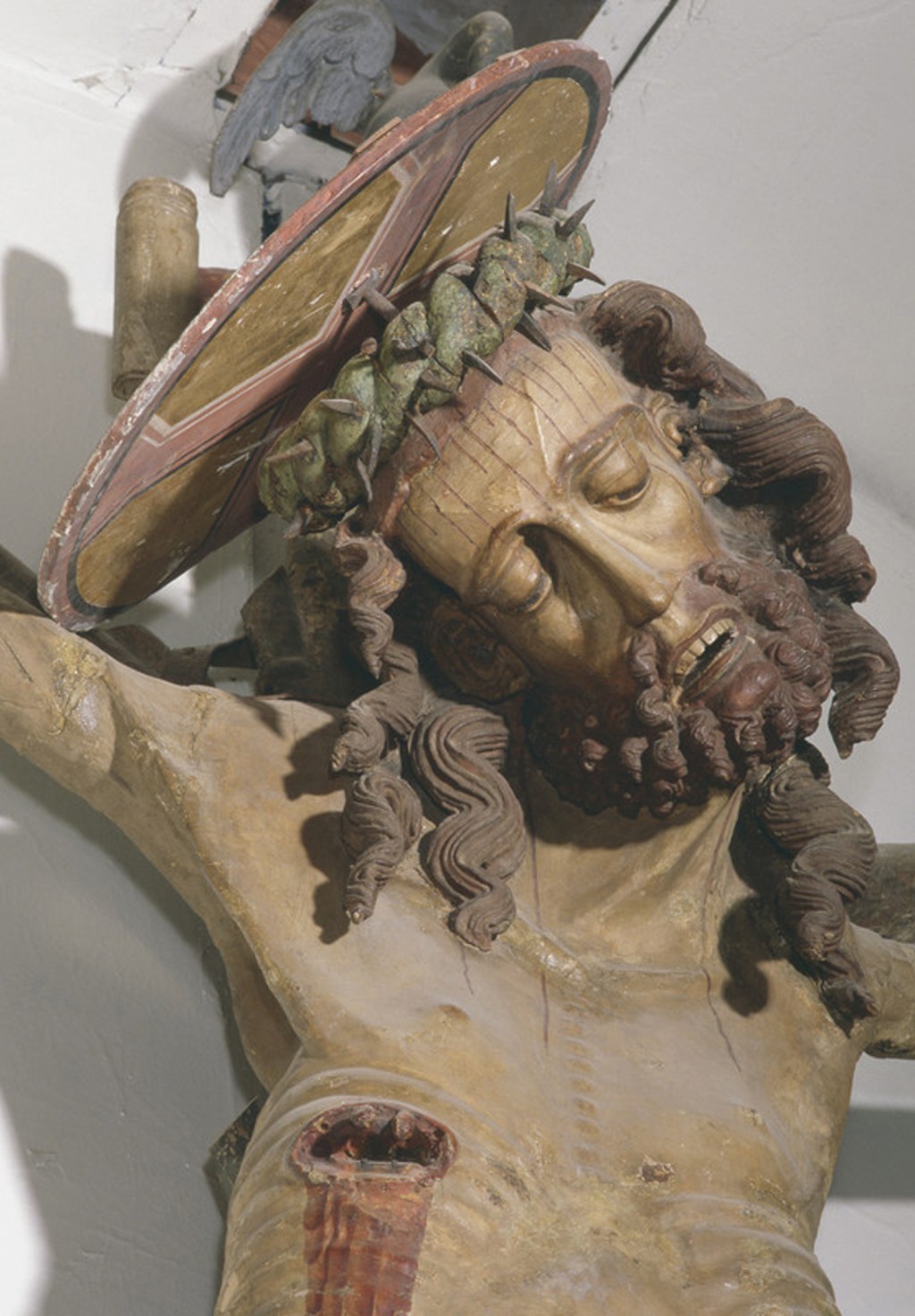
by Michael Riddick
Preview / download PDF in High Resolution
When we imagine the art of Renaissance Venice, our minds almost inevitably drift toward the monumental: the shimmering mosaics of San Marco, the sprawling oil canvases of Titian, or the gleaming marble and bronze sculptures that adorned the city’s grand plazas and patrician tombs. In this traditional hierarchy of Renaissance media, carved wood has frequently been relegated to the sidelines, stigmatized as a ‘minor art’ or an inexpensive alternative to stone.[1] Looking past this traditional media hierarchy reveals a category of wooden sculpture that was as technologically complex as it was spiritually significant. Unlike static statues, these articulated corpora were engineered with hidden mechanisms—such as wooden dowels, iron hinges, and segmented joints—that allowed the figure’s arms, head, and even facial features to be physically moved during theatrical liturgical performances.
By examining these extraordinary objects, this study offers several new perspectives on the art history of the lagoon. First, it argues that wood was not a subordinate medium but rather one whose technical properties were essential for specific liturgical functions, effectively elevating craft to the level of complex engineering. Second, it provides a necessary North-South counterbalance to traditional studies of Venetian ‘globalism.’ While Venice’s wealth was undoubtedly tied to the East for spices and luxury goods, the ‘Most Serene Republic’ was equally dependent on Northern migrants—the Oltramontani (those from beyond the mountains)—for its spiritual technology.[2] Third, this paper engages in sensory archaeology, moving beyond visual analysis to reconstruct the immersive, multi-sensory liturgical atmosphere in which these crucifixes operated. Finally, it attempts a recovery mission for the invisible German community that built some of the city’s most sacred objects, performing a socio-political critique of how Venice actively co-opted immigrant labor to manufacture its own civic myths. Central to this critique is a concept I have termed the ‘Divine Patent.’ It is important to clarify that this was not a codified period law, but rather an informal, mythological loophole: by actively attributing a newly carved sculpture to miraculous, divine origins (such as an acheiropoieta), both the parish and the foreign artist successfully shielded the physical object from Venetian guild taxation and state surveillance.
Driven by a shift in Renaissance spirituality, the market for German-crafted crucifixes expanded as practitioners sought more primeval, emotive objects of devotion. In the 15th century, the Mendicant orders—particularly the Franciscans—were driving a theology centered on ‘Pity’ and compassion. The goal of prayer was no longer to stand in awe of a distant, triumphant God, but to physically and viscerally empathize with Christ’s human suffering.[3]
To achieve this emotional connection, Italian patrons began looking North. German and Northern European artists had perfected the Pietà (or Vesperbild in German)—the graphic, pity-inducing image of the Virgin Mary holding the broken body of Christ (fig. 1). The Tedesco (Northern) aesthetic favored a drastic, unvarnished realism: skeletal bodies, prominent veins, half-open mouths, and deep, bloody wounds. Yet, as recent scholarship warns, we must avoid the nineteenth-century historiographical trap of attributing this graphic pathos exclusively to a “German Geist” or Northern national spirit.[4] The horrific, crucifixus dolorosus type actually possessed deep Mediterranean roots, drawing upon the earlier, highly emotive Tuscan sculptural innovations of Giovanni Pisano.[5] This aesthetic was advocated not only by the Franciscans, but equally by the penitential missions of the Dominican Order. The imported wooden crucifix was, therefore, not the product of an exclusive Northern aesthetic. Rather, it emerged as a dynamic synthesis, blending pre-existing Italian concepts of somatic suffering with the highly efficient, mechanical craftsmanship of the Oltramontani.
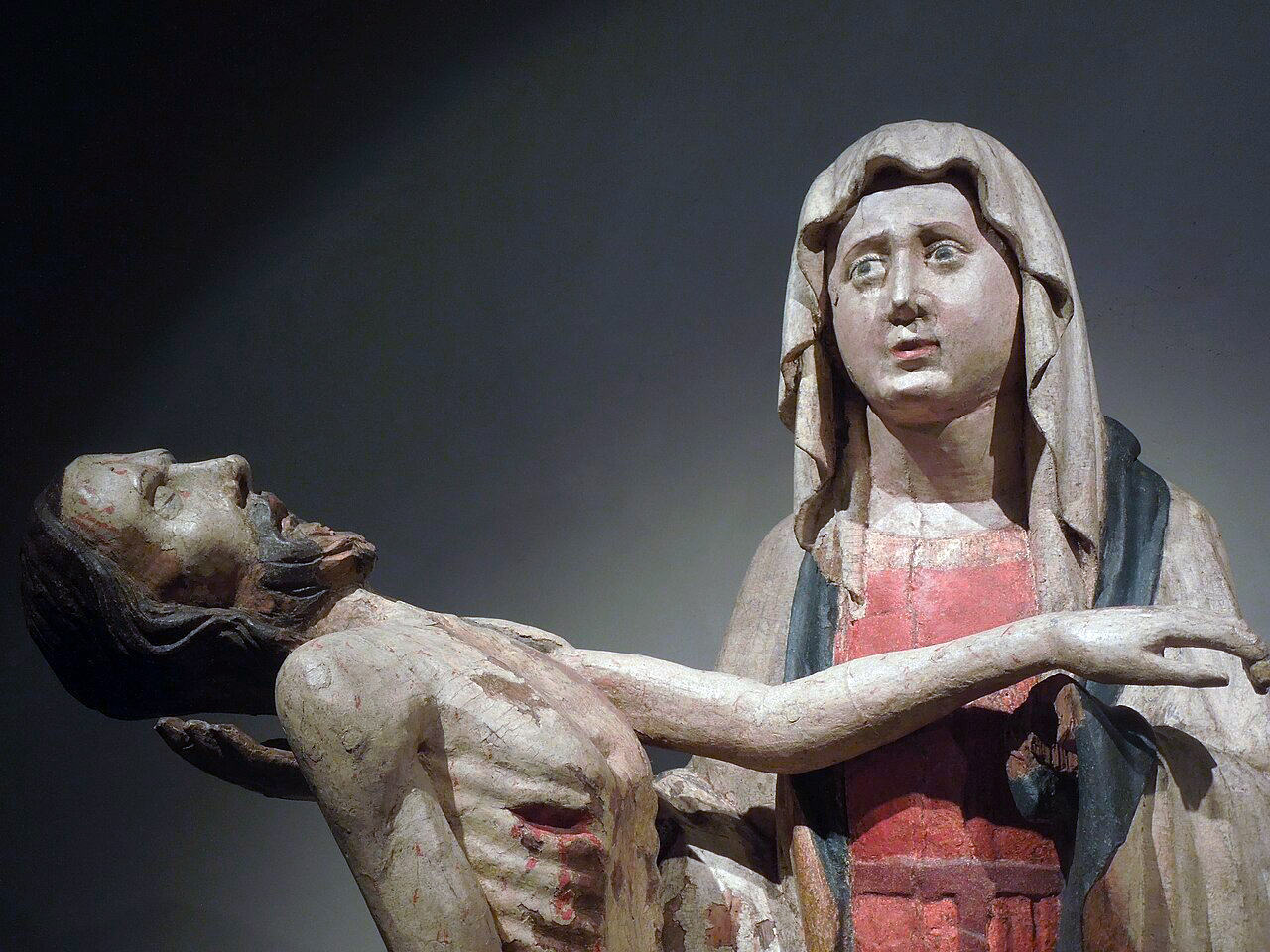
Fig. 1 – Detail of the Pietà of Lásenice, ca. 1400–1425, South Bohemia (National Gallery Prague). The proper left arm of the corpus articulated to allow the figure of Christ to be physically manipulated during Holy Week ceremonies and removed from the lap of the Virgin, enabling its secondary liturgical function as a Christus in sepulchro within a prepared grave.
The Venetian appetite for Northern realism was a direct byproduct of the city’s late 15th-century publishing expansion. As German expatriate printers transformed Venice into a global printing capital, their woodcut-heavy devotional texts primed the local market for the three-dimensional pathos of the Tedesco carvers. These presses churned out woodcut-illustrated devotional handbooks that guided laypeople through intense meditations on Christ’s Passion (fig. 2). The widespread circulation of these graphic, printed Northern images effectively primed the Venetian visual appetite for the three-dimensional, serialized wooden crucifixes that the Tedesco carvers were producing.[6]
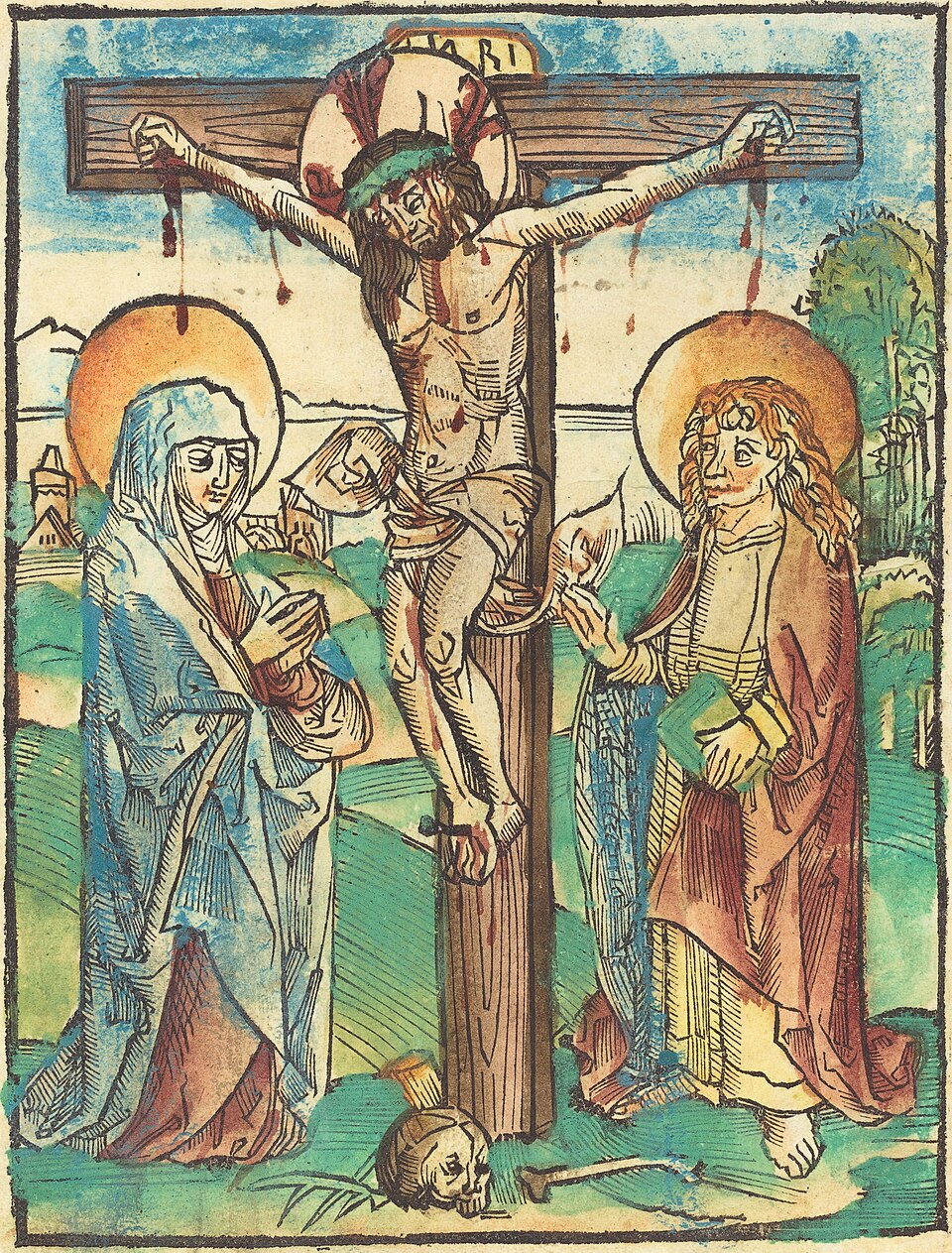
Fig. 2 – Hand colored woodcut print of Christ on the Cross, Germany, ca. 1500 (National Gallery of Art, DC. inv. 1943.3.484).
The physical epicenter of this cultural cross-pollination was the Fondaco dei Tedeschi (the warehouse of the Germans). Situated at the foot of the Rialto Bridge, the Fondaco dei Tedeschi functioned as a critical venue for direct engagement between the Venetian public and Northern artisans, serving as a commercial showroom rather than only a warehouse and hostel. It was here, amidst the exchange of silver, copper, and printed books, that the two-dimensional Northern woodcut was translated into the three-dimensional devotional carving, collapsing the distinction between commercial logistics and liturgical requirements.
The showroom was also an architecture of segregation. Much like the Jewish Ghetto instituted shortly after in 1516, the Fondaco was a heavily surveilled space of containment, designed by the patriciate to extract maximum economic benefit from a minority while simultaneously preventing the perceived moral decay of the local populace.[7] Yet, beyond the heavily monitored walls of the Fondaco, the German community was not an invisible, anonymous people-group. They actively wove themselves into the social and physical fabric of the city.[8] German artisans concentrated heavily in working-class parishes such as San Cassiano and San Polo, and they established powerful Scuole Nazionali (immigrant confraternities)—most notably the Confraternity of the Rosary at San Bartolomeo. By embedding themselves in these parish networks, the Oltramontani rooted the alpine migratory pipeline in actual, lived social structures rather than existing only as a single, abstract economic group.[9]
Looking more closely at the mechanics of these devotional works, a clear structural difference emerges between the domestic objects and their monumental counterparts. While the life-sized liturgical corpora were extensively hollowed out to manipulate their center of gravity and create a resonant acoustic soundbox, the smaller, non-articulated domestic crucifixes were typically carved from solid blocks of wood (or only minimally hollowed to prevent the sapwood from splitting).[10] This structural divergence suggests that the ‘acoustic engineering’ of the Tedesco workshops was probably less of a universal trademark, and more of a bespoke feature tailored specifically to the performative demands of the Mendicant liturgy. By viewing these solid domestic pieces as a control group, the contrast between public ‘performativity’ and private ‘devotion’ becomes starkly evident; the hollow cavity was not just a weight-saving measure, but a specialized acoustic technology reserved exclusively for the theatrical space of the church.
The artisans who brought this style to the lagoon were universally referred to in Venetian documents as Tedeschi (Germans). The term ‘Tedesco’ functioned as a fluid catch-all term for almost anyone arriving from the Alps to the North Sea. While many carvers did hail from major Southern German hubs like Nuremberg or Augsburg, the dramatic style they employed was heavily influenced by the broader artistic currents of the Lower Rhine and Strasbourg. In this context, “Tedesco” operated less as a strict marker of nationality and more as a highly successful immigrant brand identity.[11] If a Venetian confraternity wanted maximum pathos, they knew they needed to hire a Tedesco.
One must take care not to treat this immigrant community as a singular group, thereby oversimplifying the very identity we seek to recover. Behind the closed doors of the Fondaco, the Oltramontani were highly fractured, with intense regional rivalries defining their social and economic interactions. The administrative records of the Fondaco reveal a complex web of Bavarians, Carinthians, Swabians, and competing mercantile powerhouses from Nuremberg and Augsburg, each guarding their specific regional trade secrets. By understanding that “Tedesco” was merely a convenient, flattened label imposed by the Venetian state, we can begin to appreciate that a “Nuremberg style” carver and a “Lower Rhine” master might have experienced significant artistic and economic tensions within the walls of their shared, segregated enclave.[12] The physical evidence of the sculptures themselves supports this fractured reality. Modern conservators have discovered that specific, highly complex mechanical solutions—such as the internal ‘tenon and fork,’ a specialized wooden joint where a projecting peg is housed within a notched cavity and manipulated by hidden strings to allow the figure’s tongue to physically protrude and retract—were not universally shared among all Northern carvers. Rather, they appear to be proprietary technological designs utilized by specific workshops (such as that of the elusive “Giovanni Tedesco”).[13] This suggests that the internal cavities of these crucifixes housed guarded regional trade secrets, proving that “Tedesco” was an imposed, flattened label that masked a highly competitive network of rival schools. This flattening of identity was so pervasive that the Tedesco moniker may have even occasionally masked the identities of native Italian carvers due to scribal errors. Fifteenth-century notaries frequently used terms like Tedescho or Todisco to define Northern artists, but these words look incredibly similar in manuscript to terms indicating citizens of the Italian town of Ascoli Piceno (D’escoli or D’esculo). For instance, inscriptions by local Italian woodcarvers like Paolino d’Ascoli—who signed his name ‘Paulinus de Esculo’—and his master Johannis d’Esculo demonstrate how easily a native artist’s geographic origin could be misread or corrupted by later scribes into the word ‘Tedesco.’[14] Further, the commercial power of the ‘Tedesco’ brand actively encouraged native Italian workshops to intentionally emulate the German style. Recognizing that local confraternities prized the visceral, mechanical pathos of the Oltramontani, Italian carvers increasingly adopted this consonant expressive code to capture a share of the lucrative devotional market. In this highly competitive landscape, ‘Tedesco’ ceased to be strictly a geographic identifier and evolved into a highly desirable stylistic hallmark—one that native artisans purposefully replicated to satisfy the Venetian appetite for kinetic religious terror.[15]
To be truly rigorous, future technical analysis must address whether these proprietary secrets were strictly migratory or environmentally adaptive. If a carver moved from the Lower Rhine to the Veneto, did he simply import his “tenon and fork” mechanisms intact, or did the unique environmental pressures of Venice—specifically the aggressive saline humidity that quickly degraded traditional animal glues and rusted internal iron pins—force a redesign of these technological designs?[16] These corpora must therefore be evaluated not just as an imported design, but as a mechanism actively negotiating with the hostile atmosphere of the lagoon.
By closely protecting these proprietary mechanical solutions, the Oltramontani effectively created a “guild within a guild.” In the highly regulated Venetian guild system, woodcarvers (intagliatori) were legally separated from stone sculptors and were instead officially subsumed under the House Carpenters’ Guild (marangoni da case). This mandatory, restrictive affiliation with the carpenters inadvertently placed the German carvers in absolute institutional proximity to the shipwrights (marangoni da nave) of the Venetian Arsenale (fig. 3). This legal reality heavily reinforces the likelihood that acoustic, waterproofing, and structural engineering secrets were actively and fluidly shared across the city’s civic and nautical carpentry networks.[17] By limiting the transmission of their complex internal designs—such as the “tenon and fork”—to their own compatriots, the German carvers established an informal, secret hierarchy. This clandestine monopoly of knowledge allowed them to bypass the creative control and surveillance of the Venetian guild wardens, ensuring that the “magic” of the articulating corpus remained an exclusively Northern asset.
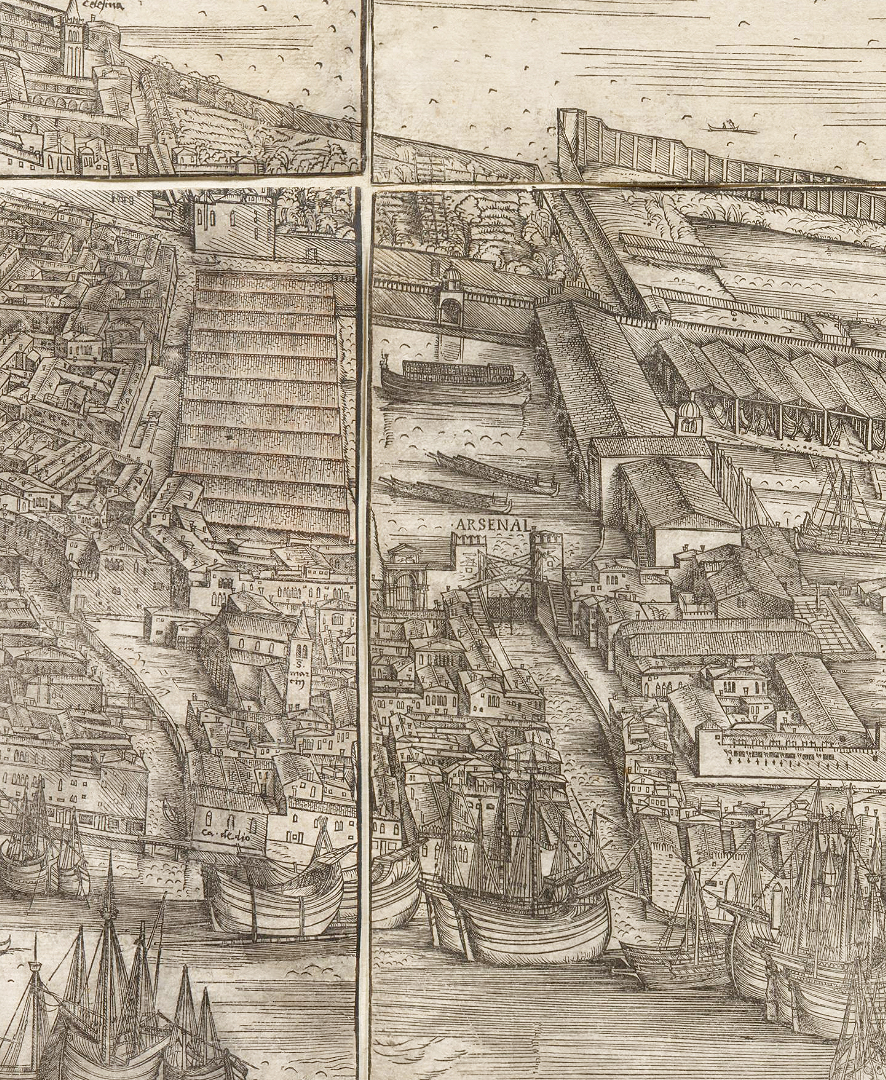
Fig. 3 – Detail of the Venetian Arsenale from the six sheet woodcut print View of Venice by Jacopo de’ Barbari, ca. 1498-1500, printed by Anton Kolb (Cleveland Museum of Art, inv. 1949.565).
While the carvers guarded their technical secrets from the guilds, they were deeply collaborative with the Mendicant Orders, who acted as the primary liturgical architects for these imported works, defining the specific theatrical roles the German crucifix would play within the Venetian sacred space. In Renaissance Venice, the Franciscans (at churches like the Frari and San Francesco della Vigna) and the Dominicans were the primary gatekeepers of popular piety. As part of their mission to bring religion to the laity, the Franciscans championed a theology of ‘Pity.’ This spiritual framework demanded that believers not just observe, but physically and viscerally empathize with the human suffering of Christ.
To provoke this intense emotional response, the friars orchestrated highly theatrical, paraliturgical performances during Holy Week, particularly the Depositio Crucis (the Deposition or taking down of Christ from the cross). During these rituals, articulated corpora were physically un-nailed from the cross and laid into the lap of an actor playing the Virgin Mary, or into a prepared sepulchre.[18] This Good Friday performance was a dramatically successful Venetian adaptation of a much broader Northern European tradition of ‘religious scenography.’ In their native regions, the Tedesco carvers were accustomed to supplying an entire ecosystem of ‘kinetic liturgy.’ They imported a sweeping culture of mechanical stagecraft that included the Palmesel (a wooden statue of Christ on a donkey pulled through town on Palm Sunday) and articulated Resurrected Christ figures designed to be physically hoisted up through round openings in church vaults on Ascension Day.[19]
While the visual gore of these German works was striking, wood offered an additional, often overlooked sensory dimension: sound. Unlike stone or marble, which are acoustically dead, hollowed-out wood is highly resonant. This acoustic potential was activated by the ritual of the scavigliazione—the literal, performative un-nailing of the corpus. During Good Friday laude performances, contemporary stage directions instructed actors playing Nicodemus to physically extract the iron nails from the wooden hands of the sculpture.[20] Because the articulated joints of the Tedesco corpora were engineered to drop limp the moment the nails were removed, the heavy wooden arms swinging downward would violently strike the hollow torso. In a quiet, stone-vaulted Venetian church, this audible “thud” would have provided a terrifyingly visceral “clatter of death,” a sensory shock that bronze or marble could never replicate.[21] Applying the methodology of sensory archaeology allows us to push this observation further into the realm of acoustic engineering. Stone-vaulted Venetian spaces, such as the cavernous nave of the Frari, possess highly specific, prolonged reverberation times. It is tempting to imagine the carver ‘tuning’ the torso of the crucifix to match the specific echo of a church like that of the Frari. By tuning the internal wooden cavity to the resonant frequency of the surrounding stone architecture, the carver functioned as an acoustic engineer, ensuring that the drop of the articulated arm would maximize the auditory terror of the congregation during the Good Friday liturgy.[22] [23]
This potentially deliberate manipulation of sound suggests an interesting technological crossover with another vital Venetian enterprise: the naval shipyards. The German carvers were operating in a city where the marangoni da nave (shipwrights) were masters of structural resonance. In the Arsenale, shipwrights deliberately built wooden hulls that had to “speak” or groan to the sailors to provide audible warnings of structural stress, shifting currents, or hidden leaks.[24] While direct archival testimonies detailing cross-trade engineering are understandably scarce—given the secretive nature of the guilds—the physical proximity of these artisans within the Arsenale suggests a possible technological crossover. The lack of extant documentation definitively linking individual woodcarvers to simultaneous naval and ecclesiastical commissions remains a primary evidentiary challenge. However, the mandatory affiliation of German carvers with the House Carpenters’ Guild placed these artisans in permanent institutional proximity to the Republic’s shipwrights. Given that these groups negotiated the same saline environment and shared the same state-controlled timber supply, the fluid exchange of waterproofing and acoustic technologies is a logical byproduct of their shared workspace, even if the specific paper trail remains obscured.
Given that the intagliatori possibly adapted waterproofing technologies (resins and oils) from the squeri (boatyards), it is equally possible they also borrowed this nautical concept of the ‘resonant hull.’ By treating the hollowed chest of the crucifix like the hull of a ship, the carvers could have ensured their sculptures functioned as highly tuned, audible instruments of the Passion, projecting the groans of the dying Christ into the nave. This acoustic engineering would have been equally vital when the crucifix was transported outside the church walls. During Venice’s frequent waterborne processions, sound travelled differently across the open lagoon than it did bouncing off stone vaults. The hollow torso acting as a maritime soundbox likely helped the ‘clatter of death’ carry across the water, reaching the crowds standing on the banks of the Grand Canal and solidifying the link between nautical engineering and liturgical performance.
Once deployed within the cavernous spaces of Venetian churches, these hidden mechanics transformed the wooden corpus from a static devotional object into a fully integrated acoustic and visual instrument.[25] The sheer, terrifying efficacy of this haptic illusion is perhaps best proven by the eventual backlash against it. By the 1520s, Protestant reformers such as Andreas Karlstadt and Martin Bucer targeted these animated wooden images in their iconoclast treatises.[26] To the reformers, there was something deeply irrational, tasteless, and dangerously idolatrous about the spectacle of believers abasing themselves before a piece of mechanically manipulated wood and pigment. The mechanical crucifix walked a perilous line between divine presence and deceptive automaton, making it a primary target for Reformation-era anxieties over material devotion.
This iconoclastic anxiety was not strictly a Protestant phenomenon; it eventually permeated internal Catholic policy as well. In the latter half of the sixteenth century, the Catholic Counter-Reformation began to view these highly theatrical, mechanical miracles with deep suspicion. The decrees of the Council of Trent (1545–1563) sought to purge the liturgy of what it deemed excessive or distracting paraliturgical stagecraft.[27] Consequently, the Catholic hierarchy gradually curtailed the dramatic Depositio rituals, effectively agreeing with their Protestant rivals that the animated wooden corpus walked too dangerously close to the realm of the deceptive automaton. This Catholic suspicion of mechanical realism was deeply grounded in historical precedent, as the very engineering used by the Mendicants to inspire orthodox piety had frequently been hijacked for extortion. During the popular ‘Bianchi’ devotional movement at the turn of the fifteenth century, authorities in Rome and Orvieto actively arrested charlatans who utilized hollowed-out crucifixes secretly rigged to ooze fake blood on command. The orthodox hierarchy was thus forced to police these objects not just for theological purity, but to prevent the staging of fraudulent miracles.[28] However, the Tedesco workshops proved remarkably resilient to this iconoclastic anxiety. As the kinetic, animated corpus became increasingly dangerous in the eyes of the Council of Trent, the German carvers shrewdly pivoted their serialized production toward highly realistic, but entirely static, figures—ensuring the long-term survival of their guild by satisfying the demand for visceral pathos without violating the new theological strictures. It is worth noting, however, that this Counter-Reformation skepticism toward theatrical automata did not eradicate the Catholic appetite for hyper-realism. While the kinetic, mechanical stagecraft of the Depositio faded from the liturgy, the Baroque period (post-1563) witnessed a resurgence of visceral, multi-media statuary in alternative devotional contexts, such as the static but intensely lifelike tableaux of the sacri monti in northern Italy and Spain. The Church did not reject realism; it simply demanded that the realism remain physically frozen, transferring the burden of ‘animation’ from the mechanical joints of the sculpture to the spiritual imagination of the beholder.[29]
While the role of these corpora in the indoor Depositio eventually faded under theological scrutiny, the unique structural engineering of these figures ensured their continued dominance in a different arena. Venetian ritual frequently migrated from the sanctuary into the city’s complex urban and aquatic landscape. This public deployment of wooden automata was aligned with an established Venetian civic precedent. During the highly popular Festa delle Marie, the Venetian state actively replaced live female participants with twelve life-sized, richly dressed wooden statues of Mary (the Marie di tòla or Marione). By the time the German carvers arrived, the Venetian public was already deeply socially conditioned to accept life-sized wooden surrogates as active, kinetic participants in their civic and aquatic rituals.[30]This ‘mobile liturgy’ required a degree of portability that the church’s static architecture could not provide, forcing processions to transition from paved campi to rocking peate (flatboats) and gondolas. In these maritime environments, the weight of traditional stone or bronze crucifixes became a logistical liability, threatening the stability of both the bearers and the vessel. The German woodcarver’s preference for lightweight maple or limewood was, therefore, a matter of nautical necessity. By extensively hollowing out the sculptures, the artisan did more than reduce the object’s weight; they engineered it specifically for nautical and urban stability. As recent X-ray conservation analyses reveal, carvers excavated deep, rectangular cavities running from the shoulder blades down to the hips. [31] This structural engineering effectively lowered the figure’s center of gravity, ensuring that the heavy crucifix remained upright and was significantly less likely to topple during a sudden halt on a crowded bridge or while navigating the unsteady currents of the lagoon.[32]
In a city defined by its recurring, catastrophic battles with the plague, this mobility allowed the Animated Tedesco to function as a ‘Plague-Time Actant.’ Confraternities like the Scuola di San Rocco were founded expressly to combat pestilence, relying on sacred intermediaries for survival.[33] During a crisis, deploying a kinetic Savior into the streets offered a radical form of crisis interactivity. The movement of the sculpture—such as a nodding head or an articulating arm—served as the mechanical hardware that permitted desperate negotiation, physically signaling to a traumatized city that their prayers for healing were being acknowledged by a God who could literally move to save them. This impression of a ‘Living Savior’ was further heightened by the polychromy of the wounds, which functioned as what Beate Fricke terms a ‘temporal paradox.’ In these German-Venetian corpora, the naturalistic depiction of fresh, liquid blood clashing with a body already exhibiting the rigid signs of rigor mortis actively worked against the illusion of a single, frozen historical moment.[34] The blood was engineered to appear perpetually wet and actively pulsing, transforming the wood from a static memorial into a continuously ‘alive’ mechanism of salvation (fig. 4).
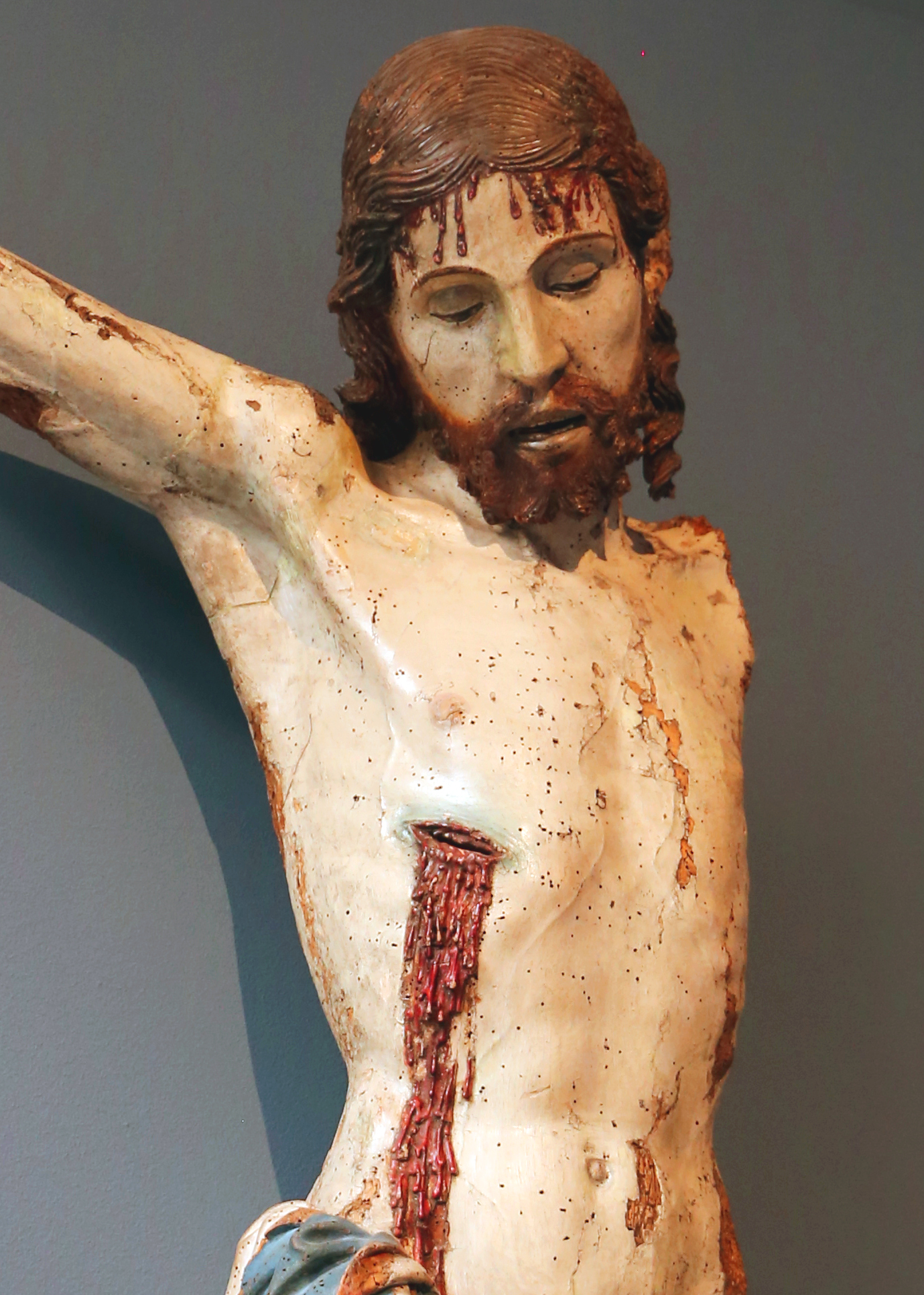
Fig. 4 – Detail of a polychrome wood corpus by Giovanni Tedescho, ca. 1460 (Bode Museum, inv. 7240).
The ambition to achieve maximum visceral pathos was not simply an aesthetic choice, but a requirement strictly enforced by local guild specializations. In Venice, woodcarvers (intagliatori) were legally bound to the House Carpenters’ Guild (Arte de marangoni de case), keeping them institutionally severed from the local painters’ guild. Across the Republic, as in much of Europe, guild regulations strictly delineated these spheres of competence, legally forbidding wood sculptors from painting their own figures, and vice versa. Therefore, the German woodcarver was strictly responsible for preparing the wooden substrate, while a highly specialized local painter was legally required to assume complete control over the final execution of the painted surface.[35]
When assessing these corpora, a critical comparative question arises: why did Venice rely so heavily on wood, when other Catholic regions—such as Spain or even Florence—developed highly successful traditions of using articulated wax, plaster, or terracotta for their hyper-realistic Depositio effigies? The answer lies in the comparative materiality of the lagoon. While pigmented wax and terracotta possessed comparable mimetic capabilities, they were poorly suited for the Venetian environment. Terracotta, being inherently heavy and brittle, was a disastrous medium to carry onto a rocking boat during a nautical procession. Conversely, wax and plaster effigies, while lightweight, were highly vulnerable to the aggressive, saline humidity of the lagoon climate, which caused plaster to crumble and wax to physically weep and melt over time.[36] The carved wooden crucifix was therefore the only technological solution capable of surviving this environment. As earlier noted, it is probable the migrant intagliatori adapted protective technologies directly from the nearby Arsenale and the city’s private boatyards, sealing their wooden corpora against dampness with the same heavy oils, resins, and varnishes utilized by Venetian shipbuilders to waterproof the Republic’s galleys. Therefore, the carved wooden crucifix was the only solution that could successfully marry the requirements of processional durability, nautical stability, and terrifying mimetic realism.[37]
This maritime material exchange extended to the very anatomy of the Savior. Conservators analyzing Tedesco-style crucifixes, such as the one in Porcía, discovered that the highly realistic, bulging veins on Christ’s body were not carved from wood, but were achieved by gluing actual hemp strings (cordini di canapa) directly to the wooden surface before applying gesso and paint.[38] Given that the Venetian Arsenale housed the Tana—one of the most famous hemp rope factories in the world for ship rigging—the use of nautical hemp to engineer the cardiovascular system of the corpus provides another link between the Republic’s maritime supply chains and the anatomical realism of the Oltramontani workshops.
To achieve this precise balance of strength and lightness, Northern carvers traditionally relied on limewood (linden). Limewood was the undisputed staple of the Tedesco sculptural aesthetic; its uniform, diffuse-porous cellular structure allowed it to be hollowed out extensively without warping or splitting.[39] However, when these German masters migrated south, they were forced to adapt their techniques to the botanical realities of the Italian peninsula.
One particularly clear case of this material adaptation is the Cristo Parlante (Talking Christ) at the Franciscan church of San Francesco della Vigna (fig. 5). A comprehensive restoration of the sculpture between 2016 and 2020 revealed that the German-style master did not use limewood, but rather dense Italian maple wood.[40] The artist deliberately utilized a large, sturdy maple trunk because it possessed the density required to support a massive, hollowed-out internal mechanical cavity, while remaining light enough to accommodate the demands of Venice’s mobile liturgy. The object provides material evidence of the migrant artisan’s ability to manipulate local Italian resources to achieve a Northern mechanical goal.
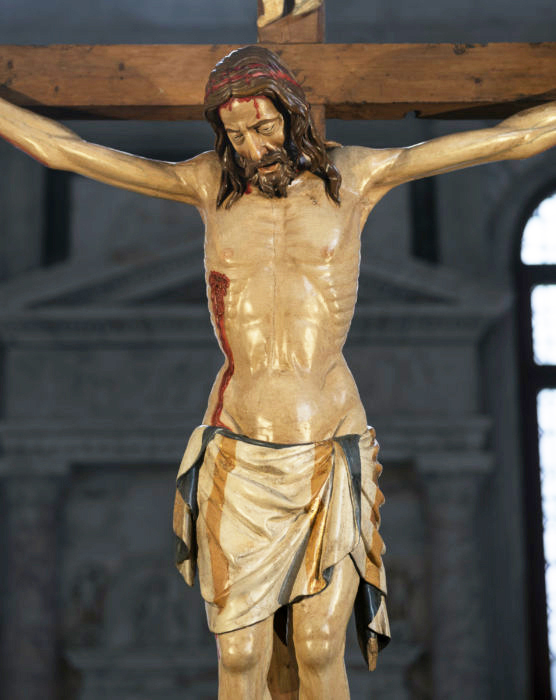
Fig. 5 – Polychromed maple wood corpus (formerly attributed to Antonio Bonvicino), Cristo Parlante (Talking Christ), 15th century (Church of San Francesco della Vigna, Venice).
This reliance on alternative local resources was necessitated by a stringent political reality. The Venetian Senate’s management of the mainland forests (Boschi del Doge) transformed the mainland landscape into a classified military asset, effectively placing religious art in a state of permanent resource competition with the Republic’s navy. Because the state reserved prime oak (rovere) and larch for galley construction at the Arsenale, the selection of raw materials for the Tedesco workshop was a precarious act of legal navigation. The penalties for illicitly harvesting naval-grade timber were absolute, ranging from ruinous fines to mandatory service in the galleys—a reality that forced German carvers to bypass state monopolies by identifying secondary Italian wood species.[41] Within this restrictive environment, the choice of dense Italian maple positions the Cristo Parlante at the fascinating intersection of material scarcity and technical adaptation. This shift aligned perfectly with the Renaissance practice of ‘chiromancy’—a term the physician Paracelsus applied to the artisan’s capacity for reading the internal character and hidden capabilities of wood through its grain and density.[42] In this regard, the German master’s engagement with local maple was a deliberate technical negotiation with a foreign landscape, allowing him to unlock the material properties required for a functioning liturgical apparatus without triggering the Republic’s protectionist wrath.
This material reading of the timber presents a theological parallel to the crucifix’s ultimate liturgical function. Just as the Oltramontano engineer performed ‘chiromancy’ on the raw timber—reading the internal tensions and radial ‘starshake’ of the grain to extract its hidden structural capabilities without breaking it—the Mendicant friar used the finished, kinetic crucifix to perform chiromancy on the Venetian congregation.[43] The mechanical drop of the arm and the smell of the incense were the precise psychological tools used to read, manipulate, and crack open the hardened hearts of the faithful, successfully exposing their inner capacity for divine pity.
The hollow cavity inside the Cristo Parlante housed an array of ‘theological special effects’ designed to further blur the line between the wooden object and the living God. During a recent restoration, conservators discovered a fragment of string inside the head that was used to manipulate a movable wooden tongue to simulate speech. Scorch marks were also found inside the head and mouth, proving that the friars burned incense within the skull.[44] Moreover, this mechanism suggests a capacity for interactive dialogue that extended beyond the Good Friday Depositio. The control rope for the tongue, deliberately positioned at the back of the head, allowed a hidden friar to manipulate the mechanism imperceptibly during normal periods of the liturgical year. Thus, the corpus functioned not only as a once-a-year theatrical prop, but as a year-round, interactive medium capable of enacting a direct, miraculous dialogue between the living God and the individual worshipper.[45] This engineering of visceral realism is paralleled by the comparable Montesanto Crucifix from Todi. Like the Cristo Parlante, the Todi corpus was equipped with a movable tongue mechanism (fig. 6), but it escalated these ‘theological special effects’ even further: the figure featured an internal system specifically designed to allow real blood—primarily animal blood—to flow directly from its wounds during religious processions. The carver even added imaginative, wince-inducing details to heighten the empathetic response of the viewer, such as a detached thorn from the crown physically piercing Christ’s left ear.[46] The hollow internal cavities of these highly engineered figures occasionally served a purpose far more profound than acoustic resonance or fluid pipelines: they functioned as literal tabernacles. In the wake of the 1215 dogma of Transubstantiation, which placed intense emphasis on the physical bodily manifestation of Christ, some animated sculptures were engineered with hidden compartments designed to house the consecrated Host itself.[47] By placing the Eucharist directly inside the wooden chest, the sculpture was elevated from a theatrical prop into a repositorium—physically merging the mechanical automaton with the Real Presence of the divine.
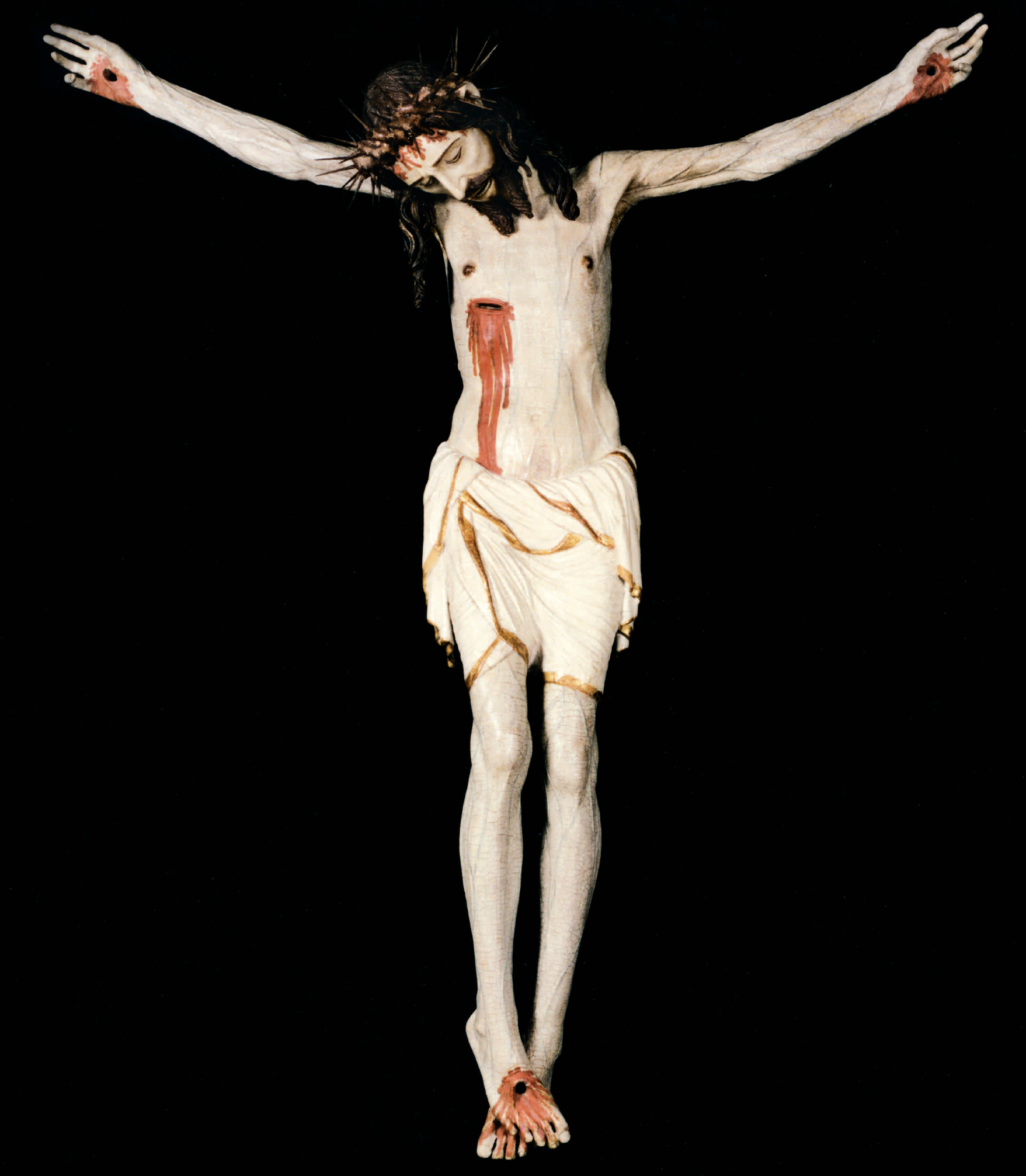
Fig. 6 – Unidentified artist, Montesanto Crucifix, ca. 1480. Polychromed poplar wood, 150 x 160 cm. (Pinacoteca Comunale, Todi).
The sensory archaeology of this mechanism goes beyond superficial stagecraft by introducing a critical, yet frequently overlooked, dimension of the Mendicant liturgical experience: the olfactory atmosphere. That this was a widespread practice is corroborated by other surviving artifacts. During a recent cleaning of the internal cavity of the Norcia corpus in Umbria, attributed to Giovanni Tedesco, conservators noted that a distinct, pungent odor of incense still emanated from the wood centuries later (fig. 7). In the dim, tightly packed nave of a medieval church, the sudden smell of specific burning resins and scorched wood billowing from the mouth of the figure would have assaulted the congregation’s senses. This ‘incense breath’ served as an immediate, unmistakable olfactory trigger, alerting the faithful to the exact ‘moment of expiration’ just as vivid as the acoustic ‘clatter of death.’ This unique perspective allows us to reframe the olfactory dimension as a primary sensory cue of the mechanical performance. In the dim, flickering light of a cavernous, crowded medieval church, visual cues like a moving tongue or billowing smoke might have been completely obscured from the parishioners standing at the back of the nave. Therefore, the sharp, sudden scent of burning resins functioned as the ultimate, invisible confirmation of the miracle. It assured the entire congregation that the Spiritus had successfully ‘exited’ the corpus even when they could not physically see it, making the olfactory trigger as structurally vital to the performance as the wooden joints themselves.[48] This mechanical exhalation of fragrant smoke was a literal enactment of scripture, functioning as a physical manifestation of Psalm 141:2: ‘Let my prayer be directed as incense in thy sight’. By synthesizing material science and stagecraft, the Mendicant friars and their Oltramontani collaborators repurposed the wooden sculpture as an interactive, theological agent. The script for these miraculous, sensory phenomena was often provided by texts like the Legenda Aurea (Golden Legend), which conditioned the Venetian faithful to expect, and believe in, images that could bleed, speak, and breathe.[49] By synthesizing material science and stagecraft the Mendicant friars and their Oltramontani collaborators repurposed the wooden sculpture as an interactive mediator of the Passion ritual.
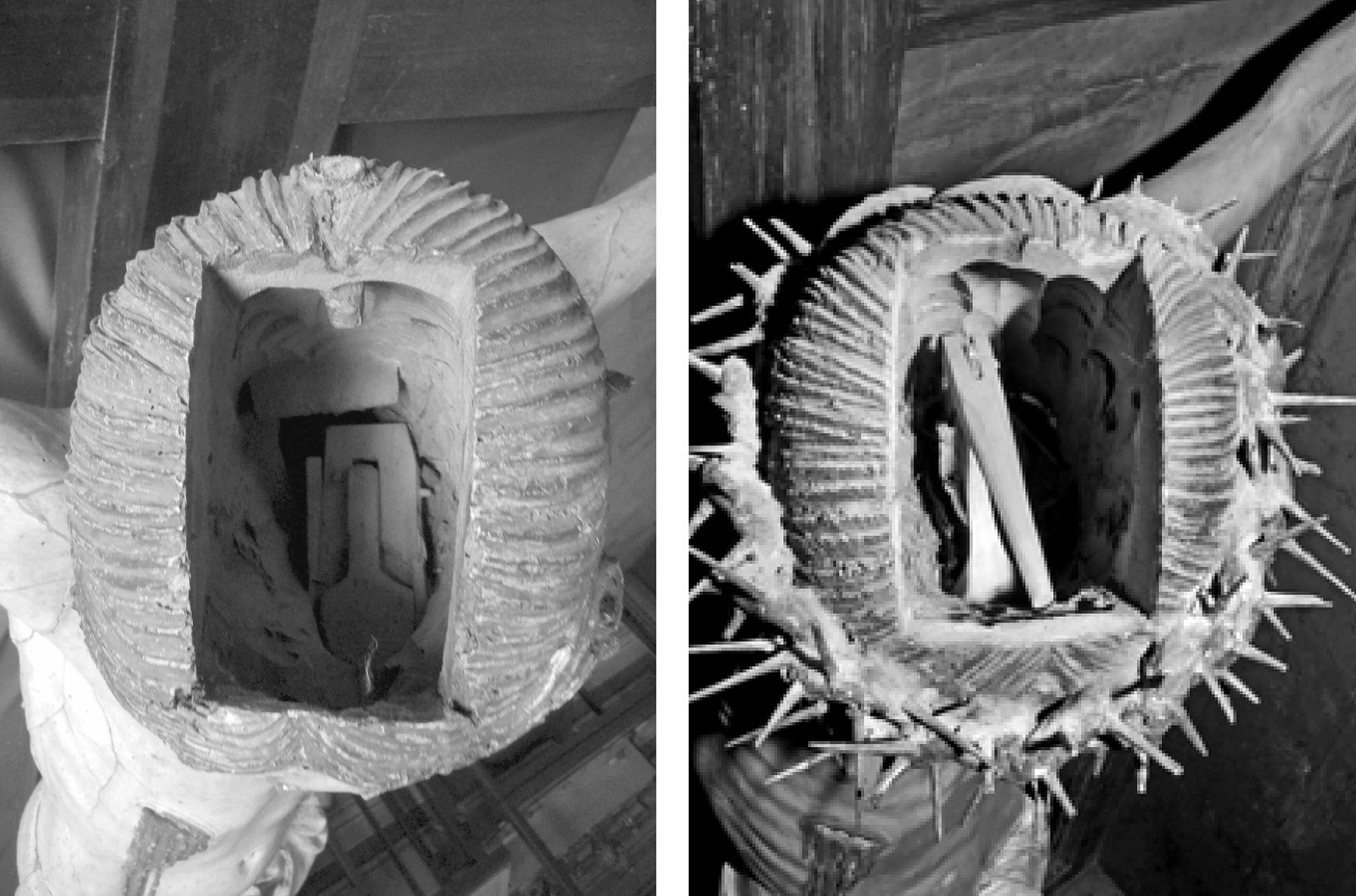
Fig. 7 – Detail of the head cavities showing the internal mechanisms for a moveable tongue. Left: Unidentified artist (Umbrian?), Montesanto Crucifix, ca. 1480. Polychromed poplar wood (Pinacoteca Comunale, Todi; Photo: Zuzanna Sarnecka). Right: Giovanni Tedesco, Crucifix, second half of the 15th century. Polychromed wood (Chiesa di Sant’Erminio, Perugia, originally from Santa Maria di Monteluce; Photo: Sandro Bellu).
Recent scholarship demands these interactive mechanisms be categorized by their specific ritual function and the factional identity of their patrons. As Carla Bino has demonstrated, while corpora with movable arms were handled passively as corpses during the Depositio, the ‘Talking Christ’ (Cristo Parlante) mechanisms—such as the movable tongue—were designed to represent Christ still alive and in agony. These speaking crucifixes were deployed specifically during sermoni semi-drammatici (semi-dramatic sermons), allowing the preaching friar to manipulate the figure to ‘act’ in the first person and create a living dialogue with the assembly. This mechanical division mapped directly onto the functional, liturgical rivalries of the Franciscan order itself. The strict Observant Franciscans pioneered a new form of fiery Lenten preaching centered on the ‘Seven Last Words’ of Christ; therefore, they functionally required the Cristo Parlante with a movable tongue to act as a living, speaking co-preacher during their sermons. In contrast, the Conventual Franciscans remained dedicated to the traditional, processional liturgy of the burial; their rituals required a body that could be un-nailed and physically manipulated, making crucifixes with movable arms an absolute necessity for the Depositio. Thus, the internal mechanical engineering of these statues was dictated strictly by competing functional liturgies—preaching versus procession—rather than simple aesthetic preference.[50]
Yet, this performative agency was fundamentally dependent on the vast economic and environmental systems that supported its creation. When the corpus is understood as an active participant in a broader network of relations, it is revealed as much more than a static icon.[51] The dense Italian maple, the Piave river currents that delivered the timber, the concealed iron hardware, the burning incense, and the friar’s emotive performance functioned as interdependent components of a single, unified system. Within this framework, the spiritual efficacy of the ‘Animated Tedesco’ was tethered to its mechanical reliability; the perceived miracle was a fragile material output that would immediately dissolve should a hinge seize, a string snap, or the wood substrate fail.
To saturate the Venetian market so completely—supplying everything from life-sized processional corpora to intimate domestic carvings—required more than just legal maneuvering; it demanded a significant and reliable supply of raw materials. This brings us to the physical origins of these corpora and the logistical lifeline that made their production possible: the alpine timber trade before it was a product of the Venetian workshop.[52] Lacking local forests, the Republic relied on a logistical pipeline that extended from the Belluno and Cadore regions down the Piave River. This industrial conduit saw massive logs lashed into zattere (rafts) and piloted by specialized zattieri, creating a physical link between the source material and the German carvers who followed these same trade routes into the lagoon.[53] Future researchers need not rely solely on biological dendrochronology; there is also an untapped archaeological avenue. During this period, the zattieri who floated timber down the Piave and Brenta rivers routinely carved proprietary shipping marks (segni di casa) into the logs using a gouge or axe before sending them downriver. By carefully examining the unpolychromed backs or the raw interiors of the hollowed cavities of these crucifixes, conservators may be able to locate these surviving Alpine timber trademarks—providing possible proof that the German carvers were sourcing their sacred substrate directly from the Republic’s commercial nautical pipelines.[54]
This logistical reality suggests that the migration of Northern artists was in deliberate alignment with the timber industry. Oltramontani carvers followed the same supply chain that transported their essential raw materials, moving from the alpine forests to the Venetian workshops as part of a single economic flow. The same mercantile networks that controlled the timber rights in the Dolomites and the Alps were often the ones sponsoring the movement of these craftsmen into the lagoon. In this light, the arrival of the German woodcarver in Venice was a logical extension of the lumber trade.
To move this logistical argument from the realm of the ‘highly probable’ to the ‘scientifically verified’, this study proposes the future application of dendro-forensics. Just as modern dendrochronology (tree-ring dating) has recently been utilized to map the timber supply routes of the domes of St. Anthony in Padua, similar forensic analysis could be applied to the wooden crucifixes of Venice.[55] If the tree rings of the Cristo Parlante can be scientifically matched to the specific growth patterns of the fifteenth-century Belluno forests, the “Piave Artery” theory ceases to be only a historical conjecture, providing definitive, biological proof that the Oltramontani migration was intrinsically linked to the alpine timber trade.
Upon arriving at the Rialto, however, these migrant artisans faced a formidable legal barrier. In 1445, the Venetian Senate passed a strict import ban specifically targeting wooden figures.[56] By law, foreign artists were forbidden from freely selling their work unless they integrated into the previously noted House Carpenters’ Guild (Arte de marangoni de case). On the surface, this protectionist legislation suggests a hostile environment for the Oltramontani.[57] However, while the Venetian Senate’s 1445 import ban on wooden figures appears restrictive on the surface, in practice, it functioned as a “paper tiger” that the Republic’s authorities could bypass whenever it encountered a foreign skill that was undeniably superior or highly lucrative. The Venetian state was notably pragmatic, frequently granting Grazie—special legal exemptions or “graces”—to foreign craftsmen who could prove their trade was “useful and necessary” to the state’s interests. Rather than forced into the shadows by protectionist laws, highly skilled German carvers were often absorbed through this process of selective naturalization, effectively permitting contraband works to pass when they suited the Republic’s broader economic or artistic goals.[58]
However, characterizing the 1445 ban as a “paper tiger” requires significant qualification. The legislation remained on the books for over a century precisely because it allowed the state to maintain overarching control; within this framework, the Grazie were not the rule, but rather carefully calculated exceptions. By weaponizing these exemptions, Venice aggressively filtered the labor market—shutting out a flood of cheap, low-quality imports while selectively granting entry to the high-end, hyper-realistic carving skills of the Oltramontani that local artisans could not replicate. Consequently, the 1445 import ban was not a failure of law, but rather a deliberate ‘market filtering’ tool; its true power lay in its selectivity, allowing the state to protect local guild monopolies from cheap imports while strategically acquiring superior foreign engineering skills.[59]
In fact, the legal framework for these exemptions had been established long before the 1445 ban. As early as 1394, a registry from the Senato Misti (reg. 43, f. 33) cleverly justified the granting of state privileges to foreign workers with the Latin clause quod sit utile et necessarium (‘that it be useful and necessary’).[60] Following the 1445 ban, German carvers actively seized upon this precedent, utilizing carefully crafted petitions to prove that their mechanical carving techniques were technologically indispensable and could not be replicated by local Venetian guilds. By arguing for their absolute mechanical superiority, they transformed a generic labor exemption into a form of early intellectual property defense.[61] Furthermore, migrant artisans actively co-opted the civic myths that surrounded their works. An Oltramontano carver would likely have been pleased to let his newly carved crucifix be branded by a parish as an ancient acheiropoieta or a miraculous relic. Such divine attribution effectively washed the object of its earthly, foreign manufacture, serving as a mutually beneficial legal shield that protected both the parish’s prestige and the immigrant’s livelihood from the aggressive scrutiny of the local guilds.
The commercial success of these Tedeschi workshops relied on a specific sector of the Venetian market, primarily comprised of the Mendicant orders and the middling classes of the Scuole Piccole. While the wealthy, state-aligned confraternities (the Scuole Grandi) commanded the vast resources required to commission monumental marble and bronze, the primary consumers of the ‘German House’ style were the Scuole Piccole.[62] The absolute absence of these mechanical crucifixes from the state church of San Marco further underscores their specific demographic appeal. While the parishes and the Scuole Piccole embraced this visceral, interactive piety, the Venetian government rejected it for its own basilica. The unique, state-controlled liturgy of San Marco (the patriarchino) was strictly designed to emphasize the orderly, hierarchical worldly and spiritual power of the Doge. The chaotic, highly emotional, bottom-up devotion generated by a bleeding, articulating wooden automaton fundamentally threatened this choreographed political serenity, ensuring that the Cristo Parlante-type corpus remained a strictly popular, parochial phenomenon rather than a tool of state theology.[63] These smaller, trade-based confraternities—often made up of working-class artisans and immigrants themselves—desired the maximum emotional pathos for the minimum price. The serialized, highly emotive production of the German woodcarving workshops was the only enterprise that could deliver this specific, value proposition at the accessible price point of wood.
To satisfy this market, the Tedesco carvers acted as cross-cultural brokers, translating the visceral Northern pathos into a visual language that the Venetian Scuole Piccole could legally and culturally digest.[64] But why did the Scuole Piccole favor these German workshops? The answer lies in the micro-economics of the ‘price of Pathos.’ By placing the smaller Scuola at the center of its own social web, we can see how they utilized these highly emotive wooden corpora as a form of calculated spiritual investment. They actively competed for prestige against the wealthy Scuole Grandi (who monopolized bespoke marble and bronze) by investing in the psychological shock-value of the Tedesco crucifix.[65]
The overwhelming efficacy of these sensory triggers did more than just captivate the faithful; it generated an intense, city-wide demand. To satisfy the appetite of the Venetian parishes and confraternities for these highly engineered spectacles, the migrant carvers had to navigate a complex—and often legally hostile—socioeconomic landscape. Attempting to reconstruct the precise patronage networks of these confraternities is not without its methodological limitations. Historians caution that the loss of even ten percent of historical data can dramatically skew the understanding of structural ties. In the case of the Scuole Piccole, day-to-day archival records are notoriously poorly preserved; in fact, there survives not a single direct contract between a Scuola Piccola and a sculptor from this period.[66] Consequently, researchers must rely on natural, fragmentary samples. By reading across guild capitolari, proxy documents, and the surviving physical objects themselves, we can successfully map the structural economic logic of this patronage even in the absence of direct contracts. Wood was significantly inexpensive not simply because the raw material was abundant, but because the Tedesco workshops employed highly efficient, serialized production methods—essentially early assembly lines—that drastically undercut the slow, labor-intensive work of Italian stone carvers. When compared to the other highly realistic medium of the period—polychromed terracotta—wood offered unparalleled industrial efficiency. Firing life-sized terracotta figures required significant expenditures and a multi-month process of slow drying, accompanied by notoriously high failure rates where entire sculptures would explode in the kiln.[67] Woodcarving bypassed this unpredictable bottleneck entirely. By utilizing a serialized approach, the German workshops guaranteed the Scuole Piccole a rapid, reliable return on their devotional investment without the financial risk of kiln failure.
While one might argue that the highly realistic terracotta traditions of Northern Italy—such as the earlier noted spectacular, life-sized Lamentation groups by Mazzoni—offered a viable alternative to wood. This comparison overlooks the absolute necessity of articulation. While terracotta was exceptionally effective for static, mimetic displays, its inherent weight and brittleness disqualified it entirely from being used as a mechanical puppet. Heavy terracotta arms could not be hollowed out and affixed to iron hinges without shattering under their own weight during a performance.[68] Therefore, wood retained an absolute, uncontested monopoly on the ‘mobile liturgy.’ When even hollowed-out wood proved too heavy or expensive for certain confraternities, the pragmatic engineering of the German workshops adapted again. Documented masters like Giovanni Tedesco serially produced figures of the Crucified Christ entirely out of papier-mâché (cartapesta or a pesto) specifically for religious plays. By pivoting to this alternative medium, the Oltramontani were able to provide the ultimate lightweight, serialized theatrical prop for the civic stage without sacrificing their dramatic aesthetic.[69]
Beyond these dynamic processional spectacles, the technical supremacy of the Northern artisans quickly translated into a broader commercial dominance. Perhaps the clearest evidence of this serialized economy is observed in the workshop activity of Antonio Bonvicino, arguably the preeminent sculptor of the Dead Christ in early fifteenth-century Venice.[70] Operating a highly specialized shop, Bonvicino established a successful, static “Bonvicino-type” model (fig. 8). He and his assistants produced a quantity of closely linked replicas of this corpus-model for distribution across the Veneto. These specifically included commissions for churches in Mestre (San Carlo Borromeo, San Giuseppe, and San Marco), Treviso (Santa Croce and San Nicolò), Vicenza (Cathedral of the SS. Annunziata), as well as an example formerly in the Lanz collection in Amsterdam. Several additional variations of this model continue to surface on the private art market today, attesting to the unprecedented volume of the workshop’s output.[71]
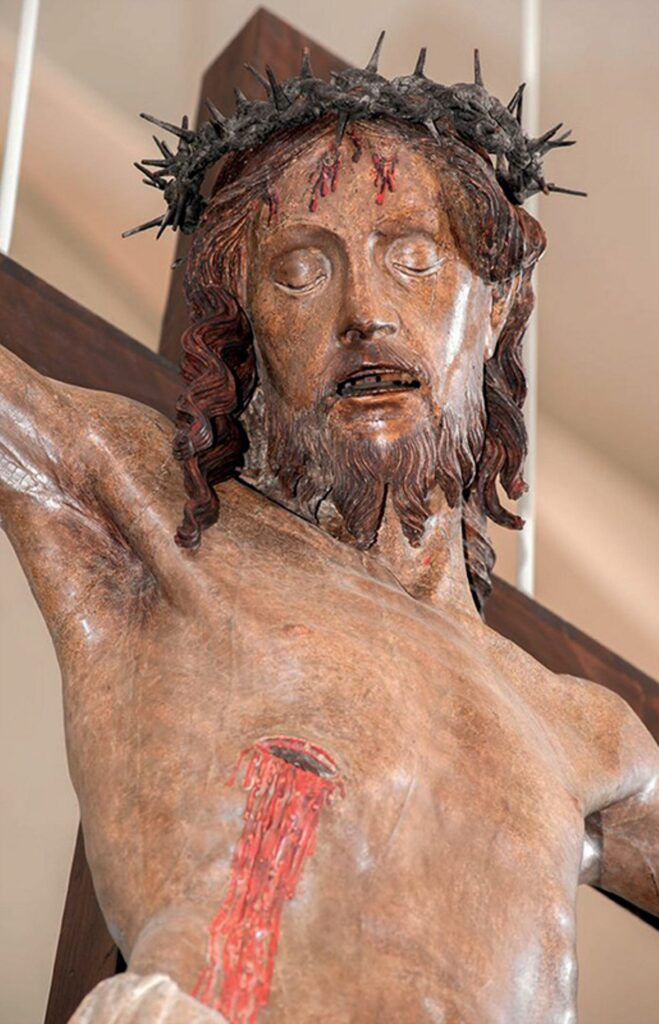
Fig. 8 – Giovanni Tedesco, Crucified Christ, 1494. Polychromed lime wood. Chiesa di Santa Maria Argentea, Norcia.
This lucrative, serialized approach established a commercial blueprint for the next generation of German carvers. In the second half of the fifteenth century, this phenomenon of serial production can be seen in the emergence of the “Leonardo Tedesco-type”—exemplified by Leonardo Tedesco’s 1491 crucifix for San Giovanni in Bragora (fig. 9).[72] This later aesthetic generated its own network of standardized corpora, with stylistic copies distributed to regional parishes such as Torcello (Santa Maria Assunta), Pellestrina (Ognissanti), and the Basilica Eufrasiana in Parenzo.
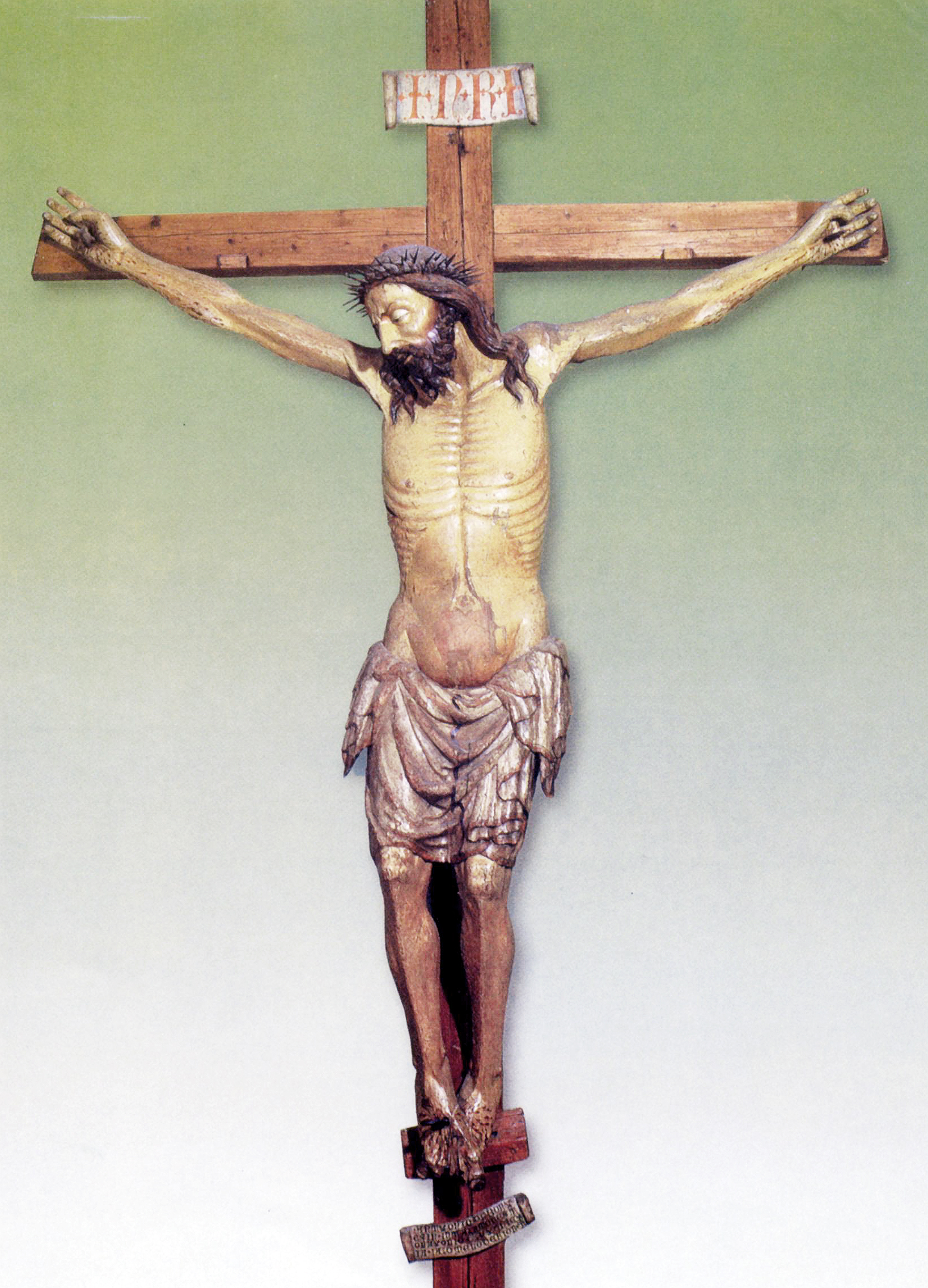
Fig. 9 – Antonio Bonvicino (woodcarver) and Jacobello del Fiore (painter), the Casteldimezzo Crucified Christ, ca. 1415. Polychromed limewood, 194 x 176 cm (Parish church of Santi Apollinare e Cristoforo, Casteldimezzo).
This appetite for Northern pathos was not restricted to the public sphere of the parish church. The Devotio Moderna strongly emphasized private, internalized meditation, prompting a robust parallel market for smaller, non-articulated German-style crucifixes designed specifically for domestic interiors and private cells (fig. 10). By purchasing these scaled-down works, Venetian laypeople brought the visceral “brand identity” of the Oltramontani directly into the home, ensuring that the graphic aesthetic of the North permeated every level of Venetian spiritual life, from the civic procession to the private bedchamber.[73] This domestic market was heavily driven by a gendered audience. The intense, affective piety associated with the Northern aesthetic was specifically marketed toward female empathy and the devotional practices of the matronae and cloistered nuns, making female spiritual consumers a major economic driver for the German woodcarving workshops.
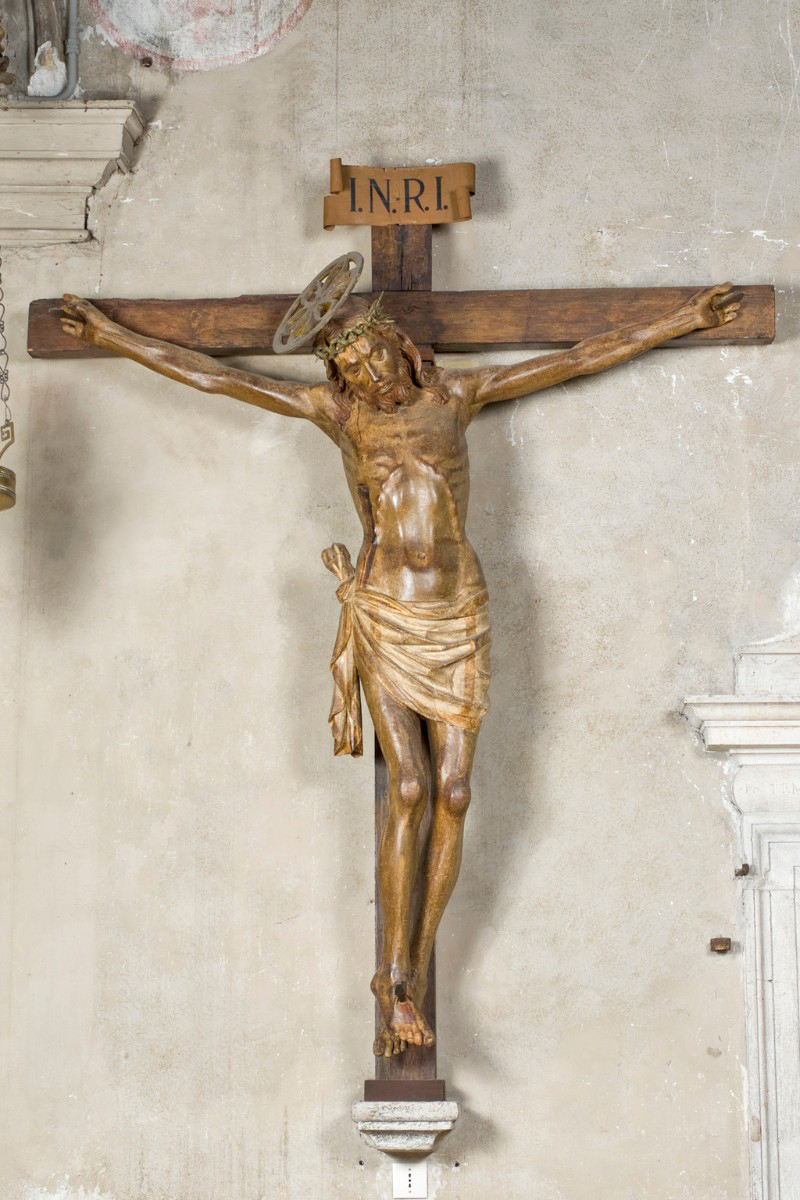
Fig. 10 – Leonardo Tedesco (woodcarver) and Leonardo Boldrini (painter), Crucified Christ, 1491. Polychromed wood, 170 cm. (Church of San Giovanni in Bragora, Venice).
One might also consider how the use of these domestic objects changed depending on who was using them, particularly within the prayer lives of Venetian women. The Mendicant theology of “Pity” and the Devotio Moderna were frequently marketed toward this aforenoted female empathy, encouraging women to form an emotional bond with the suffering Christ. For the Venetian matronae engaged in private devotion, or for nuns within the cloister, the small, unvarnished wooden crucifix served as a primary medium for mystical union.[74] However, for nuns and female devotees within enclosed religious orders, the hyper-realistic and fully articulated crucifixes took on an even more profound functional role. Rather than functioning simply as passive focal points, these life-sized kinetic sculptures operated as an active medium through which the grace of God descends. Interacting with the terrifying, mimetic realism of the Oltramontani carvings allowed these women to physically embrace the Savior, providing an essential, tactile step in achieving the intense, empathetic visualization required for the mystic experience of unio (mystical union).[75] By interacting with these tactile objects, women could personally reenact the compassion of the Virgin Mary, transforming the domestic space or the convent cell into an intimate theatre of the Passion.[76]
Beyond the crucifix, nuns and female tertiaries frequently utilized fully articulated ‘holy dolls’ of the Infant Jesus—complete with jointed limbs, cribs, and rich wardrobes—as intense devotional aids. Mystics such as Margaretha Ebner and Caterina de’ Ricci physically manipulated these wooden dolls: dressing them, rocking them, kissing them, and even attempting to suckle them. This intense physical manipulation of the wooden joints acted as a psychological trigger, inducing ecstasies where the lifeless sculpture transformed into a living baby, allowing the nuns to experience Imitatio Mariae (imitating Mary) or even mystical pregnancy and marriage. Whether it was a Venetian battuto un-nailing the adult Christ in the nave, or a cloistered nun swaddling a wooden Infant Jesus in her cell, the physical manipulation of the carved wooden body was the required, tactile bridge to achieving a direct, unmediated union with God.[77]
Even without internal moving mechanisms, the construction of these figures relied on the exact same engineering principles as their articulated counterparts: arms were carved separately, attached with iron nails, and their seams were masked and reinforced with linen. This serialized model was so commercially dominant that it spawned a generation of lesser imitators, ensuring that the Northern schema of the Dead Christ saturated everyday Venetian devotion long after the Good Friday processions had ended.[78]
However, whether a crucifix was a highly engineered, animated mechanism or a static, serialized model, the raw, earthly carpentry of the Oltramontani required a thoughtful physical concealment to achieve its terrifying realism. This cross-cultural collaboration to achieve maximum visceral pathos was not only an aesthetic choice, but a requirement strictly enforced by local guild specializations. For example, the Perugian guild for wood and stone masters (Matricola dell’Arte dei maestri di pietra e legname di Perugia) did not even mention the application of polychromy in its statutes. Therefore, the woodcarver was strictly responsible for preparing the wooden substrate, while a highly specialized local painter was legally required to assume complete control over the final execution of the painted surface.[79] This hierarchy of media was not just theoretical, but strictly economic. The financial valuation of the surface polychromy frequently exceeded the value of the structural carving itself. Surviving accounts demonstrate that the specialized painter generally received significantly more pay than the master who physically carved the wooden substrate—providing economic evidence that patrons prized the painted ‘surface illusion’ over the hidden mechanical engineering.[80]
The collaboration between intagliatore and pittore was a requirement of mechanical engineering as much as guild compliance. For the articulated corpus to perform effectively during the Depositio rites, its articulated shoulder joints and iron hinges required total visual concealment. This was achieved through incammottatura—the application of glue-soaked linen, leather, or parchment over the wooden substrate.[81] Functioning as the ‘hardware casing’ of the fifteenth century, this layer bridged the mechanical gaps before the pittore applied the gesso and the visceral, ‘Venetian Red’ polychromy. More than a superficial masking agent, the incammottatura facilitated a terrifying ‘haptic illusion’; as the arms were lowered, the membrane would literally wrinkle, stretch, and bunch.[82] This engineered mimesis caused the wood to behave like the folding skin of a human corpse, successfully transforming a German mechanical carving into a primary instrument of religious terror and pity. This sophisticated engineering reflects a broader Northern European obsession with kinetic realism that these migrant carvers brought with them to the lagoon. Comparable Central European corpora from the period reveal that Northern artisans were constantly experimenting with multi-material engineering—such as utilizing felt-filled joints to conceal internal leather-cord reinforcements—specifically to maximize lifelike movement without ever exposing the underlying mechanics.[83]
The seamless incammottatura and the visceral realism of the Tedesco carving style succeeded almost too well, provoking such intense religious fervor that these objects quickly became the centers of localized miraculous cults. However, the subsequent erasure of the immigrant artist was not the work of the singular Venetian state. Rather, this overwriting of origins was driven by specific, often competing, agents within the city who manipulated the art for different ends. On the local level, parish priests and mendicant wardens actively fostered the legends of divine authorship or biblical provenance for these corpora. To these clerics, erasing the mortal, foreign craftsman was a standard mechanism of medieval relic-making; establishing the object as miraculously conceived was a functional requisite for attracting pilgrims, prestige, and alms to their specific parish.[84] Conversely, at the macro level, state patricians and civic chroniclers (such as Marin Sanudo) appropriated these devotional objects to bolster state propaganda, utilizing them to reinforce the myth of the Republic’s divine favor and invulnerability.
The dramatic wooden corpus at the Church of San Domenico in Chioggia illustrates this phenomenon (fig. 11, cover). Modern art historical consensus recognizes the sculpture as a late fourteenth or early fifteenth-century masterpiece carved by a Northern master, likely hailing from Strasbourg or Ulm.[85] The local civic myth, however, completely ignores this Northern pedigree. According to legend, the Chioggia crucifix was carved by Nicodemus—the secret disciple who physically helped lower Christ from the cross—and miraculously floated across the sea from Constantinople to the Venetian lagoon. By attributing the work to a biblical eyewitness and claiming an Eastern, aquatic arrival, the Venetians effectively removed the credit from the anonymous German migrant. They elevated a superb piece of imported woodcarving into an authentic, ancient civic relic.
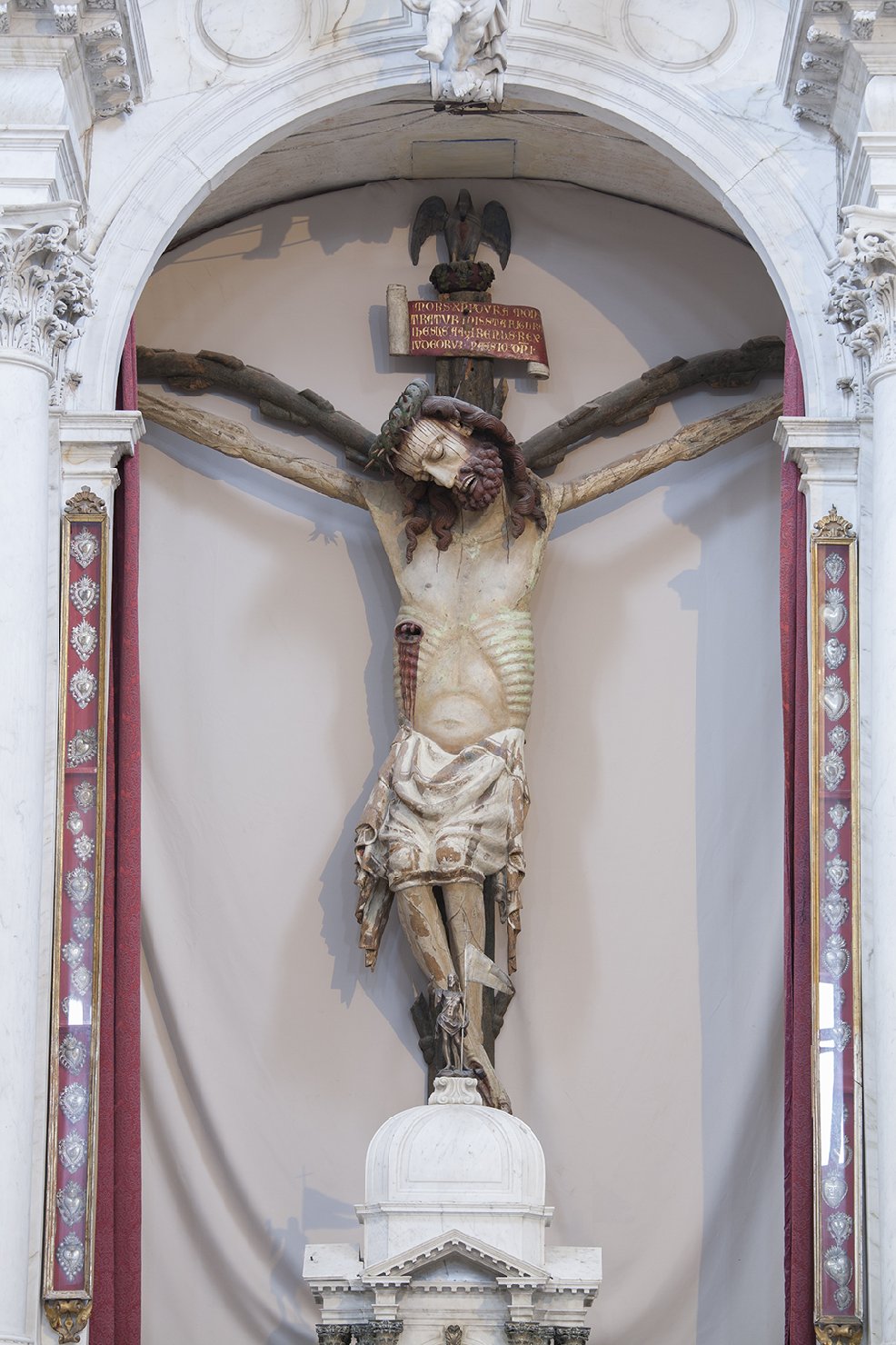
Fig. 11 – Unidentified Northern Master (probably Rhenish), Crucified Christ, ca. 1350–1360. Polychromed poplar wood, 487 x 350 cm. (Church of San Domenico, Chioggia).
The construction of these myths extended beyond biblical antiquity to serve a specific civic function: the production of patriotic and martial lore. A striking example of this is the highly venerated wooden “Lepanto crucifix” housed in the Church of San Martino (fig. 12). Like many of the expressive wooden figures in the city, its raw emotional power suggests the hand of a migrant carver. In the sixteenth century, the Arsenale shipyards employed thousands of workers, including a steady stream of foreign intagliatori and carpenters who possessed the specialized skills needed for maritime construction and ornamentation. It is possible the San Martino crucifix was carved by one of these migrant laborers using scrap wood from the shipyards.[86] However, the repurposing of naval timber should not be viewed only as a frugal cost-saving measure; it functioned as an act of ‘civic relic-making.’ Wood that had survived the sea, or perhaps even a naval battle, carried a powerful ‘material memory’ of Venetian victory and resilience. By carving the body of Christ out of a battle-tested oak plank or discarded galley timber, the artisan was literally weaving the safety, history, and military triumph of the Republic directly into the flesh of the Savior.
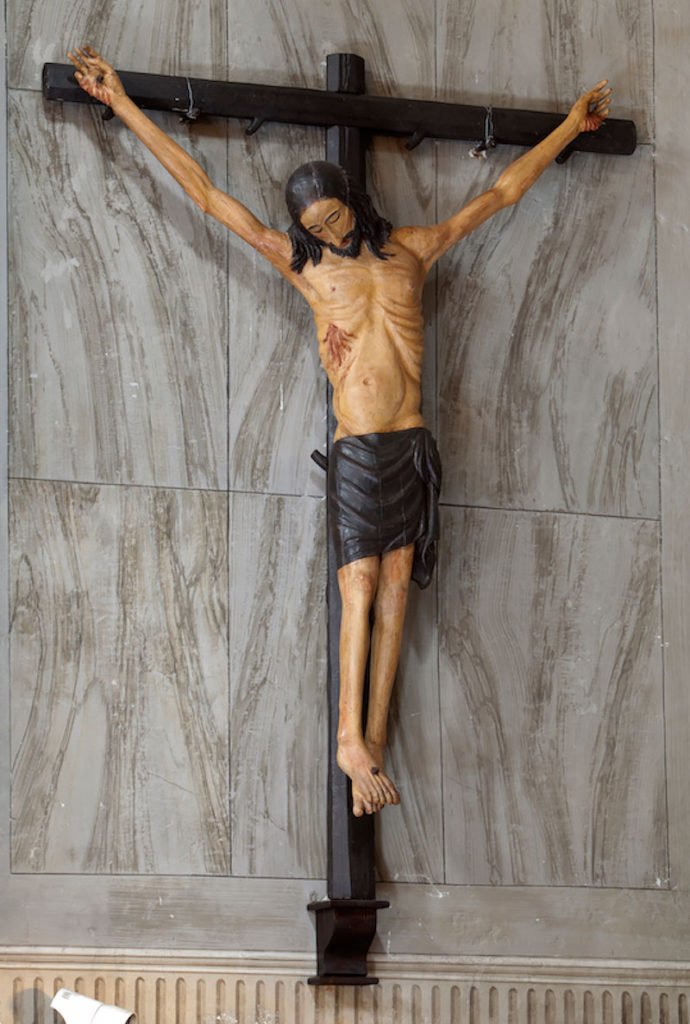
Fig. 12 (next page) – Unidentified Artist, Crucified Christ (The Lepanto Crucifix), 15th century. Polychromed wood (Church of San Martino, Venice).
This symbiotic exchange of discarded materials points toward another fascinating perspective: the material waste economy of the Tedesco workshops. In a timber-starved city like Venice, the extensive hollowing out of a massive maple trunk to create a figure like the Cristo Parlante would have generated a substantial volume of high-quality wood scraps and offcuts. It is probable the German intagliatori sold this valuable secondary material to local craftsmen—such as musical instrument makers or even the nearby squeri (boatyards)—thereby further embedding their ‘foreign’ workshops into the highly integrated, micro-economic fabric of the city.[87]
This material reality points toward a remarkable vocational convergence. The foreign intagliatori and carpenters employed at the Arsenale were not just utilitarian shipbuilders but were frequently responsible for the fleet’s extensive sculptural ornamentation.[88] It is quite possible the same migrant hands commissioned to carve the Republic’s naval figureheads (polene) or the majestic winged Lions of St. Mark that adorned the prows of Venetian flagships also carved the Savior for the local parish. This dual role makes the state’s erasure of their names even more politically significant: the Tedesco artisan acted as the essential, yet unacknowledged, architect of both the physical and the spiritual navy. Venice absorbed the labor of the Oltramontani to physically manufacture its own martial and civic brand, only to credit the resulting masterpiece to the “scraps” of the fleet itself.
Yet, the local legend surrounding the crucifix completely eclipses any mention of foreign labor. The myth insists that the cross was fashioned from the leftover “scraps of the Venetian fleet” and was proudly carried into the legendary Battle of Lepanto in 1571.[89] In this narrative, the true origin of the object—the technical skill of the immigrant woodcarver—is entirely erased. Instead, it is replaced by the martial glory of the Venetian military-industrial complex. The foreign skill is absorbed, but the material itself—the very oak of the Republic’s victorious galleys—becomes the hero of the story.
Through these acts of civic myth-making, Venice performed a brilliant sleight of hand. The Republic relied heavily on the mechanical ingenuity and pathos of the ‘German House’ style to fuel its spiritual life, yet it clothed those foreign mechanics in the invulnerable armor of Venetian myth.
Ultimately, the German wooden crucifix in Renaissance Venice functioned as an integrated system of engineering and ritual rather than a collection of discrete aesthetic objects. By tracing the life of these artifacts, the structural alignment between the environmental realities of the Venetian mainland and the spiritual requirements of the lagoon becomes clear. The raw material, transported by the zattieri via the Piave artery, served as the physical foundation for a highly engineered, processional instrument.[90] To operate within the city’s mobile liturgy, the migrant intagliatore functioned as both a nautical engineer and a theatrical designer, hollowing out the wood to stabilize its center of gravity on rocking vessels and outfitting the torso as a resonant soundbox for the visceral Mendicant Depositio plays.[91]
In a way, the physical hollowing of the wood mirrors how the Venetian state interacted with its immigrant workers. By excavating the heartwood of the maple to ensure the stability and acoustic power of the machine, the carver created a literal void—one that the Republic effectively mirrored by ‘hollowing out’ the identity of the artisans themselves. Erasing the mortal, foreign authorship and replacing it with the armor of civic myth, like the acheiropoieta or the ‘Relic of Lepanto,’ allowed Venice to fill that space with its own patriotic and divine narratives. This appropriation functioned less as a simple act of cultural theft and more as a mutually beneficial legal shield, protecting the ‘foreign’ apparatus from guild litigation while providing the Republic with a superior spiritual technology.
The erasure of the immigrant artist was not solely a top-down legal fiction orchestrated by the state to bypass guild laws; it was also driven from the bottom up by a ‘co-creative’ audience. The medieval spectators were not passive observers of a deceptive automaton, but active participants who brought the performance to life. Their intense psychological belief functioned as the impetus for the realism of the articulated corpus, with its wooden joints and hemp-string veins. By actively choosing to see the miracle rather than the machine, the Venetian public became complicit in the erasure of the Tedesco carvers—willingly dissolving the hand of the earthly engineer to achieve a direct, interactive communion with the living God.[92]
The efficacy of this material agency relied entirely on the audience’s complicity. When this empathetic interaction dwindled, the sacred apparatus collapsed into a mere object. This fragile boundary is perfectly illustrated by the earlier discussed twelve wooden statues of the Virgin utilized during the Festa delle Marie. Originally revered as sacred, active participants in an immersive civic procession, the Venetian public eventually lost their reverence for these figures. Stripped of their sacred aura by a mocking, unruly public, the figures were derisively renamed in the Venetian vernacular as Marie de tola (Marys of wood) or marione (big Marys), and their miniature replicas as marionette (little Marys). This linguistic degradation illustrates the peril of the Animated Tedesco. The mechanical crucifix walked a thin line between divine presence and deceptive idol. The moment a skeptical public withdrew its empathetic complicity, the ‘Living Savior’ reverted to a Maria de tola—a mere wooden puppet.[93]
As the fifteenth century ended, the dawn of the sixteenth century brought a marked shift that introduced a new trajectory for Northern art in the Republic. In 1505, the Fondaco dei Tedeschi tragically burned to the ground; during the massive reconstruction efforts that immediately followed, the celebrated German master Albrecht Dürer arrived in Venice.[94] Seizing the moment to assert their cultural prestige, the wealthy German merchants of the Fondaco commissioned Dürer to paint a magnificent altarpiece, The Feast of the Rose Garlands, for their adjacent parish church of San Bartolomeo at the Rialto.[95] Dürer’s masterpiece spectacularly silenced local critics, proving that a Northern artist could synthesize German linear precision with the radiant, oil-based chromatics of the Venetian Renaissance.[96] This site of cultural exchange was a two-way street; decades later, the Augsburg master builder Elias Holl would travel to Venice specifically to study the Fondaco and observe the Venetian protomagistri at work, taking Italian structural carpentry back across the Alps.[97]
Yet, we must be careful not to fall into a teleological trap by assuming that Dürer’s arrival rendered the mechanical craft of woodcarving instantly obsolete. Even as the elite gaze of the Rialto merchants shifted toward this celebrated “High Art,” the production of functional, articulated corpora remained a robust, somewhat invisible parallel economy.[98] Long into the sixteenth century, the Scuole Piccole and the Mendicant orders continued to demand these highly engineered instruments to satisfy a localized, visceral piety that static paint and stone simply could not accommodate. Having transformed carved wood into a sophisticated liturgical technology, these migrant carvers ensured that Northern pathos became an inseparable component of Venetian devotional identity.
[1] Emma Jones, The Business of Sculpture in Renaissance Venice, Vol 1 (PhD diss./thesis, Pembroke College, 2016). In Venice, woodcarvers (intagliatori or incisori) were legally distinct from stone and bronze sculptors. Initially, all woodcarvers were required to be members of the House Carpenters’ Guild (Arte de marangoni de case), and they were not permitted to form their own independent woodcarvers’ guild (Arte degli intagliatori) until a ruling on November 29, 1564. Wood was often considered a cheaper material, frequently painted to simulate more expensive mediums like marble or bronze. However, the present author notes the mechanical logic of the articulated wooden body was so effective at producing mimetic realism that it was eventually absorbed into the secret studio practices of the Italian ‘Major Arts.’ Giorgio Vasari notes that the High Renaissance painter Fra Bartolomeo actively relied on a life-sized, jointed wooden lay-figure (“un modello di legno… che si snodava nelle congenture”) dressed in real fabrics to achieve the celebrated naturalism of his painted drapery. See Vasari, Le vite de’ più eccellenti pittori, scultori e architettori, ed. R. Bettarini and P. Barocchi (Florence: Sansoni, 1966–1987), vol. IV, 101.
[2] Bernd Röck, “Venice and Germany: Commercial Contacts and Intellectual Inspirations” in Renaissance Venice and the North Crosscurrents in the Time of Bellini, Durer, and Titian (New York, 2000). Röck highlights that just as Alexandria was vital for Eastern spices, Venice was the crucial commercial hub for Northern Europeans, solidifying a significant North-South economic and cultural reliance.
[3] Kamil Kopania, Animated Sculptures of the Crucified Christ in the Religious Culture of the Latin Middle Ages (Warsaw, 2010). Kopania details the role of the Franciscans in the emergence of theatrical, paraliturgical performances (laude) that required a more affective, visceral observance of Christ’s suffering, paving the way for the graphic realism of the imported Northern aesthetic.
[4] Pavel Kalina’s scholarship extensively critiques the Vasarian and 19th-century nationalist frameworks that attempt to assign inherent ethnic characteristics (such as a German Geist or an Italian Formgefühl) to trans-regional aesthetic movements. Pavel Kalina, Giovanni Pisano, the Dominicans, and the Origin of the ‘crucifixi dolorosi’ in Artibus et Historiae 24, no. 47 (2003), 81-101.
[5] The crucifixus dolorosus drew heavily from the emotionally charged Tuscan sculptural traditions pioneered by artists like Giovanni Pisano, demonstrating a Mediterranean foundation for this pathos.
[6] Febvre, Lucien, and Henri-Jean Martin. The Coming of the Book: The Impact of Printing 1450–1800, eds. Geoffrey Nowell-Smith and David Wootton and trans. David Gerard (London: Verso Editions, 1984). The authors document the massive influx of Germans into the Venetian printing trade in the late 15th century, establishing a cross-media synergy between printed illustrations and wooden carving.
[7] Donatella Calabi, Venice and its Jews: 500 Years Since the Founding of the Ghetto (Milan: Officina Libraria, 2017), 38. Calabi and Concina have both demonstrated how the Venetian state utilized structures like the Fondaco and the Ghetto as deliberate tools of urban segregation and multicultural governance.
[8] This waste economy presents an untapped archaeological site. Future scientific studies could seek a molecular link by comparing the wood grain and species of a documented Tedesco crucifix with surviving Venetian lutes or violins from the same era. Uncovering such a hidden ‘cascade of materials’ would definitively prove that the sacred workshop was inextricably bound to a larger, secular industrial ecosystem.
[9] Philippe Braunstein, Les Allemands à Venise (1380-1520) (Paris, 2016), 110. Braunstein’s archival work traces the settlement of German artisans in specific parishes and their integration into Scuole like San Bartolomeo, proving they were a highly organized social demographic.
[10] Michael Baxandall, The Limewood Sculptors of Renaissance Germany (New Haven: Yale University Press, 1980), 27-30. Baxandall explains that the hollowing of large wood sculpture was primarily a structural necessity to remove the recalcitrant heartwood, which causes the sapwood to split as it shrinks. Smaller domestic pieces lacked this critical mass and could often be carved solid, entirely bypassing the need for the large, resonant cavities found in public liturgical works.
[11] Zuzanna Sarnecka, “Monteripido and the Identity of Wooden Crucifixes in the Culture of 15th Century Umbria” in Arte Medievale, IV serie (2014). Sarnecka discusses the fluidity of the term “Tedesco,” noting instances where Venetian notaries confused the geographic origin of artists, proving that the term functioned as a generalized brand for Northern, Oltramontani migrants.
[12] Braunstein (2016), 14-15, 29. Braunstein’s demographic analysis of the Fondaco dismantles the notion of a unified German identity, demonstrating that the community was segmented by regional allegiances and specialized craft monopolies that frequently led to internal legal disputes.
[13] Kopania (2010), 160-163. Kopania details the restoration findings of Bruno Bruni, who identified a nearly identical, highly specific wooden peg and string mechanism for the moving tongue across several works attributed to Giovanni Tedesco, highlighting the presence of specialized, proprietary mechanical knowledge. See also Sara Cavatori, Giovanni Teutonico: Scultura Lignea Tedesca nell’Italia del Secondo Quattrocento (Aguaplano, 2016).
[14] Sarnecka (2014), 218-219. Sarnecka notes that the signature of Paulinus d’Ascoli (‘Tdesculo’) highlights the orthographic proximity between ‘Tedesco’ and ‘d’Esculo.’ She argues this scribal confusion likely affected his master, Johannis d’Esculo, suggesting that the late-fifteenth-century carver documented as ‘Johanis Todisco’ (Giovanni Tedesco) may have actually been a native Italian from Ascoli Piceno rather than a German.
[15] Elisabetta Francescutti and Sara Cavatorti have both demonstrated that many works historically lumped under the single name “Giovanni Tedesco” were actually produced by native Italian artists who shared this spiritual milieu and actively adopted the German expressive code to satisfy local market demands. See Sara Cavatorti, Giovanni Teutonico. Scultura lignea tedesca nell’Italia del secondo Quattrocento (Perugia: Aguaplano, 2016), and Elisabetta Francescutti, “Caratteristiche esecutive, cifre stilistiche, espedienti tecnici,” in Riflessioni sul Rinascimento scolpito (Pollenza, 2006), 83-85.
[16] John T. Paoletti, “Wooden Sculpture in Italy as Sacral Presence” in Artibus et Historiae 13, no. 26 (1992), 85. Paoletti touches on the extreme vulnerability of materials like wax and plaster to the “aggressive, saline humidity of the lagoon climate.” The mechanical iron and wooden joints of the animated crucifix would have been equally susceptible to this environment, suggesting that imported engineering blueprints would have required active, localized adaptation.
[17] Jones (2016), 28.
[18] Kopania (2010) extensively details the role of the Franciscans in cultivating passion piety and the use of these articulated figures in theatrical Depositio Crucis and laude performances to evoke physical empathy from the faithful.
[19] Petr Uličný, “Christ in Motion: Portable Objects and Scenographic Environments in the Liturgy of Medieval Bohemia,” Theatralia 14, no. 1 (2011): 52, 86–94. Uličný details this broader kinetic ecosystem, demonstrating that the articulated crucifix was just one component of a vast Northern and Central European tradition of mechanical stagecraft that included both the Palmesel and the theatrical, airborne spectacles of Ascension Day.
[20] For the scavigliazione ritual and stage directions requiring the physical extraction of nails from the sculpture, see Kopania (2010), 56-57, 64; see also Daniele Di Lodovico, “Revising Devotion: The Role of Wooden Sculptures in Affecting Painting and Devotion in the Late Medieval Period in Italy” (PhD diss., University of Washington, 2016), 25.
[21] Paoletti (1992) highlights the visceral, mimetic capabilities of wooden sculpture, noting instances in contemporary chronicles (such as Giovanni Cambi’s Istorie) where the movement of such crucifixes was accompanied by a “great clattering noise,” adding a startling acoustic dimension to their sacral presence.
[22] Ibid., 94, no. 2. On account of the “clattering noise” recorded by contemporary chroniclers during these performances we may analyze these objects through sensory archaeology, re-evaluating the “hollowed torso” not just as a solution for physical weight distribution, but as a deliberate acoustic soundbox engineered for the specific reverberant qualities of Venetian ecclesiastical architecture.
[23] This hypothesis opens a novel avenue for further research: digital sensory reconstruction. By utilizing Acoustic Ray Tracing software to model the specific three-dimensional space of the nave of the Frari, researchers could potentially simulate the exact decibel level and reverberation of this wooden ‘thud.’ Such acoustic mapping would move the ‘clatter of death’ from a poetic historical description to a measurable data point of liturgical scenography.
[24] Frederic C. Lane, Venetian Ships and Shipbuilders of the Renaissance (Baltimore: Johns Hopkins University Press, 1934). The distinctive intersection of the Arte dei Marangoni (carpenters) and the maritime expertise of the shipyards fostered an environment where the acoustic properties of stressed wood were deeply understood as matters of life and death, an engineering concept translated into the dramatic mechanics of the wooden crucifix.
[25] Kopania (2010) warns against using diminutive or anachronistic terms like “marionette” or “puppet” to describe these objects, as such language fails to grasp their profound sacral presence and serious liturgical function.
[26] The danger of this mechanical realism is documented in early Protestant iconoclastic writings. Reformers such as Andreas Karlstadt, Martin Bucer, and John Hooper condemned animated, smoking, or moving wooden sculptures, denouncing them as deceitful idols designed to irrationally manipulate the laity.
[27] Kopania (2010), 210. Kopania notes that the Council of Trent “destroyed the enormous and wonderful legacy of the artistic superstructure of liturgy,” severely impacting the fate of the theatrical Depositio Crucis and the animated sculptures used within it.
[28] Ibid., 230, n. 676. Kopania highlights the research of Daniel Bornstein regarding the Bianchi movement, noting that authorities like Zaccaria Trevisan investigated and arrested fraudsters who used hollow crosses equipped with internal mechanisms to fake miracles and extort the faithful.
[29] David Freedberg, The Power of Images: Studies in the History and Theory of Response (Chicago: University of Chicago Press, 1989), 286-291. Freedberg discusses how the intense, lifelike realism of the sacri monti satisfied post-Tridentine devotional needs for visceral empathy without employing actual mechanical movement.
[30] For the civic use of wooden surrogates in Venice, see Edward Muir, Civic Ritual in Renaissance Venice (Princeton University Press, 1981), 135-156. Muir details how the state replaced living women with the wooden Marie di tòla to prevent aristocratic factionalism, establishing a strong local precedent for the public manipulation of life-sized wooden figures.
[31] Ibid. Kopania’s structural analyses of surviving figures (such as the crucifix from Norcia) reveal deep, rectangular cavities hollowed out from the shoulder blades down to the buttocks. This removal of mass from the upper body inherently shifted the center of gravity downward, a significant modification for processional stability.
[32] This Northern engineering logic of the single hollowed trunk was a distinct regional tradition that contrasted with emerging Italian innovations. X-ray conservation research reveals that while some elite late-fifteenth-century Florentine workshops—most notably that of Benedetto da Maiano—continued to hold onto the traditional technique of thoroughly hollowing out a single, presumably fresh trunk, other prominent masters pioneered an entirely different approach. Workshops such as those of Baccio da Montelupo and the Sangallo brothers rejected the hollowed log in favor of an innovative ‘joined block’ assemblage technique, building life-size crucifixes by gluing and nailing together multiple smaller, pre-dried planks. Peter Stiberc, “Wood Crucifixes in Late 15th Century Florence – Innovations in Construction Techniques. First Results from a Research in Progress,” in Polychrome Sculpture: Tool Marks and Construction Techniques, ed. Kate Seymour (ICOM-CC, 2010), 41-42.
[33] For the founding of plague confraternities and their desperate reliance on intercessors to be “freed of disease and pestilential vapours,” see Peter Humfrey, “Competitive Devotions: The Venetian Scuola Altarpieces and the Plague,” The Art Bulletin 70, no. 3 (1988): 410.
[34] Beate Fricke, “A liquid history: Blood and animation in late medieval art,” RES: Anthropology and Aesthetics 63/64 (2013): 54-55. Fricke notes that depicting fresh blood on a dead body was a deliberate artistic strategy to emphasize the ongoing, perpetual nature of Christ’s sacrifice.
[35] For the strict separation of Venetian woodcarvers into the House Carpenters’ Guild, see Jones (2016), 24-25. For the broader European guild statutes forbidding woodcarvers from applying polychromy, see Mark Richter, “Artists and Artisans of Polychrome Wooden Altarpieces in Southern Germany, Austria and Switzerland (c. 1600-1780),” in From Conservation to Interpretation, ed. Justin E. A. Kroesen et al. (Leuven: Peeters, 2017), 306-307.
[36] Paoletti (1992): 85. Paoletti discusses the use of wax and plaster for life-sized mimetic effigies, which, while capable of astonishing realism, were environmentally unsuited to the damp, corrosive climate of the Venetian lagoon without robust material treatments.
[37] Ibid. In Venice, the environmental pressures of dampness and salt rapidly accelerated the degradation of such materials, rendering wood the exclusive viable medium for mobile, articulated statuary.
[38] Irene Zefferino, “The ‘Articulated Christ’ Crucifix in the Church of San Geremia: A Study of Movable Sculptures of the Crucified Christ in Venice and the Veneto” (PhD thesis, University of Warwick, 2014), 47. See also Teresa Perusini, “Descaviglietur corpus totum et detur in gremio Mariae,” (2000), 197-198.
[39] Baxandall (1980) explains the unique cellular properties of limewood (Sommerlinde), noting that its “tractable” and diffuse-porous nature allowed it to be carved deeply and hollowed out without compromising the structural integrity of the sculpture.
[40] Milena Dean, “The Cristo Parlante Crucifix in San Francesco della Vigna,” SaveVenice.org (accessed March 2026). The 2016–2020 conservation report details the removal of eight layers of overpaint and confirms the substrate material as maple wood, demonstrating a shift from traditional Northern European limewood. Dean’s technical interventions on the Cristo Parlante are part of a broader, recent wave of conservation efforts revealing the hidden mechanics of early wooden corpora across the Veneto. This includes her comparable conservation work on the late-fourteenth-century crucifix at San Fidenzio in Polverara, which revealed a hollow cranium and nails likely used for a lost tongue mechanism. See M. Dean, “Il Crocifisso di Polverara: considerazioni sulla tecnica di esecuzione e riflessioni per il restauro ancora in corso,” in L’uomo della croce: L’immagine scolpita prima e dopo Donatello, ed. C. Cavalli and A. Nante (Padua: Scripta, 2013), 83-99.
[41] For the Republic’s strict administration of mainland timber and the severe punitive measures enacted against poachers of naval-grade timber, see Karl Appuhn, A Forest on the Sea: Environmental Expertise in Renaissance Venice (Baltimore: Johns Hopkins University Press, 2009), 101-105; and Sean P. Edinger, “Lawyers and Sawyers: Venetian Forest Law and the Conquest of Terraferma,” (Master’s Thesis, Appalachian State University, 2013), 28-34.
[42] Baxandall (1980), 32. Baxandall notes that the sixteenth-century physician Paracelsus linked woodcarving to chiromancy, elevating the carver’s relationship with wood to a divinatory science where the artisan “reads” the inner character and hidden capabilities of the material.
[43] Ibid. Baxandall notes that carvers had to sense the “sublimated starshake” and internal forces of the wood to properly manipulate it.
[44] Dean’s (2013) conservation treatment uncovered the internal string mechanism used to move the tongue, as well as the interior scorch marks which definitively prove that incense was burned inside the head to simulate Christ’s dying breath.
[45] Kopania (2010), 248.
[46] Sarnecka (2014), 227.
[47] Kopania (2010), 51, n. 23. See also Di Lodovico (2016), 314-315.
[48] Ibid. Utilizing Bruno Bruni’s conservation reports on the Norcia crucifix, Kopania confirms the distinct, lingering smell of incense inside the head cavity, highlighting the use of fragrant smoke (thimiama) as a potent, multi-sensory tool capable of reaching the faithful through scent when sightlines were obstructed.
[49] Jacobus de Voragine’s Legenda Aurea (Golden Legend) was an ubiquitous medieval text that provided a foundational narrative framework for miraculous images. As noted in scholarship on the Cristo de Burgos and other animated figures, the text popularized accounts of speaking and bleeding crucifixes, priming the laity to accept these theatrical effects as divine truths.
[50] Carla Bino, “Le statue del Cristo crocifisso e morto nelle azioni drammatiche della Passione (XIV-XV secolo). Linee di ricerca. Drammaturgia, 13(3), 277–311. For the hypothesis regarding the mechanical preferences of the Observant versus Conventual Franciscans, see Teresa Perusini, “Le immagini per la Settimana Santa: Una Storia Antica, Importante e… Dimenticata!” in Cultura in Friuli 5 (settimana della cultura friulana = setemane de culture furlane: 10-20 maggio 2018), 805.
[51] This theme is here viewed through the lens of the Actor-Network Theory (ANT) and “New Materialism” of historical objects as elaborated in Bruno Latour, Reassembling the Social (Oxford: Oxford University Press, 2005). In this respect, the crucifix’s sacral presence is entirely dependent on the successful mechanical alignment of its physical and human components.
[52] Advanced dendro-forensics could identify the exact state of timber seasoning at the time of carving. Ascertaining whether the wood was carved ‘green’ (freshly cut) or ‘dried’ would reveal operational details about the workshops—specifically, whether the carvers relied on a ‘just-in-time’ delivery system directly from the Piave rafts, or if they possessed the capital and infrastructure to maintain long-term storage yards. Martina Diaz, “Contextualisation of the Timber Trade between the Sixteenth and Nineteenth Centuries in the Basilica of St Anthony, Padua,” (ETH Zurich), 169-171. Diaz’s research on the timber superstructures of the Santo in Padua demonstrates how analyzing the physical wood can reveal complex trade routes and storage practices.
[53] Appuhn (2009) details the Republic’s intense reliance on the mainland forests and the river systems for its survival, framing the timber trade as the foundational infrastructure upon which Venetian maritime and architectural power rested.
[54] For the historical use of shipping marks on floated timber in the Veneto, see L. Vandenabeele, “Historical Timber Trade in the Venetian Republic,” in Wood in Cultural Heritage (2018), 175-176. Ownership marks were affixed to the logs in the mountains before floating, serving as a concrete archival fingerprint of the timber’s commercial journey.
[55] See Diaz (ETH Zurich), 169-170, for the successful application of dendrochronological investigations to trace the alpine origins and floating routes of historic Venetian timber supplies.
[56] The Venetian authorities actively enforced these protectionist trade laws. A documented case from February 1457 reveals that an altarpiece painted by a German artist, imported into the city by German merchants via the Fondaco dei Tedeschi, was immediately confiscated by the state as contraband. It was only released back to the merchants as a matter of special grace (gnadenhalber), demonstrating the state’s tight control over foreign art imports and its pragmatic use of legal exemptions. Manuel Teget-Welz, “Wir waren schon da! Deutsche Künstler vor Dürer in der Republik Venedig,” in Künstlerreisen: Fallbeispiele vom Mittelalter bis zur Gegenwart, ed. Andreas Tacke et al. (Petersberg: Michael Imhof Verlag, 2020).
[57] Jones (2016) outlines the strict regulatory framework of the Venetian guilds, noting that woodcarvers (intagliatori) were monitored to protect the economic interests of native artisans against the influx of foreign labor.
[58] Braunstein (2016) likewise highlights the pragmatism of the Venetian state regarding foreign merchants and artisans, noting instances where contraband works or illicit trades were permitted to pass “as a matter of grace” (gnadenhalber) when it suited the broader economic or artistic interests of the Republic.
[59] For the strict regulation of artisans and the state’s pragmatic, highly selective use of legal exemptions to protect local economic interests while acquiring superior foreign skills, see Richard Mackenney, Tradesmen and Traders: The World of the Guilds in Venice and Europe, c.1250-c.1650 (Totowa, NJ: Barnes & Noble, 1987), 17-19.
[60] Records in the Archivio di Stato di Venezia (ASV) document German artisans petitioning the governing councils for residency and guild exemptions. For example, a 1394 registry from the Senato Misti (reg. 43, f. 33) cleverly justifies the granting of state privileges with the Latin clause quod sit utile et necessarium (“that it be useful and necessary”). Braunstein (2016), 22, n. 63. See Braunstein’s transcription of ASV, Senato Misti 43, f. 33 (1394/18/X).
[61] The ASV Privilegi registries demonstrate that when this technological indispensability was proven, the state actively bypassed its own protectionist laws by granting the highly coveted de intus et extra citizenship to German craftsmen—such as the recorded cases of Henricus quondam Armani de Alemania and others. ASV, Senato, Privilegi I, 76 and I, 79. As documented by Braunstein (2016, 22, n. 60).
[62] Humfrey (1988), 401-423. Humfrey distinguishes the patronage of the Scuole Piccole from the Scuole Grandi, demonstrating how these smaller, trade-affiliated groups actively commissioned works that suited their specific devotional needs and financial limitations.
[63] Zefferino (2014), 43. Zefferino highlights that the liturgy of San Marco, which culminated in the Doge sealing the host in the ciborium, was designed to stage civic power rather than emotional, paraliturgical empathy.
[64] E. Natalie Rothman, Brokering Empire: Trans-Imperial Subjects between Venice and Istanbul (Ithaca: Cornell University Press, 2012). Framing the carver as a “broker” aligns with recent historiography that emphasizes the role of go-betweens in negotiating the borders of the Republic’s cultural and economic spheres.
[65] B. L. Perry, B. A. Pescosolido, and S. P. Borgatti, Egocentric Network Analysis (Cambridge: Cambridge University Press, 2018). Applying this sociological model demonstrates how the Scuole Piccole leveraged serialized wooden art to maximize their socio-religious capital within their immediate parish networks.
[66] Humfrey (1988) notes this severe documentary gap regarding the Scuole Piccole. The complete absence of direct sculptor-confraternity contracts from this era requires historians to reconstruct patronage networks through broader socio-economic and proxy documentation.
[67] Bruce Boucher, “Italian Renaissance Terracotta: Artistic Revival or Technological Innovation?” (2001), 1-31. The creation of large-scale terracotta figures was fraught with technical difficulties, making the predictable, serialized carving of wood a far more secure economic investment for budget-conscious confraternities.
[68] Paoletti (1992), 85-93. Paoletti discusses Guido Mazzoni’s terracotta Lamentation groups, noting their astonishing realism. The physical constraints of terracotta strictly limited these figures to rigid, static tableaus, making lightweight, tractable wood the exclusive material for crucifixes requiring movable, articulated limbs.
[69] Zefferino (2014), 47. See also Elisabetta Francescutti, “Crocefissi ‘a pesto’ nella città di Pordenone: anticipazioni di tecnica e restauro,” in In hoc signo. Il tesoro delle croci (Milan: 2006), 207-223.
[70] Anne Markham Schulz, “Antonio Bonvicino and Venetian Crucifixes of the Early Quattrocento” in Mitteilungen des Kunsthistorischen Institutes in Florenz 48, no. 3 (2004), 312. Bonvicino’s workshop standardized the production of the Dead Christ, effectively transitioning the highly emotive Northern aesthetic into a serially produced, regional commodity.
[71]Ibid., 293-332. Schulz maps the surviving distribution of these nine documented Bonvicino models across the Veneto. The continuing emergence of similar, undocumented models on the modern art market further underscores the prolific, “assembly line” efficiency of these early woodcarving workshops. See for example, Sotheby’s Master Paintings & Sculpture Day Sale, 31 January 2019, New York, lot 146 and an example formerly with the UK dealer Sam Fogg.
[72] The original monumental wooden crucifix for Santa Maria Gloriosa dei Frari was carved by Antonio Bonvicino in the 1420s and was likely intended to be suspended from the triumphal arch following the completion of the cappella maggiore and crossing by 1425. This early Quattrocento corpus was eventually relegated to the Frari’s storerooms, where it remained until it was acquired in 1885 by the Staatliche Museen in Berlin (inv. no. 45) as a donation from Heinrich Vieweg of Braunschweig. The crucifix currently hanging in the basilica represents a later, distinct wave of serialized production from the second half of the fifteenth century. This replacement corpus is stylistically associated with the ‘Leonardo Tedesco model.’ Leonardo’s prominent role in this later era of Venetian woodcarving is securely documented by his 1491 wooden crucifix and the 1493 carved reliquary cover of Saint John the Almsgiver, both located in the church of San Giovanni in Bragora. Anne Markham Schulz, “Antonio Bonvicino and Venetian Crucifixes of the Early Quattrocento,” Mitteilungen des Kunsthistorischen Institutes in Florenz 48, no. 3 (2004): 313.For the 1491 crucifix, see Manuel Teget-Welz, “Wir waren schon da! Deutsche Künstler vor Dürer in der Republik Venedig,” in Künstlerreisen: Fallbeispiele vom Mittelalter bis zur Gegenwart, ed. Andreas Tacke et al. (Petersberg: Michael Imhof Verlag, 2020), fig. 10. For the 1493 reliquary cover, see Save Venice Inc., Lardo Tedesco and Leonardo Boldrini’s Reliquary Cover of Saint John the Almsgiver at San Giovanni in Bragora (Conservation Report).
[73] Jones (2016) notes that while wood was occasionally eschewed by wealthy patrons for monumental altarpieces in favor of marble or bronze, it remained a highly popular, accessible medium for “portable devotional pieces” used in private and domestic contexts.
[74] Kopania (2010), 21. Kopania discusses the findings of Elżbieta Pilecka regarding the role of highly realistic crucifixes in female religious orders, noting that for nuns and female devotees, the sculpture functioned as a vital “medium of mystical experience” and a physical step in the meditative process of unio (mystical union).
[75] Elżbieta Pilecka, “Rzeźba ‘Chrystusa w Grobie’ z dawnego kościoła cysterek w Chełmnie.” In Argumenta, articuli, quaestiones. Studia z historii sztuki średniowiecznej. Księga jubileuszowa dedykowana Marianowi Kutznerowi, (Toruń, 1999), 321–359.
[76] Future research ought to explore the ‘gendered economics’ of the domestic market by examining the tactile theology of the dowry. Investigating whether these German-style crucifixes traveled with Venetian women as part of their movable property (beni mobili) when they married or entered a convent—by systematically tracing their presence in probate inventories (inventari di beni)—could definitively prove that ‘Northern Pathos’ was a fundamental, portable component of the Venetian domestic interior, rather than just a church-bound performance. For the legal and social mechanisms of female property (beni mobili) and dowries in Venice, and the use of probate inventories to track the domestic presence of devotional art, see Jones (2016), 28-30.
[77] Natalia Keller, “‘Pick Him up and hold Him in your arms.’ The Function of the Holy Dolls in the Convent Life of the Late Middle Ages,” in Holy Dolls in Convent Life of the Late Middle Ages, 76-93. Keller details how female mystics like Margaretha Ebner and Caterina de’ Ricci used jointed holy dolls to experience Imitatio Mariae and mystical union, demonstrating that physical interaction with wooden figures was central to late medieval female piety.
[78] The structural reliance on separately carved arms attached by iron nails and masked with linen (incammottatura)—even when the figure was not designed for articulation—demonstrates the direct transfer of engineering practices from the kinetic Depositio figures to static, serially produced devotional commodities.
[79] Sarnecka (2014), 213.
[80] Richter (2017), 317-318.
[81] Kopania (2010) documents the technical construction of these figures, noting the widespread use of parchment or linen to mask the joint mechanisms of the articulated arms.
[82] Ibid. Kopania’s analysis of surviving European examples confirms that the parchment covering the joints was specifically designed to fold and stretch accordingly when the arms were moved, heightening the mimetic realism of the performance.
[83] Uličný (2011): 28-29. Uličný notes that such innovations, like the late-fifteenth-century corpus from Medlov, provided the sculptures with “greater lifelike dimensions” compared to older, puppet-like wooden joints.
[84] The erasure of authorship to elevate an object to relic status was a widespread theological practice across Europe, as the cult’s efficacy relied on divine, non-human, generation. However, in Venice, this standard theological practice conveniently dovetailed with the state’s desire to mask its reliance on Oltramontani engineering.
[85] For the stylistic attribution of the Chioggia crucifix to a Northern European master, see Anne Markham Schulz, Woodcarving and Woodcarvers in Venice, 1350-1550 (2011). Schulz’s analysis places the work firmly within the stylistic orbit of Strasbourg or Ulm, standing in stark contrast to the entrenched local legends of Nicodemus and an aquatic arrival from the East.
[86] The Arsenale was a melting pot of local and migrant labor. The myth of the Lepanto crucifix at San Martino exemplifies how the Venetian state appropriated the products of this diverse workforce. By claiming the wood was the physical remnant of the triumphant Venetian fleet, the narrative shifts the object’s value from the skill of its maker to the patriotic resonance of its material.
[87] The Venetian recycling of wood is well documented. Just as the Arsenale’s castoffs were reputedly salvaged by migrant workers to carve the Lepanto Crucifix at San Martino, the high-quality maple offcuts generated by the hollowing process of large Tedesco crucifixes would have represented a lucrative commodity in Venice’s resource-competitive market.
[88] Jones (2016) highlights that the imposing military might of the Arsenale was overflowing with sculptural decoration, and that the installation of the sculpted winged Lion of St. Mark was the Republic’s most recognizable, durable symbol of earthly power and divine favor. The migrant artisans working within the shipyards were thus intimately involved in crafting the state’s visual identity.
[89] “Lepanto Crucifix at the Church of San Martino” (SaveVenice.org, accessed March 2026). The project documentation notes that the crucifix is made from “various wood remnants, possibly castoffs from the shipyard” and records the local tradition that it was carried into the naval battle of Lepanto in 1571.
[90] Appuhn (2009). The logistical pipeline of the zattieri highlights how deeply interconnected the environmental resources of the mainland were with the physical production of Venetian sacred art.
[91] Kopania’s (2010) structural analysis of the hollowed-out mechanisms of these figures underscores the sheer mechanical ingenuity required to make them function within the highly mobile, multi-sensory environment of the Mendicant liturgy.
[92] Di Lodovico (2016) notes that the intense emotional engagement of the faithful during these processions “dissolved the distinction between the audience and event,” transforming them from mere spectators into active participants.
[93] Zeferrino (2014), 54-56. Zefferino discusses Giustina Reiner Michiel’s account of the linguistic shift from the sacred Festa delle Marie to the secularized terms Marie de tola, marione, and marionette, demonstrating how the withdrawal of civic reverence transformed sacred wooden effigies into inanimate puppets.
[94] Braunstein (2016) documents the devastating January 1505 fire that destroyed the Fondaco dei Tedeschi, noting Albrecht Dürer’s presence in the city during the highly publicized, state-sponsored reconstruction of the German headquarters.
[95] Ibid. San Bartolomeo served as the spiritual epicenter for the German merchant community on the Rialto, and the commissioning of The Feast of the Rose Garlands for this space functioned as a monumental declaration of Northern cultural and economic power in Venice.
[96] Albrecht Dürer’s letters from Venice to his friend Willibald Pirckheimer specifically detail the jealousy of the local Italian painters and his ultimate triumph with The Feast of the Rose Garlands, marking the moment Northern art transcended its reputation as a mechanical craft and achieved unquestioned parity with the Italian “Major Arts.” See William Martin Conway, The Writings of Albrecht Dürer (New York: Philosophical Library, 1958).
[97] The architectural exchanges of Elias Holl demonstrate the bi-directional nature of the Fondaco dei Tedeschi. Holl’s studies of Venetian protomagistri and structural carpentry underscore that Venice exported technological data to the North just as it imported it, resulting in hybrid structures that paired Italian spatial engineering with German stylistic vernaculars.
[98] While elite patrician and mercantile tastes shifted toward Renaissance “High Art” (marble, bronze, and oil on canvas), the demand for affective, functional wooden sculpture remained remarkably stable among the Scuole Piccole and rural parishes, demonstrating that different socioeconomic tiers in Venice consumed “art” according to entirely different aesthetic and functional criteria.


Leave a comment