by Michael Riddick
Preview / download PDF in High Resolution
The corpus of Nuremberg’s late Gothic and early Renaissance sculpture is frequently viewed through the lens of technical virtuosity; however, a profound tension underlies the celebrated “free arts” of this Imperial City. Nuremberg remained unique among its European peers for its draconian suppression of independent guilds following the failed Handwerkeraufstand or Craft Revolt of 1348.
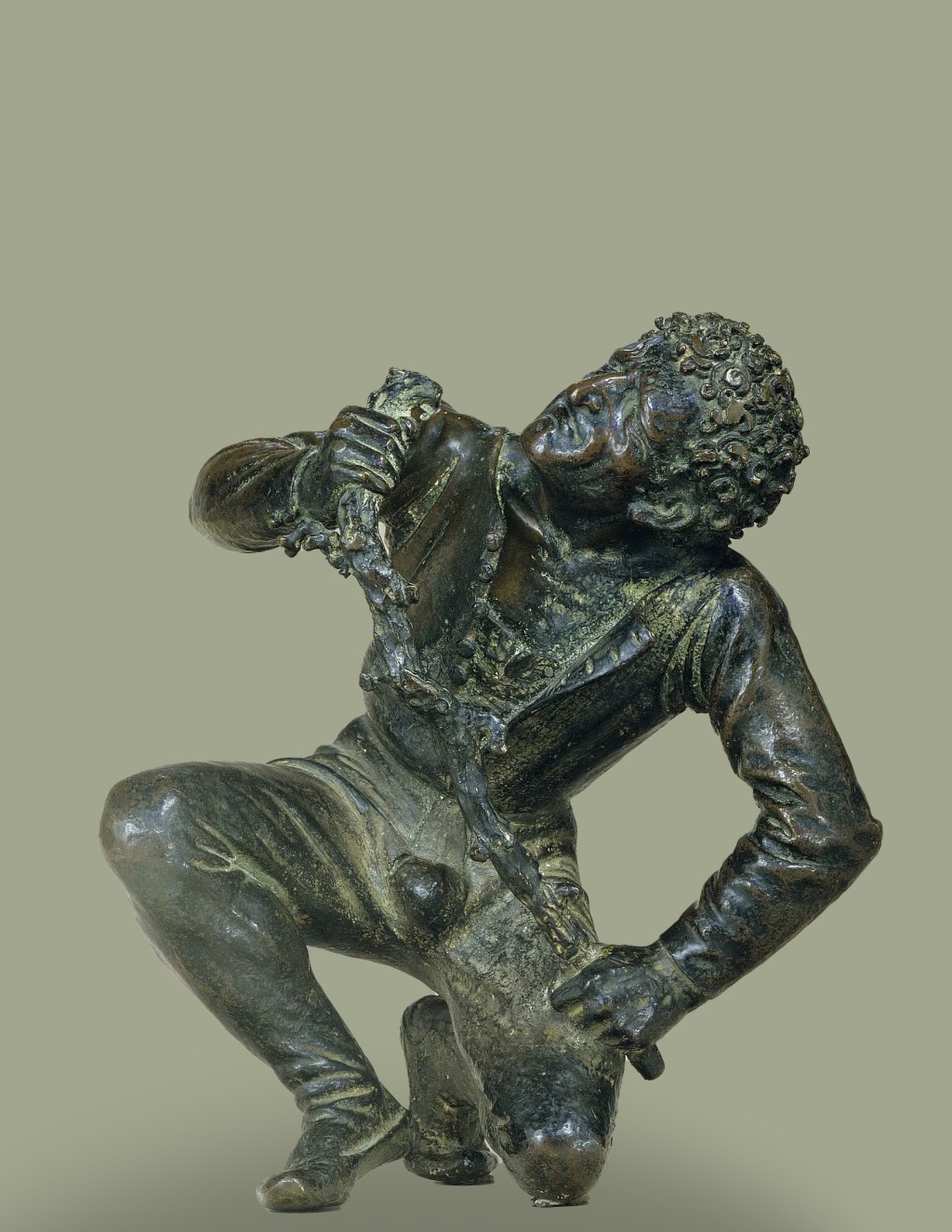
This essay proposes a radical reinterpretation of the bronze Astbrecher (Branch-Breaker)—frequently cataloged in museum and metallurgical literature under its alternate title, the Knieender Bauer (Kneeling Peasant). Dated 1490, the sculpture is currently recognized as a collaborative masterpiece between the stonemason Adam Kraft, who provided the model, and the bronze-caster Peter Vischer the Elder, who executed the casting (fig. 1). This attribution is substantiated by historical accounts of their personal relationship. The 16th-century chronicler Johann Neudörffer recorded that Vischer and Kraft were “bosom friends” who “seemed to have but one heart” and met every Friday to study and draw together.1 Furthermore, it was common practice in Nuremberg for foundries to rely heavily on local wood and stone sculptors to carve their models; the contribution of the carver to the finalized bronze was often considered greater than that of the caster.2 Vischer’s own early works, such as his 1488 model for the shrine of St. Sebald, betray the heavy stylistic influence of Kraft at every point.3
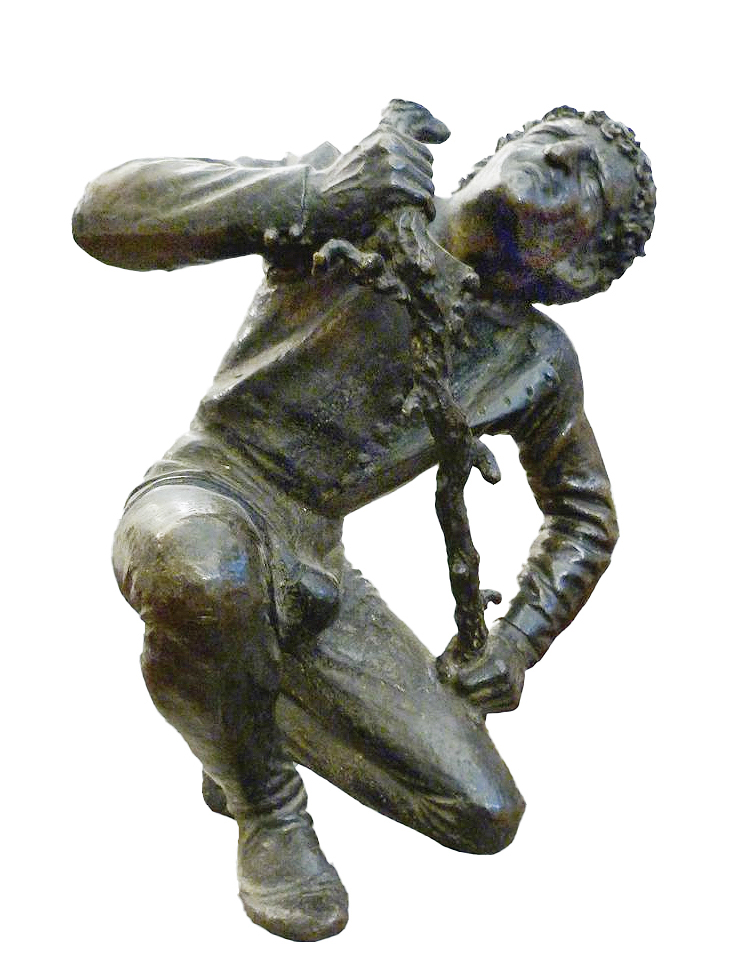
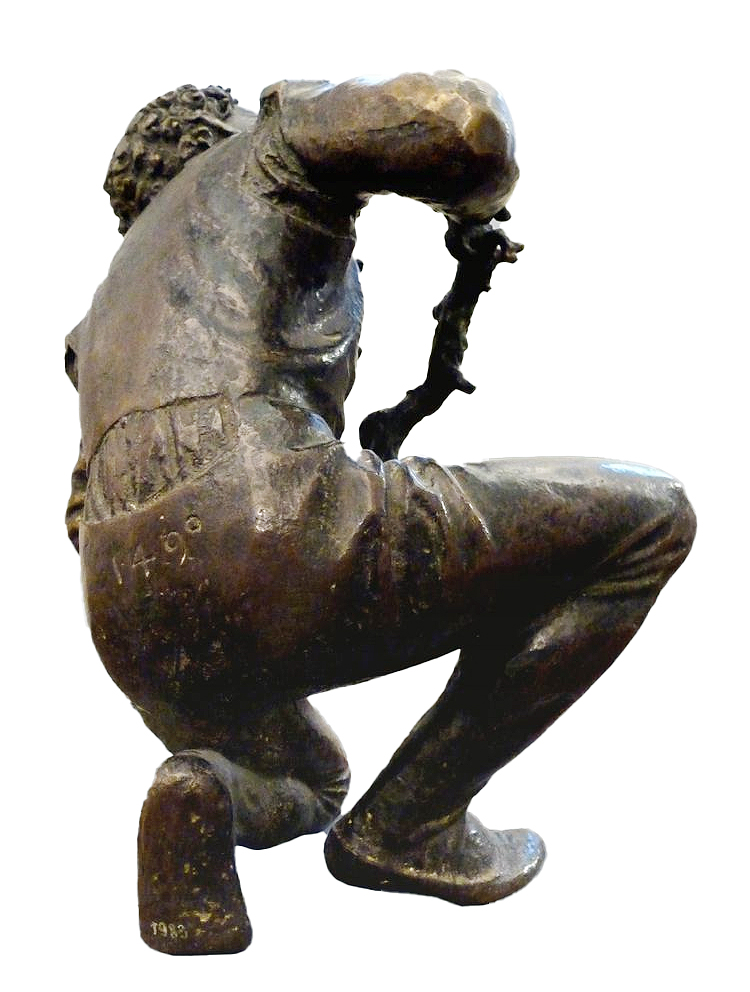
Fig. 1: Bronze Branch-Breaker, by Adam Kraft (sculptor) and Peter Vischer the Elder (bronze caster), 1490 (Bayerisches Nationalmuseum, inv. MA 1983).
While the sculpture’s attribution rests confidently on style and connoisseurship, it is worth noting a significant gap in the scientific literature: in a comprehensive 1983 atomic absorption analysis of Vischer workshop bronzes, this specific 1490 figure remained an “unexamined object” because the Bayerisches Nationalmuseum formally refused to allow its pieces to be tested at the time.4 Future metallurgical analysis could definitively prove its workshop origins, but for now, traditional scholarship views this bronze largely as a secular “genre” study or an exhibition of casting prowess. The present author, however, suggests that the figure—a muscular, kneeling craftsman in the throes of breaking a wooden limb—serves as a multi-layered allegory. It at once preserves the bitter memory of the 1348 insurrection and invokes a classical precedent of resistance to arbitrary power.
Beyond its function as a masterclass in bronze casting, the Branch-Breaker demands to be read as a work of profound intentionality and ideological investment. In the late fifteenth century, bronze was an exceptionally costly material, and the labor required to achieve such anatomical precision in a complex, multi-axis pose represents a significant expenditure of both financial and creative capital. It is highly improbable that an object of this material value and technical difficulty was produced simply as a decorative “show-off” of workshop skill. Instead, the substantial commitment from both Kraft, the Vischer workshop and its commissioners suggests a shared passion for the work’s underlying narrative. Far from a generic study from life, the sculpture’s visceral depiction of a laborer subduing a physical obstacle serves as a deliberate “statement”—a medium through which the makers could explore the tensions of their own social standing in Nuremberg and the enduring power of the artisanal voice.
To understand the Branch-Breaker, one must first locate it within the unique administrative landscape of Nuremberg’s Rugamt. Unlike other major centers of production, Nuremberg’s artisans were classified as “Sworn Crafts” (Geschwornen Handwerke). The Council strictly forbade the formation of guilds to ensure that no single trade could form a political bloc.5 This created a paradoxical environment where Nuremberg produced some of the most sophisticated art in Europe, yet its creators remained politically disenfranchised and legally prevented from formal union.
Within this draconian system, a nuanced legal distinction existed between Kraft and Vischer that amplifies the subversive nature of their collaboration. While stone sculptors (such as Kraft) managed to elevate their trades to the status of “free arts” (freie Künste)—exempting them from the strictest local regulations—they were still explicitly forbidden from establishing self-governing guilds by the City Council. The metalworking trades, however, were entirely subjugated. Bronze casters and redsmiths (Rotschmiede), including the Vischer workshop, were legally classified as “sworn crafts” (geschworene Handwerke). As such, they reported directly to the Rugesherren, patrician delegates who ruthlessly controlled their labor and the importation of raw materials like copper.6 Thus, both artists suffered under the patriciate’s absolute prohibition of guild solidarity, making their Friday meetings not just an artistic exchange, but a profound locus of craft fraternity. If the Branch-Breaker serves as a symbol of suppressed artisanal power, it is immensely significant that it was jointly conceived by two friends whose respective trades were legally denied political agency.
This legal disenfranchisement highlights a profound material paradox within the sculpture. In Renaissance Germany, bronze was the ultimate elite medium, an extraordinarily expensive alloy primarily reserved for the immortalization of saints, archbishops, and emperors. The raw copper required for casting was strictly controlled by the wealthy patrician merchant class.7 To expend such valuable, patrician-controlled resources on a complex, multi-axis depiction of a lowly, sweating laborer is a radical subversion of material hierarchy. By casting this subject in bronze, the workshop effectively declared that the common worker—the foundation of the city’s economic might—was just as worthy of the permanence and dignity of bronze as the aristocrats who ruled them.
The Branch-Breaker emerged from the Vischer workshop during the peak of this “guild-less” era. While the piece is a triumph of metallurgical mastery, its subject matter appears to challenge the Council’s ethos. In the figure’s exertion, we observe a physical manifestation of the artisan’s power—a power that Nuremberg’s laws sought to domesticate. The sculpture functions as a “silent monument” to the unity of the crafts, representing a physical realization of the artisanal strength that the 1348 martyrs had died to establish and that the Council continued to suppress.
However, the sculpture’s subversive undertones extend beyond the urban artisan. We must also consider the alternate archival title under which the bronze has frequently been cataloged: the Knieender Bauer (Kneeling Peasant). The year 1490 sits on the precipice of the massive agrarian uprisings that would soon sweep through the German lands, beginning with the Bundschuh movement. The peasant and the artisan shared a profound lack of political agency in the face of patrician and feudal overlords. A sculpture of a kneeling peasant forcefully snapping a thick branch could be read as a thinly veiled allegory for the breaking of feudal bonds or the shattering of oppressive taxation. In this light, the figure embodies a brooding meditation on the socio-economic powder keg of late fifteenth-century Germany—a warning that the rural and urban lower classes possessed a dangerous, dormant strength.
Because direct textual documentation explaining the Branch-Breaker’s specific iconographic program does not survive, an allegorical reading must rely on a highly plausible heuristic lens: the recovery of classical texts by Nuremberg’s 15th-century humanist circle. Figures such as Hartmann Schedel and Willibald Pirckheimer were deeply immersed in the study of classical history and possessed voluminous libraries. Central to Book II of Livy’s Ab Urbe Condita is the account of Volero Publilius, a former centurion who famously defied the Roman consuls. When lictors were dispatched to scourge him, Volero physically resisted, leading a plebeian surge that resulted in the symbolic breaking of the lictors’ fasces—the bundled rods representing executive and punitive power. While we lack a humanist poem explicitly linking this bronze to Volero, the intellectual climate of Nuremberg makes it highly probable that Roman symbols of resistance against executive power would circulate among the city’s closely-knit artists and thinkers.
While direct textual documentation for the Branch-Breaker is lost, the mechanisms for the transmission of the Volero Publilius narrative to the Vischer workshop are robustly supported by the cultural traffic of 1490. Livy’s texts were highly accessible and already circulating in printed form well before this date; the editio princeps (first printed edition) of Livy’s history—which contained the First Decade featuring the story of Publilius—was published in Rome as early as 1469 or 1470. It was common practice for the patrician youths of Nuremberg to sojourn at Italian universities in Padua and Bologna, returning home laden with newly printed Italian books and humanist ideas. Willibald Pirckheimer, the nexus of Nuremberg humanism, commenced his own studies in Padua in 1488, placing him directly at the center of northern Italy’s classical revival during the exact period of the bronze’s conception. Through these well-worn academic and trade routes, the Livian narrative of plebeian resistance was readily available in print, providing a powerful thematic precedent for the Vischer and Kraft workshops.
Alongside the Livian narrative of Publilius, the figure’s raw display of muscular domination over nature strongly suggests a Herculean prototype—perhaps a young Hercules in the act of breaking a branch to fashion his famous club. Herculean iconography became a defining, closely held subject for the Vischer family; inventories of Peter Vischer the Elder’s works explicitly list a bronze Hercules and Antaeus dated to circa 1500, now housed in the same museum as the 1490 Branch-Breaker (fig. 2).
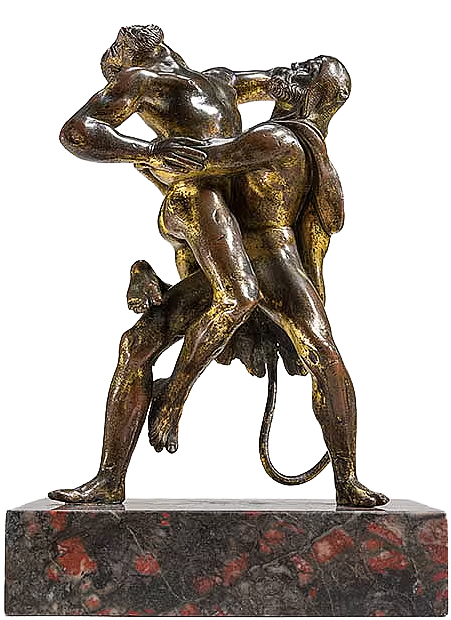
Fig. 2: Bronze Hercules and Antaeus, workshop of Peter Vischer the Elder, ca. 1500 (Bayerisches Nationalmuseum, inv. 26/77).
Furthermore, around 1515, the humanist Pankraz Schwenter composed a poem titled Historia Herculis explicitly dedicated to Peter Vischer’s sons, framing Hercules as a profound moral allegory for the “Conquest of Vice by Virtue.” If Hercules represented the triumph of virtue to the Vischers, the Branch-Breaker as an early Herculean prototype perfectly complements a narrative of resistance: it elevates the grueling labor of the disenfranchised craftsman into a mythological, heroic virtue.
Because of its subversive Livian undertones, the Branch-Breaker could never have functioned as a public civic monument; Nuremberg’s patrician City Council ruthlessly controlled all public art and strictly forbade any displays that elevated individuals or factions above their station. Instead, the bronze was almost certainly intended for the private Kunstkammer or study of a wealthy humanist collector. During the Renaissance, small bronze statuettes from the Vischer workshop were frequently commissioned by patrician intellectuals and integrated into functional desk objects, such as inkstands. In the intimate, erudite setting of a humanist’s desk, an allegorical bronze could safely explore politically charged themes—like the story of Volero Publilius—without drawing the ire of the Council. As a private, utilitarian masterpiece, the Branch-Breaker could have served as a highly intellectualized conversation piece for a sympathetic patron who could decode its classical references to executive resistance.
The kneeling posture of the Branch-Breaker is a deliberate iconographic choice that mirrors the social reality of the Nuremberg artisan. In one sense, it represents the “Atlas-like” strength required to sustain the city’s economy; in another, it reflects the literal posture of submission required by the “Sworn Crafts” before the Council. However, by depicting the craftsman in the act of breaking the wood while in this submissive pose, the sculpture suggests that the potential for resistance remains dormant but ever-present.
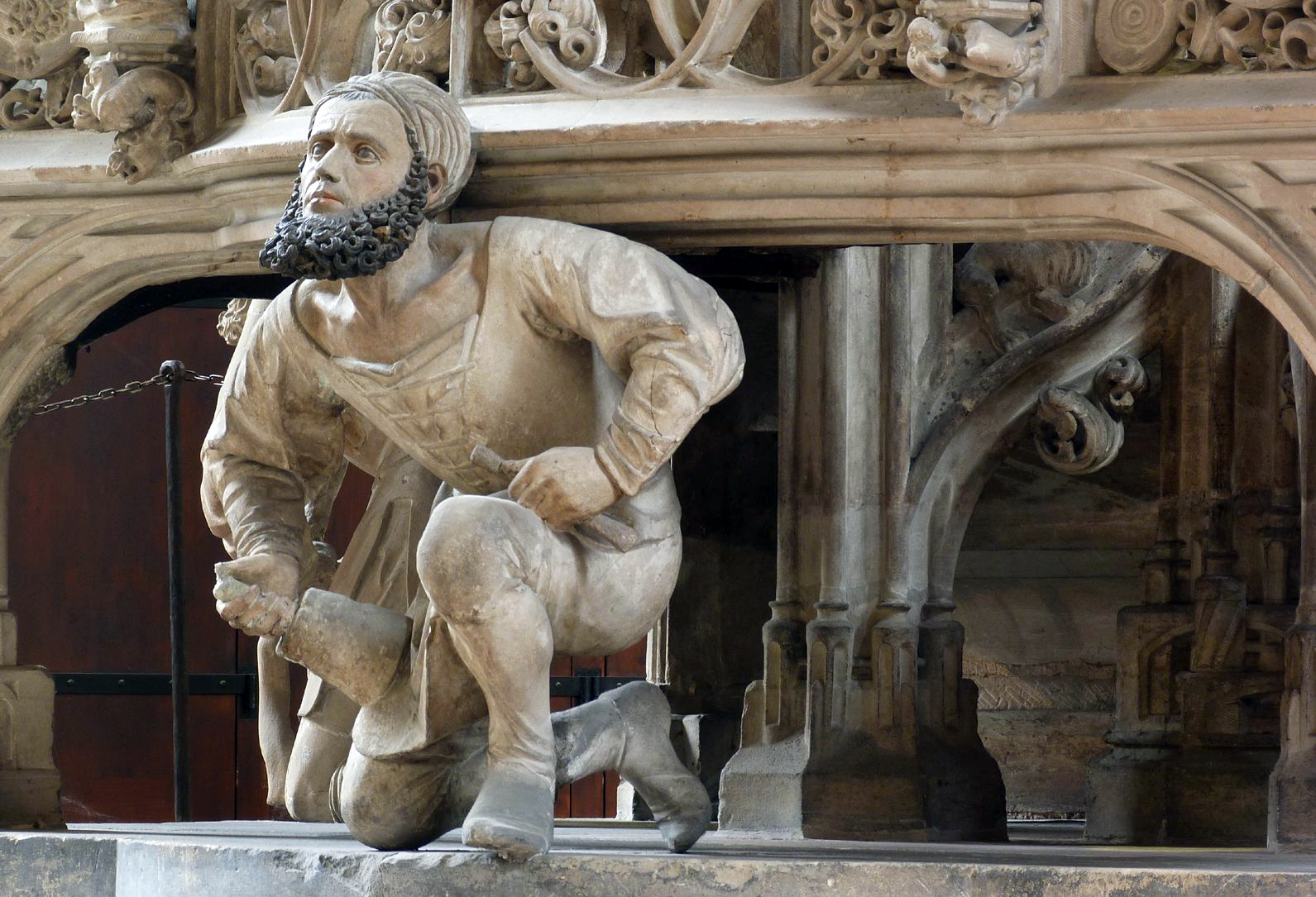
Fig. 3: Adam Kraft’s self-portrait, ca. 1493-96, at the Sakramentshaus in St. Lorenz, Nuremberg.
The tension in the figure’s deltoids and the grimace of his facial expression find a powerful contemporary parallel in the work of Adam Kraft. Specifically, the famous self-portraits at the base of Kraft’s Sakramentshaus in St. Lorenz (1493–1496)—depicting the artist and two assistants physically supporting the massive stone tower on their shoulders—which have long been interpreted as a statement regarding the social weight borne by artisans (fig. 3). Kraft deliberately crafted these life-size, kneeling figures not with humbly bowed heads, but looking the visitor directly in the eye, with Kraft himself proudly pressing a hammer against his thigh and clutching a chisel.8 This self-conscious assertion of the craftsman’s identity was so potent that decades later, the humanist Eobanus Hessus attempted to erase their artisanal pride, describing them in a 1532 poem merely as nameless, ‘Atlas-like figures [who] struggle to rise, as if the weight would cave in on them.’9 Yet, where Kraft asserts his presence through static, dignified endurance and direct confrontation with the viewer, Vischer utilizes the explosive, kinetic energy of the snap to present a raw allegory of the artistic process itself: the craftsman’s struggle with nature. Breaking a thick branch over one’s knee mirrors the back-breaking, sweaty, and often dangerous labor of both stone carving and bronze casting. Both works elevate the figure of the laborer from a mere “study from life” to a form of political theater, asserting that the true ‘virtue’ of Nuremberg’s art lay not just in the patrician’s wealth, but in the calloused hands of the makers. As Vischer himself later demonstrated on the Shrine of St. Sebald, where he depicted his own likeness holding his hammer and chisel on the same level as the patron saint, the Vischers actively brandished their tools as signs of the ‘virtue of work’ (fig. 4).10 Thus, Vischer’s Branch-Breaker uniquely conveys the suppressed, dormant power of the strictly regulated metalworker conquering his raw materials.
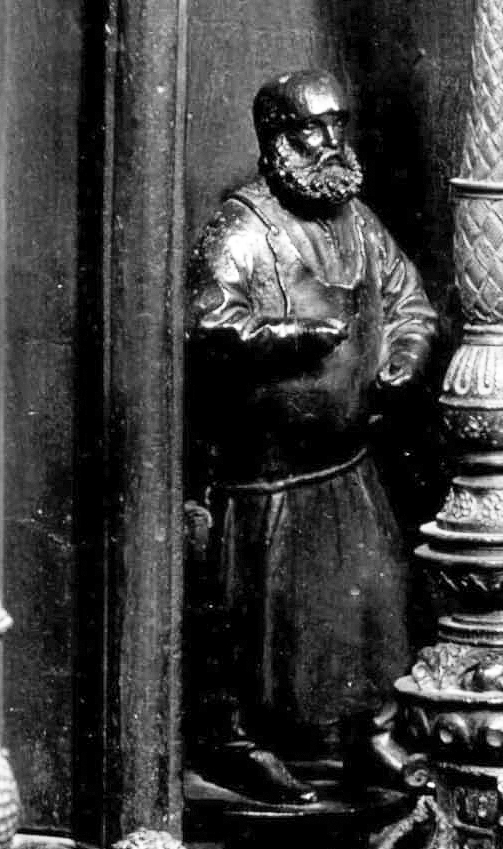
Fig. 4: Peter Vischer the Elder and workshop, ca. 1508-19, detail of the Shrine of St. Sebaldus with a portrait of Peter Vischer the Elder.
However, the idealized, dormant strength projected in the Branch-Breaker and the Sakramentshaus stood in stark contrast to the crushing socio-economic reality of the Nuremberg artisan. The ultimate subservience of the craftsman to the patrician class is tragically illustrated by the end of Adam Kraft’s life. Despite the monumental success of the Sakramentshaus, Kraft later suffered financial ruin. He borrowed heavily from Peter Imhoff—the son of Hans IV Imhoff, the very patron of the tabernacle—against sculptural work he was contracted to complete. By the time Kraft died at the end of 1508, he had fallen too ill to finish the commission and could not repay the 310 guilders. Demonstrating the absolute, ruthless power of the ruling elite, Peter Imhoff’s attorney placed a lien on Kraft’s house and workshop before the master was even buried.11 His widow, Barbara, was forced to forfeit the property to Imhoff and likely spent her remaining days in poverty. This devastating historical reality underscores the precarious existence of even the most celebrated artists beneath patrician economic dominance, and highlights the necessity for craftsmen to encode their assertions of power in allegory.
To fully grasp the profound intentionality of the Branch-Breaker, we must synthesize these overlapping registers into a unified reading: the sculpture functions as a raw allegory of the artistic process (Techne vs. Physis) operating safely under the acceptable visual guise of a Herculean theme. For the wealthy humanist collector who displayed the expensive bronze in his private Kunstkammer, the figure represented a young Hercules fashioning his club—a classical, highly acceptable meditation on the triumph of virtue and physical strength. Yet, for Kraft and Vischer, the underlying meaning would have been intensely personal and quietly subversive. They utilized this mythological cover to immortalize the brutal, back-breaking reality of their own trades. In a city where patricians could legally seize an ailing master’s entire workshop before his body was even in the ground, the physical act of snapping a thick branch became a proxy for the craftsman’s violent, muscular struggle to conquer raw materials. Through this brilliant synthesis, the Vischer workshop successfully smuggled a permanent monument to craft solidarity, the dignity of labor, and the suppressed power of Nuremberg’s “sworn crafts” directly onto the desks of the very elite who disenfranchised them. Five centuries later, the Branch-Breaker continues to embody the snapping of the rod of authority, preserving a multi-layered narrative of artisanal resistance that the archives of the Rugamt were designed to erase.
Endnotes:
1 Johannes Neudörffer, Nachrichten von den vornehmsten Künstlern und Werkleuten (1547), edited by Georg W. K. Lochner (Vienna: Wilhelm Braumüller, 1875).
2 William D. Wixom, “The Art of Nuremberg Brass Work,” in Gothic and Renaissance Art in Nuremberg 1300-1550 (New York: Metropolitan Museum of Art, 1986), p. 76.
3 Cecil Headlam, Peter Vischer (London: George Bell and Sons, 1901), p. 22.
4 Josef Riederer, “Die Zusammensetzung deutscher Renaissancestatuetten aus Kupferlegierungen,” Zeitschrift des Deutschen Vereins für Kunstwissenschaft 36 (1982), pp. 42-48.
5 Rainer Brandl, “Art or Craft? Art and the Artist in Medieval Nuremberg,” in Gothic and Renaissance Art in Nuremberg 1300-1550 (New York: Metropolitan Museum of Art, 1986), pp. 51-52.
6 Larry Silver, “Adam Kraft’s Moving Sandstones,” Arts 12, no. 9 (2023), p. 2. Also corroborated by Brandl, Art or Craft?, p. 52.
7 Wixom, “The Art of Nuremberg Brass Work,” p. 76.
8 Corine Schleif, “Does Religion Matter? Adam Kraft’s Eucharistic Tabernacle and Eobanus Hessus,” in Art, Piety and Destruction in the Christian West, 1500-1700, edited by Virginia Chieffo Raguin (Burlington, VT: Ashgate, 2010), pp. 54-55.
9 Ibid.
10 Gerhard Weilandt, as discussed in context of the Shrine of St. Sebald and the elevation of artisanal status through tools.
11 Corine Schleif, “The Many Wives of Adam Kraft,” in Saints, Sinners, and Sisters: Gender and Northern Art in Medieval and Early Modern Europe, edited by Jane L. Carroll and Alison G. Stewart (Aldershot: Ashgate, 2003), p. 221.
 Renaissance Bronze
Leave a comment