by Michael Riddick
Preview / download PDF in High Resolution
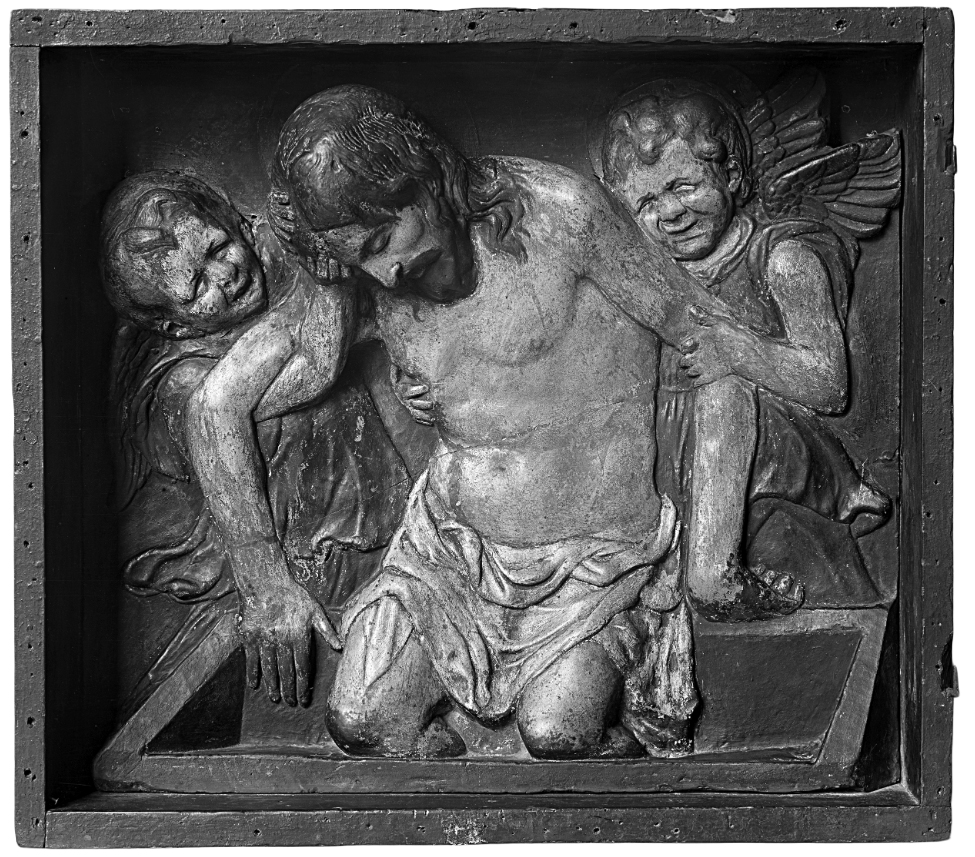
Fig. 1: Fig. 1. Polychrome terracotta Dead Christ Tended by two Angels after Donatello (?), second half of the 15th century (Skulpturensammlung, Berlin, inv. 2439)
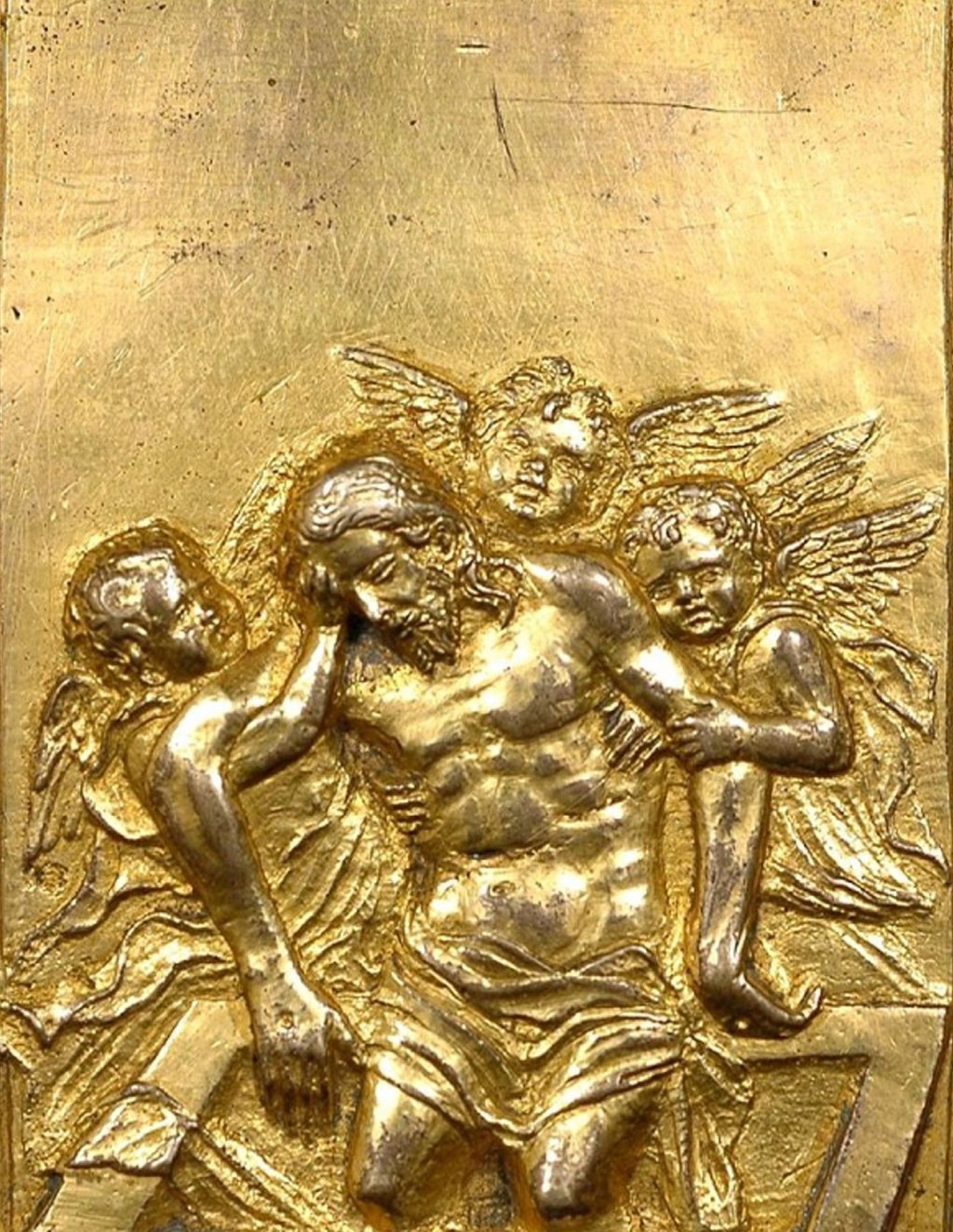
The sculptural composition of the Dead Christ Tended by Angels—characterized by the stark gravity of the Savior’s torso and the poignant gesture of a limp arm resting upon the tomb’s edge—is one of the most emotionally resonant inventions of the Quattrocento. Universally traced back to a lost prototype by Donatello, the design achieved widespread success across the Italian peninsula, particularly in the Veneto. Because of its popularity, the composition was primarily disseminated through highly reproducible, inexpensive media, with numerous surviving copies cast in polychrome papier-mâché (cartapesta), stucco, and terracotta (fig. 1, cover). The purpose of this brief paper is to introduce a previously unrecorded iteration of this popular motif: a unique version cast in gilt bronze (fig. 2).
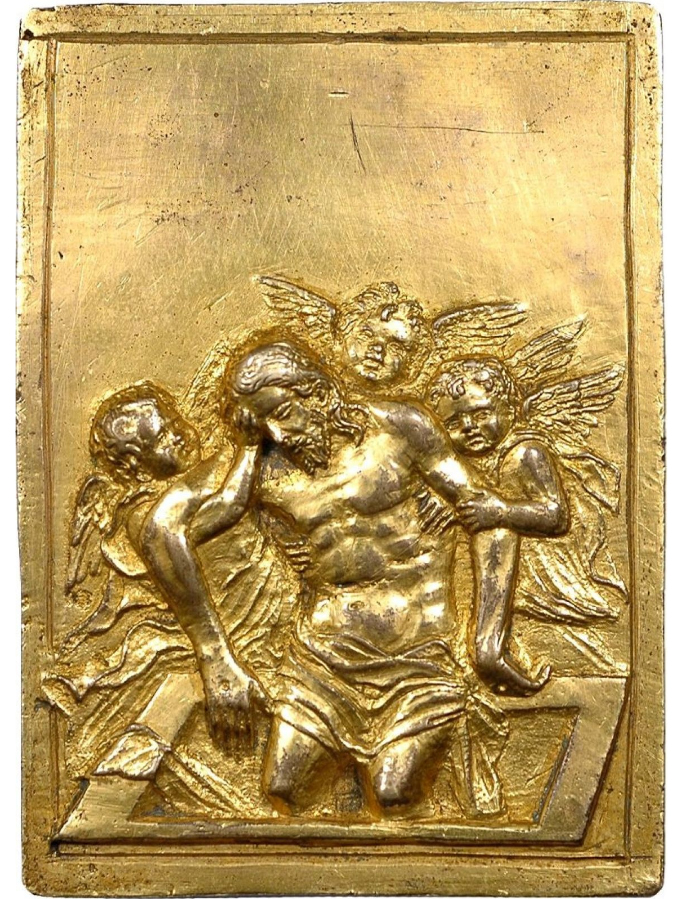
Fig. 2. Gilt bronze plaquette of the Dead Christ Tended by two Angels after Donatello (?), late 15th century (Neil Goodman collection)
Unlike secondary papier-mâché iterations (such as the relief in the Princeton University Art Museum), which betray their status as degraded serial copies through the vestigial “ghost hands” of a missing third angel, the present bronze plaque achieves a complete and coherent presentation of the original Donatellian motif. The preservation of the full angelic cohort suggests that the modeler had access to a primary prototype. This distinction marks the bronze not as a standard serial product, but as a deliberate and faithful translation of the archetype into a luxury medium.
The physical evidence presented by the bronze plaquette—specifically its unusually large upper register—shifts the inquiry toward the practical exigencies of the Renaissance workshop. The composition occupies only the lower portion of the field, leaving a disproportionate void above the figures. This strongly suggests that the plaquette was not conceived as a standalone cabinet object, but as a bespoke functional component destined for a larger architectural or liturgical ensemble, such as a small chapel predella or a wall-ciborium. In the Paduan tradition of the late fifteenth and early sixteenth centuries, a discrepancy between the pre-carved open area of a marble surround and the standard dimensions of a popular sculptural model would necessitate exactly this kind of tailored adaptation (fig. 3).
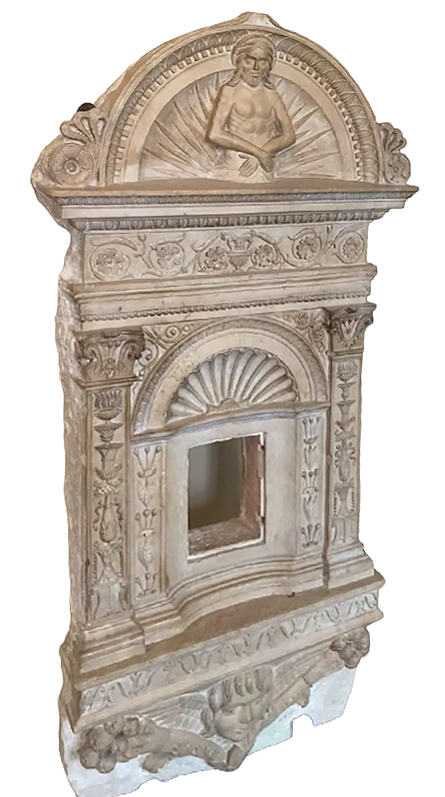
Fig. 3. 15th century marble surround for a wall ciborium (collection of Fabrizio Canto)
The application of fire-gilding further confirms a specific liturgical destination, elevating the composition to the status of a precious instrument and ensuring maximum luminous impact within a dimly lit chapel. As no other bronze casts of this exact model are currently known to the present author, it stands as a rare and luxurious material testament to the enduring, malleable legacy of Donatello’s invention in Northern Italy.
While a definitive attribution is beyond the scope of this paper, the present author suggests the plaque’s stylistic and technical execution points to the immediate Paduan circle of Antonio Antico (not to be confused with Pier Jacopo Alari Bonacolsi) and his father-in-law, the coroplasta Giovanni de Fondulis (whose workshop was instrumental in serializing this Donatellian motif). The translation of this model into metal reflects the early sixteenth-century Paduan shift away from coroplastica and toward the arte fusoria (the art of casting). Antico’s dual identity as a clay modeler and a descendant of a long dynasty of lapicidi (stone carvers) provides a highly logical framework for this commission; he possessed the exact technical knowledge required to rapidly modify an additive clay modello (extending its upper borders) to ensure the resulting bronze cast would flush-fit a difficult, pre-existing stone housing. Furthermore, the sharp delineation of the eyelids on the figure of Christ and the specific geometric treatment of the drapery share persistent stylistic links with Antico’s documented works, bridging mid-Quattrocento naturalism with a more refined classicism, as seen in his St. Roch in Tramonte and the St. Paul at the Worcester Art Museum (fig. 4).
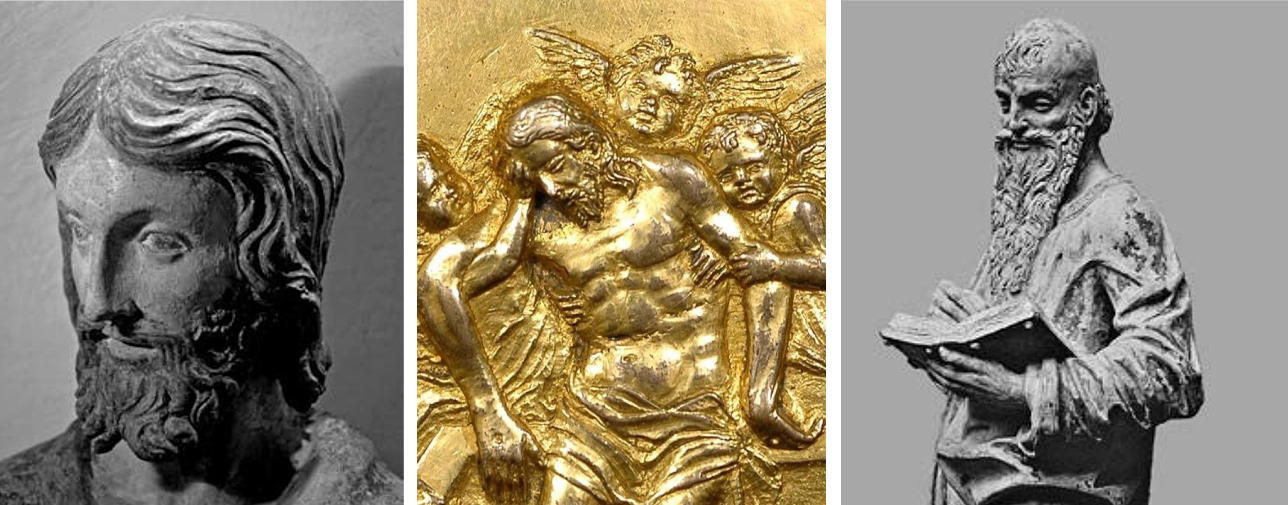
Fig. 4. Detail of figure 1 (center) alongside the work of Antonio Antico: St. Roch at Tramonte (left) and St. Paul at the Worcester Art Museum (right)
Endnotes:
De Marchi, Andrea. Centralità di Padova: alcuni esempi di interferenza fra scultura e pittura nell’area adriatica alla metà del Quattrocento, in Charles Dempsey (ed.), Quattrocento adriatico. Fifteenth-Century Art of the Adriatic Rim, symposium papers (Florence, Villa Spelman, 1994), Bologna, Nuova Alfa Editoriale, 1996, pp. 72-73.
Scansani, Marco. “Antonio Antico: Scultore e coroplasta padovano a cavallo di due secoli” in Arte Veneta, 76, (2019), pp. 8-23.
Ericani, Giuliana. “Giovanni de Fondulis. Un importante capitolo della scultura rinascimentale padana [italiana].” In Rinascimento cremasco. Artisti, maestri e botteghe tra XV e XVI secolo, edited by Paola Venturelli, 68–81. Geneva-Milan: Skira, 2015.
Gaurico, Pomponio. De sculptura. Florence, 1504. (Modern edition: De sculptura, edited by P. Cutolo. Naples, 1999).
Gentilini, Giancarlo. “La terracotta a Padova e Andrea Riccio, ‘celebre plasticatore’.” In Rinascimento e passione per l’antico. Andrea Riccio e il suo tempo (Exhibition Catalogue: Trento, Castello del Buonconsiglio – Museo Diocesano), edited by Andrea Bacchi and Luciana Giacomelli, 59–75. Trento, 2008.
Rowley, Neville. “Da Donato di Niccolò di Betto detto Donatello: Cristo morto sostenuto da due angeli.” In Le vendite e la tutela, (2019) 316–317.
 Renaissance Bronze
Leave a comment