
by Michael Riddick
Preview / download PDF in High Resolution
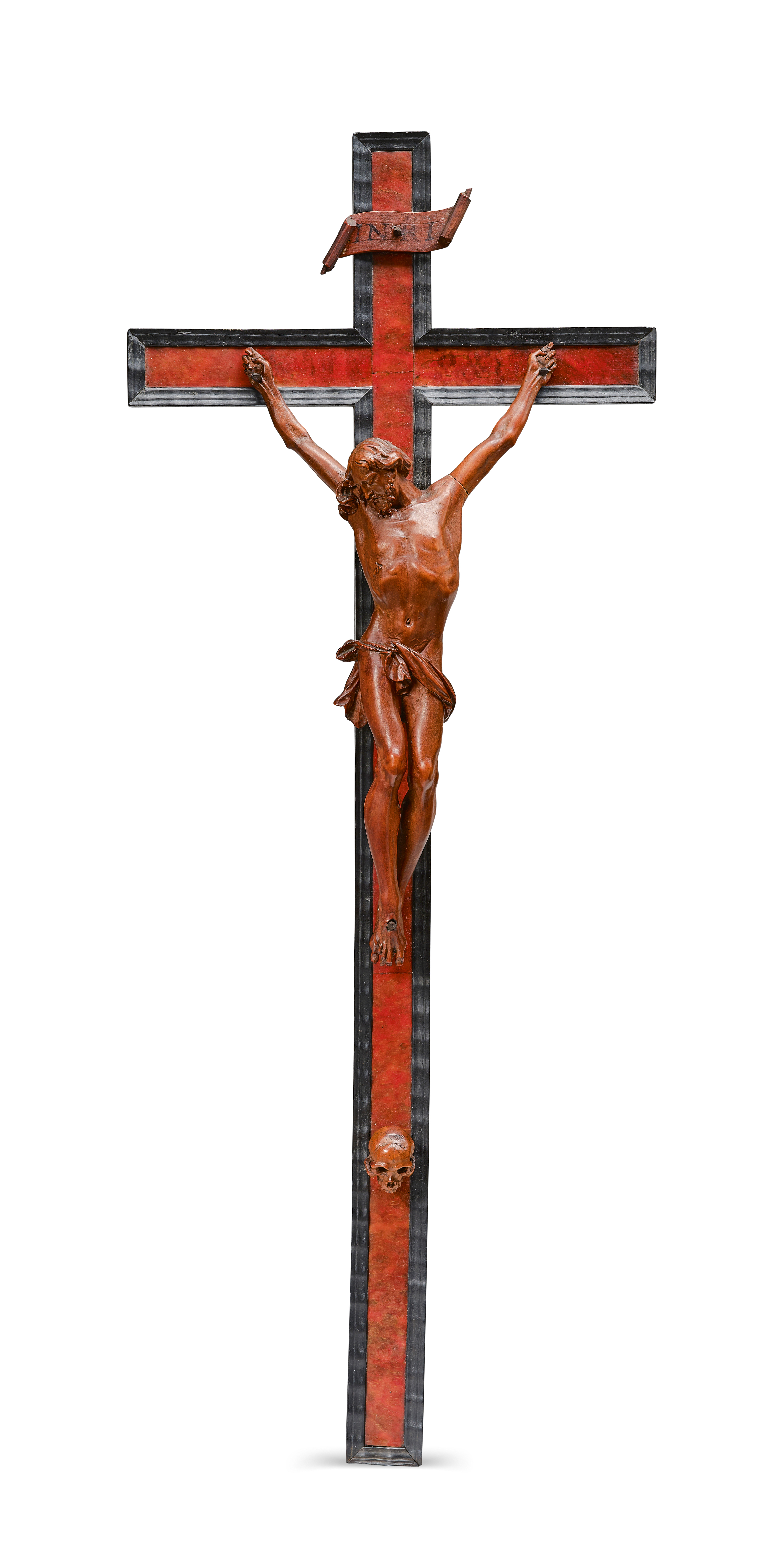
Fig. 1 – Boxwood crucifix here attributed to Matthieu van Beveren or his atelier, ca. 1660s (art market)
A small boxwood crucifix—approximately 10.25 inches in height by 5 inches across—found recently in the art market,1 appears to stylistically relate to the 17th century sculptural production of the Antwerp artist, Matthieu van Beveren (cover, fig. 1).
While no firmly identified crucifixes by Matthieu are confirmed, Christian Theuerkauff’s past scholarship on the subject of identifiable corpora by this master have narrowed the known examples to a mere handful of qualified works.2 The most notable of these is a large boxwood corpus preserved at the Vleehuis Museum in Antwerp datable to the 1670’s (fig. 2).
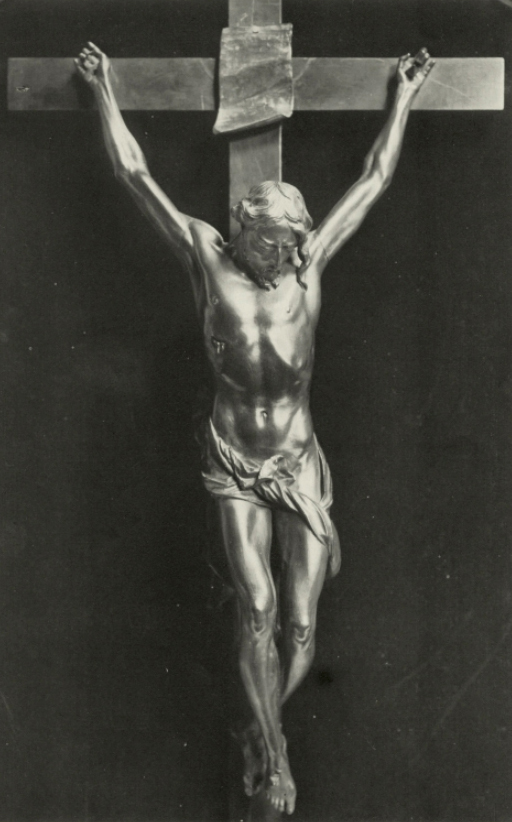
Fig. 2 – Boxwood crucifix attributed to Matthieu van Beveren, ca. 1670s (Vleehuis Museum, Belgium)
Matthieu’s production of crucifixes is cited in 18th century documents from two Flemish churches and in the testimony of Van den Sanden who proclaimed, “his beautiful images of Christ, whilst dying on the cross, are today still purchased for collector’s cabinets and the House of God.”3
Various ivory and boxwood corpora associated with Matthieu appear to have been influenced by Peter Paul Rubens’ paintings and drawings of Christ’s crucifixion and those sculpted by Jerome Duquesnoy. However, the youthful works of the master, executed during the 1660’s, emphasize the greater influence of Anthony van Dyck and it is during this period that the boxwood corpus presented here may find its possible genesis. In particular, the figurative form of Christ echoes an oil painting of the Crucifixion attributed to van Dyck, ca. 1630-32, at the Courtauld Institute (fig. 3).

Fig. 3 – Oil on canvas painting of the Crucifixion attributed to Anthony van Dyck, ca. 1630-32 (Courtauld Institute, UK, inv. P.1947.LF.107)
More notable, however, is its comparison with the figure of Christ in Matthieu’s 1668 Lamentation for the altar of Our Lady of the Seven Sorrows in Dendermonde and the smaller scale domestic boxwood house altar figure group of the same subject at the Metropolitan Museum of Art (fig. 4, right) as well as its ivory corollary at the Royal Museum of Fine Arts in Brussels.4
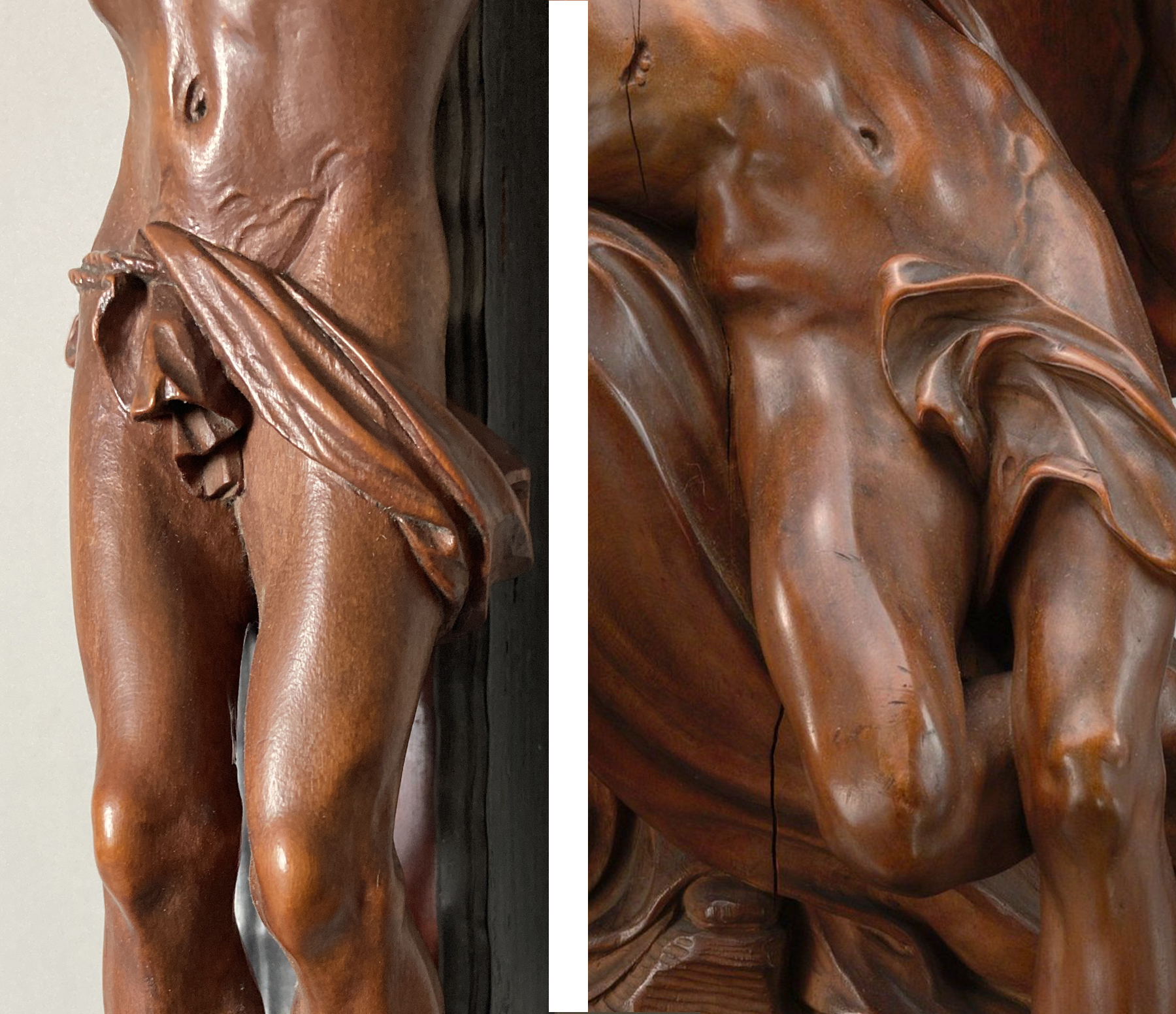
Fig. 4 – Detail of a boxwood crucifix here attributed to Matthieu van Beveren or his atelier, ca. 1660s (left; art market); detail of Christ from a boxwood figural group of the Lamentation attributed to Matthieu van Beveren or his workshop, 17th century (right; Metropolitan Museum of Art, NY, inv. 64.164.242)
Comparisons may also be drawn between the face of Christ in Matthieu’s 1661 stone Ecce Homo for the Church of St. James in Antwerp (fig. 5, left) and the downward gaze of his marbled painted wood figure of a veiled angel featured in the left niche along the Altar of Seven Sorrows, previously noted (fig 5, right).
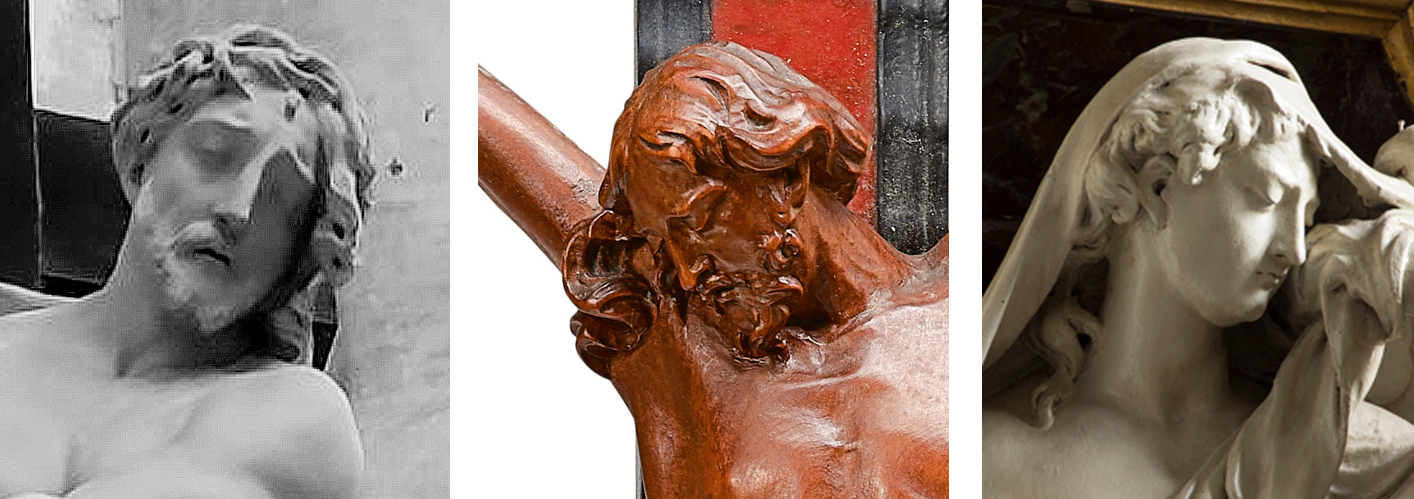
Fig. 5 – Detail of a stone figure of Christ (Ecce Homo) by Matthieu van Beveren, 1661 (left; Church of St. James, Antwerp); detail of a boxwood crucifix here attributed to Matthieu van Beveren or his atelier, ca. 1660s (center; art market); detail of a polychrome wood angel from the Altar of Seven Sorrows by Matthieu van Beveren, 1668 (right; Dendermonde, Belgium)
Particularly informing of an association with Matthieu are the distinctive features that characterize the boxwood Christ. These include the perizonium which leaves the proper right hip of Christ exposed and the modest swath of linen providing privacy, a feature associated with all corpora securely attributed to Matthieu. Also noted is the undercut upper eyelids and furrowing brow line accentuated by a pursed indentation above the supraorbital ridge; the simple feature of three tear-like drops of blood emanating from Christ’s side-wound—commensurate on other of his smaller scale sculptures representing Christ (figs. 6, 7); the cavernous and elongated concha of the ear; the elongated triceps which are pulled taught and create a cavernous shadow beneath the biceps; the exaggerated strain of the flexor carpi beneath the wrists; and the iliac circumflex veins running laterally along the lower abdomen as observed on his wooden Lamentation model at the MET (fig. 4) as well as his stone figure of Neptune on the Memorial to Duke Lamoral II of Thurn and Taxis (Chapel of St. Ursula in the Church of Notre-Dame du Sablon in Brussels); the latter two works being chiefly cited for attributions of corpora ascribed to Matthieu.
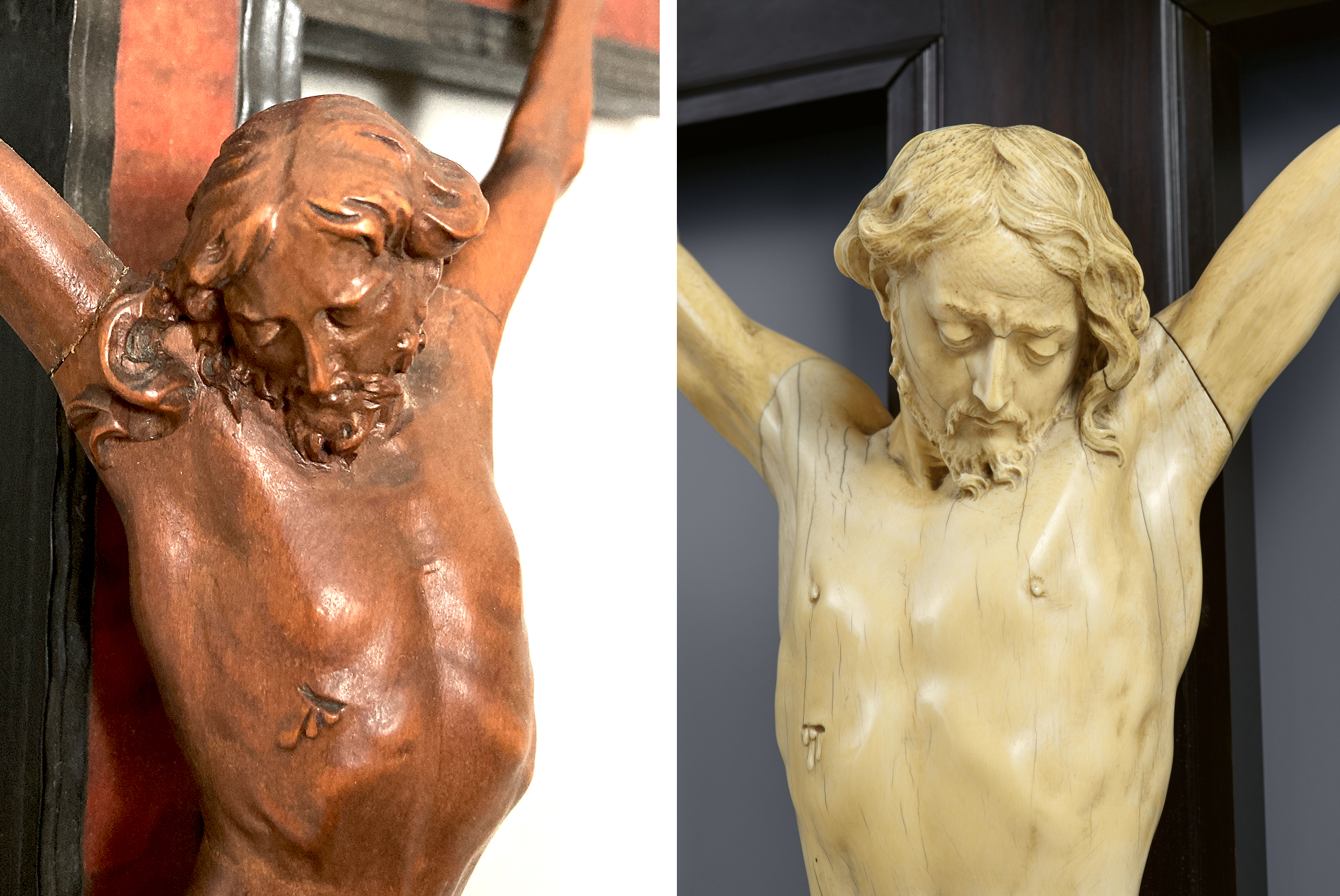
Fig. 6 – Detail of a boxwood crucifix here attributed to Matthieu van Beveren or his atelier, ca. 1660s (left; art market); detail of a large ivory crucifix attributed to Matthieu van Beveren (right; Lempertz auction)
Although the present crucifix is managed with care and a superb attention to surface details, there is a simplicity that could suggest the work may have been preparatory for a finer production of similar or larger scale or the production of a follower. We may observe an alike association between the previously cited boxwood Lamentation preserved at the MET and the ivory Lamentation in the Royal Museum of Fine Arts in Brussels or comparatively the stone monument for Jasper Boest in St. Jackbskerk in Antwerp and the reduced-scale ivory variant at the Beguine Convent in that same city.
The boxwood corpus is complimented by its original ebony guilloché ripple molded cross with inset red tortoiseshell veneer, indicative of the expensive tastes of the period. A similar configuration of ebony wood and red tortoiseshell veneer is found on the elaborate Coronation of James II Cabinet in the UK Royal Collection Trust executed by Matthieu and his workshop sometime between 1685-90.5
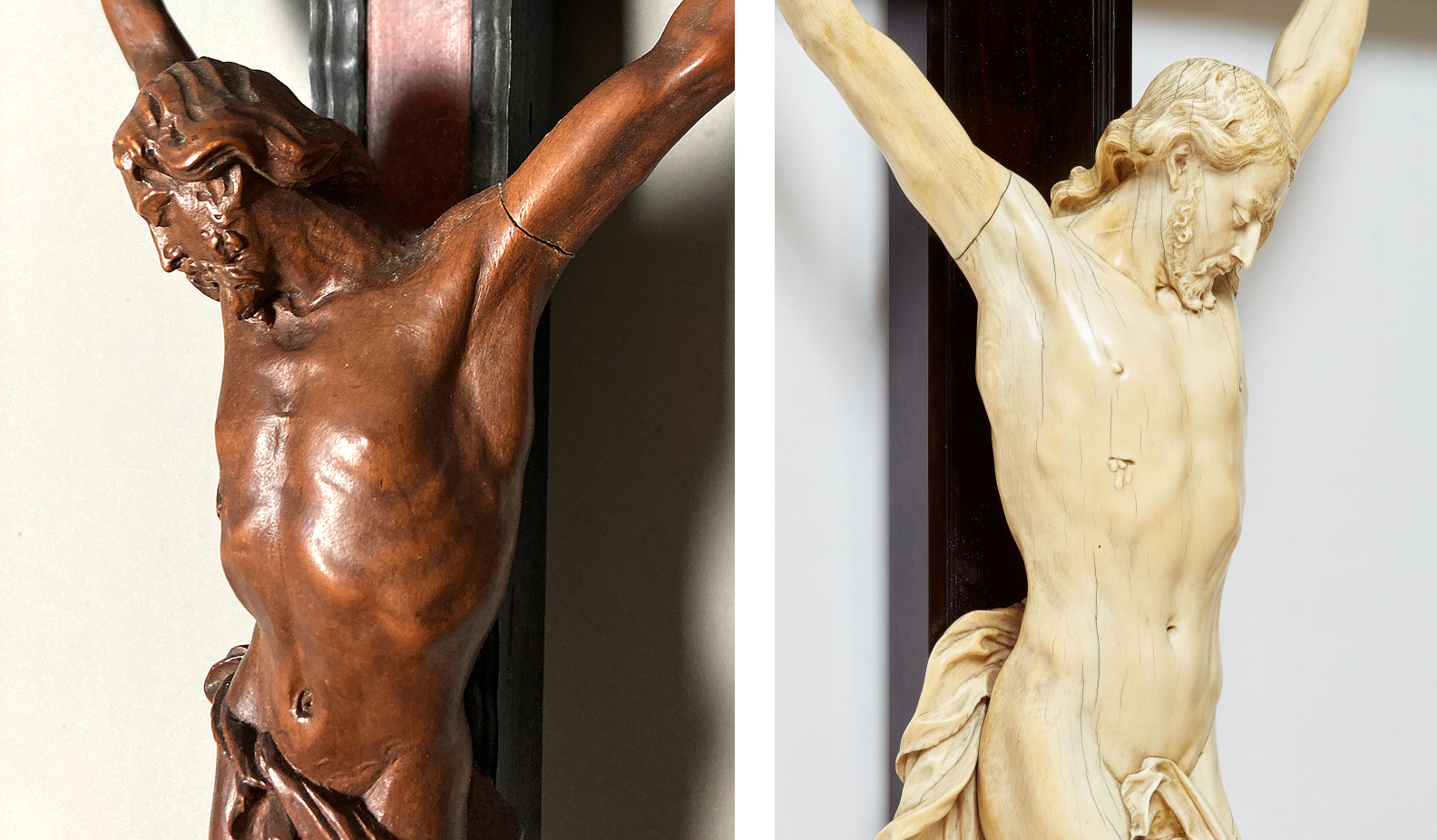
Fig. 7 – Detail of a boxwood crucifix here attributed to Matthieu van Beveren or his atelier, ca. 1660s (left; art market); detail of a large ivory crucifix attributed to Matthieu van Beveren (right; Lempertz auction)
Two larger and highly detailed ivory corpora compared against the Christ attributed to Matthieu at the Saint Carolus Borromeus church in Antwerp have been attributed to his workmanship: Lempertz, 15 July 2021, lot 87 (figs. 6, 7) and Sotheby’s, 9 July 2015, lot 172. The former is most probably a late mature work, large in-scale and highly accomplished, although in the present author’s opinion the latter corpus appears to have more in common with one preserved in the Monastery of St. Truiden, variably attributed to Gabriel Grupello or a later, quite talented, follower of Matthieu or member of his circle.
If not the work of a follower, the present corpus—small in-scale, and in the modest medium of boxwood—is possibly indicative of the early years of Matthieu’s activity and a precursor to the masterworks that entailed a demand for his work and established his more recently heralded respect as one of the foremost Flemish sculptors of the late Baroque era.
Endnotes:
1 Aguttes auction (Paris, France), 20 December 2023, Lot 216.
2 Christian Theuerkauff (1975): “Anmerkungen zum Werk des Antwerpener Bildhauers Matthieu van Beveren (um 1630-1690)” in Oud Holland, Vol. 89, no. 1, pp. 19-62 and C. Theuerkaff (1988): “Addenda to the Small-Scale Sculpture of Matthieu van Beveren of Antwerp” in Metropolitan Museum Journal, no. 23, pp. 125-47.
3 Ibid.
4 Royal Museum of Fine Arts in Brussels, inv. 1764.
5 Royal Collections Trust, UK, inv. RCIN 21633.
 Renaissance Bronze
Leave a comment