
by Michael Riddick
Preview / download PDF in High Resolution
Preview Italian version at Antiqua Nuova Serie
PART 1 of a SERIES OF FIVE PLAQUETTE STUDIES CONCERNING MODERNO AND HIS SCHOOL
Galeazzo Mondella, called Moderno, was the most prolific producer of small bronze reliefs of the Renaissance. While some of his productions were evidently conceived as independent works-of-art others were likely intended to be grouped in a series. Further examples ostensibly sought to preserve creations conceived by him originally in more precious materials.
Throughout the course of scholarship various bronze plaquettes attributed to Moderno have instead been reallocated to followers or presumed anonymous workshop assistants. These artists are today identified by pseudonyms like the Master of the Herculean Labors, the Coriolanus Master, Master of the Orpheus and Arion Roundels, Master of the Corn-Ear Clouds, the Lucretia Master, et al.
While many of these pseudonyms have been applied only in the last few decades, the proposed identity of these artists or their possible reassessment back to Moderno has been little explored due to an absence of information or further critique. However, certain observations may yield reasonable suggestions concerning their context or authorship, particularly as regards the work of Matteo del Nassaro, a gem-engraver whom Giorgio Vasari noted had been a pupil of Moderno as well as a pupil of Moderno’s Veronese contemporary Niccoló Avanzi.
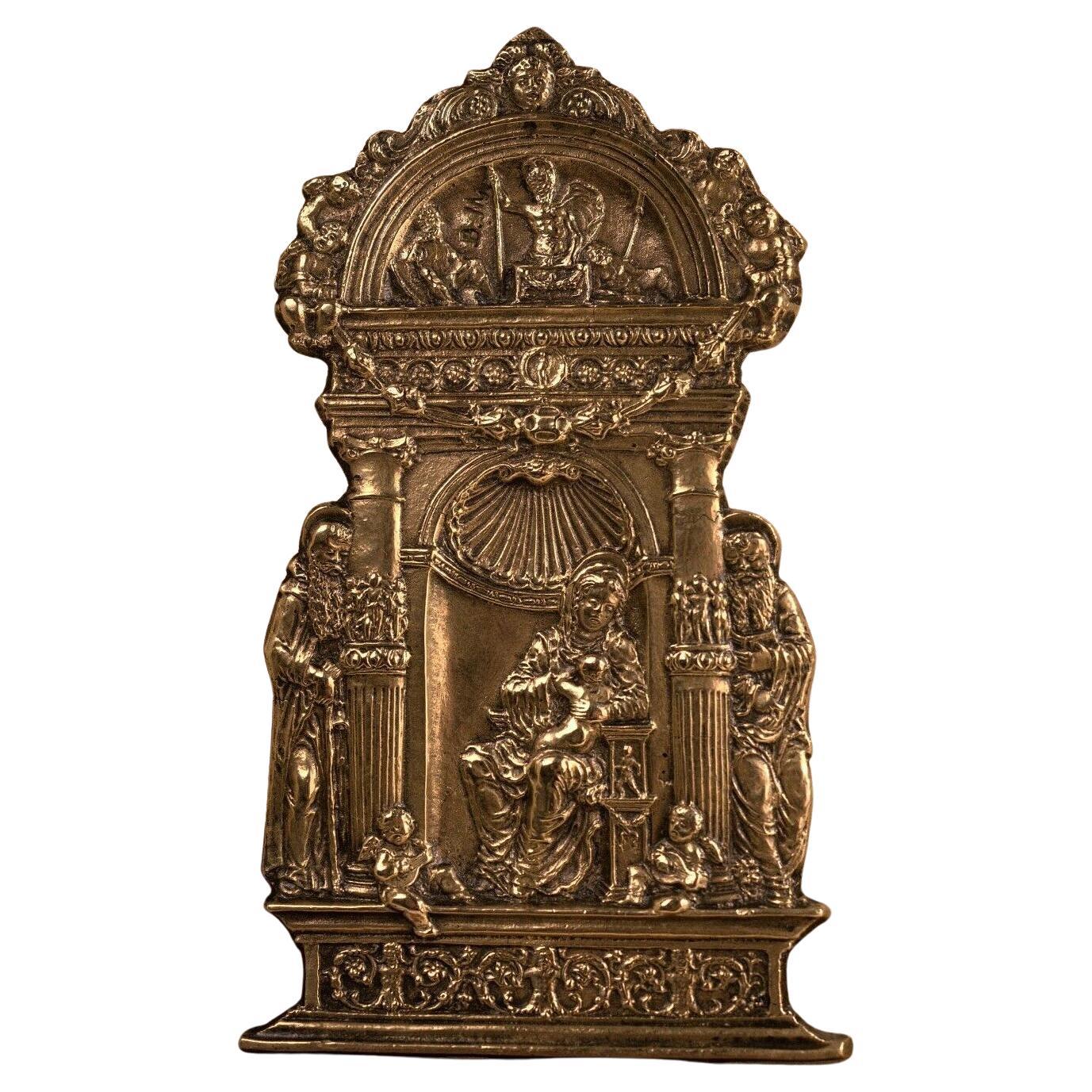
Cover image – a gilt bronze pax of the Virgin and Child, formerly in the collection of the Baron of Monville (Thomas Charles Gaston), by Moderno and probably cast by Moderno & Associated Makers, ca. 1528-35 (image courtesy De Gurbert Antiques, France)
Luciano Rognini’s studies of the Mondella family of goldsmiths has amply noted how Giambattista, the son of Galeazzo Mondella (called Moderno), assumed his father’s trade.1 Unfortunately, to the present author’s knowledge, no surviving examples are known of Giambattista’s goldsmiths work although we do know from recently published documents that in 1528,2 at the age of twenty-two, and just after the death of his father, Giambattista established a business partnership with his three cousins in Brescia: Giovanni Maria, Giovanni Battista and Luigi Mondella for ‘the execution and the trade of buying and selling jewels and things of gold and silver.’3 This partnership lasted until 1535 when finances were settled following the untimely death of the Brescian cousin Giovanni Battista Mondella.4
Such a partnership may be responsible for the posthumous dissemination of Moderno’s compositions throughout Lombardy. In particular, several early aftercasts of his compositions were almost certainly the product of this partnership operating between Verona and Brescia. In particular, casts of a pax relief of the Madonna and Child flanked by Saint Anthony Abbot and Jerome—of which a large quantity of casts are known to have survived5—feature inscriptions on their reverse, and are possibly the product of this family partnership. The reverse of these paxes is variably inscribed:
HOC • OPVS • MONDELA • VER • AVRIFEX • MCCCCXC
HOC • OPVS • MODERNI • C • C
While these inscriptions have already been adequately discussed in literature, this particular family partnership explains the previous observation that the C • C on the latter inscription refers to COMITES CONFECTORES or “associated makers,”6 and verifies a previous observation by Walter Cupperi that the inscriptions appear chased into the reverses themselves on finer casts and integrally cast on slightly debased aftercasts.7
Inscribed examples of these paxes are therefore quite likely not contemporary with Moderno’s own lifetime but rather follow a model he earlier conceived in Mantua in 14908 while his descendants perpetuated the design further after 1528. Douglas Lewis suggested the original model may have been realized under the patronage of Isabella d’Este, who came to power in 14909 and Francesco Rossi has also suggested a possible commission from the Mantuan Cardinal Scarampi.10
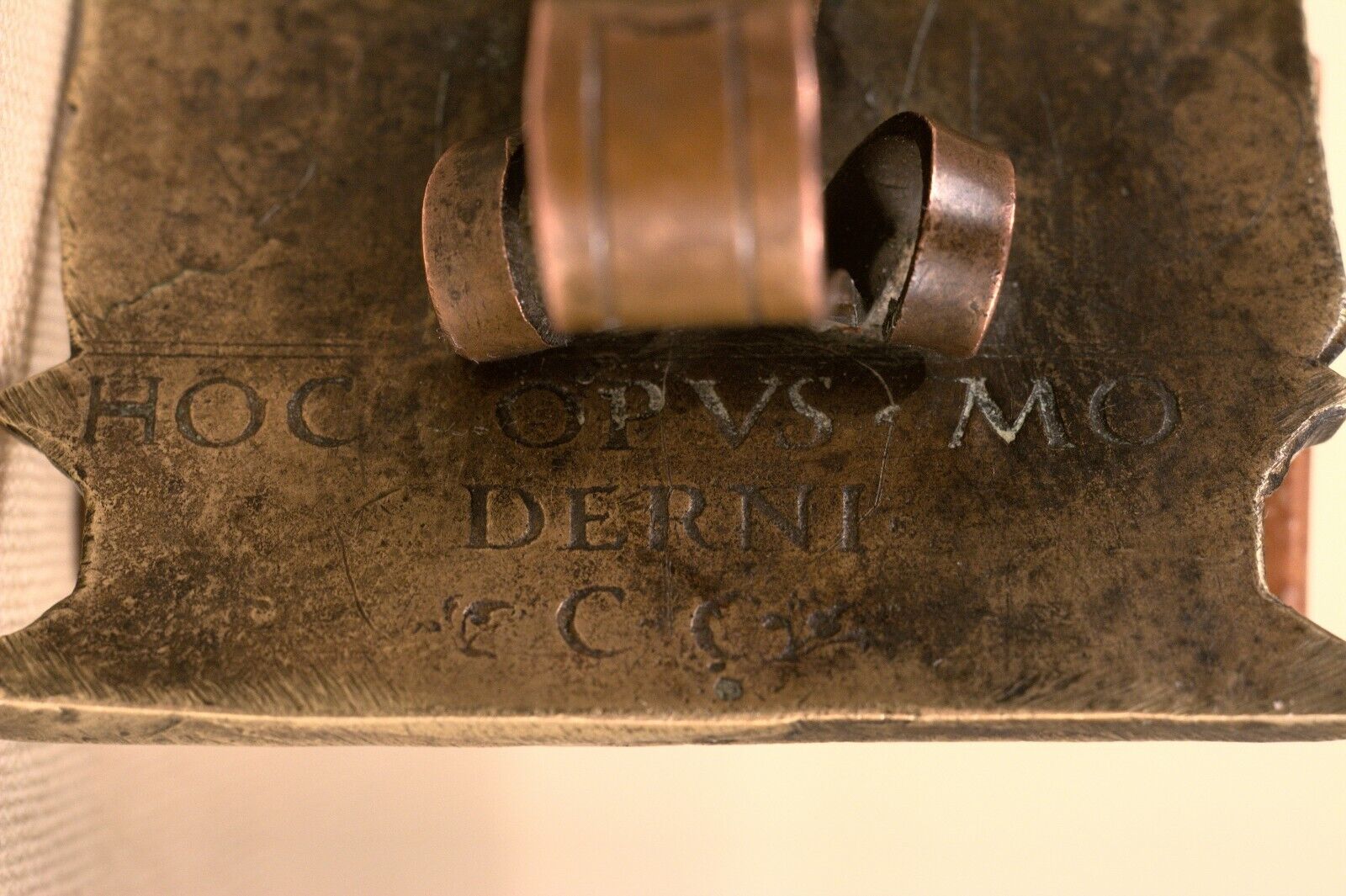
Fig. 01 – detail of the reverse of a gilt bronze pax of the Virgin and Child, formerly in the collection of the Baron of Monville (Thomas Charles Gaston), by Moderno and probably cast by Moderno & Associated Makers, ca. 1528-35 (image courtesy De Gurbert Antiques, France)
An extraordinarily fine cast of the pax from the 19th century collection of the Baron of Monville (cover photo) is a rare example still featuring an old handle—possibly contemporaneous or a slightly later addition—but interestingly featuring engraved flourishes flanking the C • C and likewise featuring a double-ruled line above the lower inscription, evidently to help align where the pax handle would have been attached so as to not interfere with the maker’s inscription (fig. 01). A slightly later but very fine aftercast of the pax at the Victoria and Albert Museum reproduces a trace remnant of this ruled line on its reverse.11
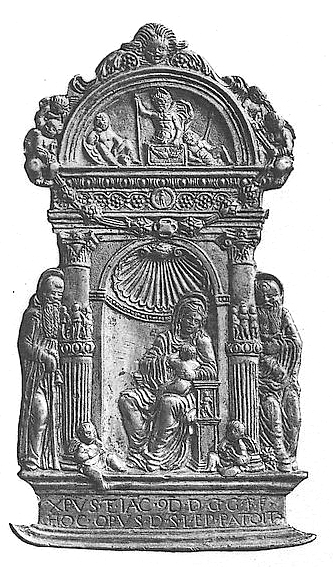
Fig. 02 – Bronze pax of the Virgin and Child, formerly in the Arthur Sambon collection, by Moderno and probably cast by Moderno & Associated Makers, ca. 1528-35 (Hirsch auction, 9 May 1914, lot 92)
An example of the pax from the early 20th century Sambon collection appears to be of high quality and may be one such example commissioned from this Veronese-Brescian family cooperation, produced for a donor for an unspecified church (fig. 02).12
One of the partners, Giambattista’s cousin, Giovanni Maria Mondella, sometime between 1533-57, autographed an enameled cross he executed for a portion of the Reliquiario della Santissima Croce preserved in the treasury of the Duomo Vecchio di Brescia,13 signing it in a manner superficially comparable to the aforenoted paxes:
IO • M • MONDELLA AVRIF • FECIT
(Made by the goldsmith Giovanni Maria Mondella)
A brightly enameled example of Moderno’s Madonna and Child pax, cited by Rossi,14 may indeed be the product of Giovanni Maria Mondella who was evidently quite talented in working colorful enamels.
While the inscriptions on these paxes are pivotal in identifying Moderno as the Veronese goldsmith, draughtsman and gem-carver named Galeazzo Mondella, their inscriptions are evidently the probable product of his son and nephews, preserving his memory and fame while reinforcing their generational roots in Verona. The genesis of this collaborative business, established immediately after Moderno’s death, also indicates the ambition of his young son and nephews, all new to their trades and leveraging Moderno’s regional fame to launch their own blossoming careers.
Endnotes:
1 Luciano Rognini (1973-74): Galeazzo e Girolamo Mondella – artisti del Rinascimento Veronese in Atti e Memorie della Accademia di Agricoltura, Scienze e Lettere di Verona, vol. VI, XXV, pp. 95-119.
2 Moderno’s will was drafted 5 May 1528 and he is presumed to have expired soon thereafter. The company formed by his son and nephews was established on 18 November 1528. See Douglas Lewis (1989): The Plaquettes of ‘Moderno’ and His Followers in Studies in The History of Art, vol. 22, National Gallery of Art, Washington, DC, pp. 105–07 and Alessandro Barbieri (2012): Il Reliquiario della Santissima Croce del tesoro del Duomo Vecchio di Brescia in Arte Lombarda Nuova Serie, nos. 164-65, pp. 25-58.
3 The possible connection between the Mondella’s of Verona and those in Brescia was first posited by Luciano Rognini but at-that-time lacked the documentary evidence to fulfill this now certain connection. L. Rognini (1973-74) op. cit. (note 1). For a discussion of the Mondella families in Verona and those active also in Brescia during the first half of the 16th century see A. Barbieri (2012): op. cit. (note 2), see especially his footnote 124.
4 A. Barbieri (2012): op. cit. (note 2).
5 Jeremy Warren notes more than 50 casts. See Jeremy Warren (2016): The Wallace Collection. Catalog of Italian Sculpture. The Trustees of the Wallace Collection, London.
6 D. Lewis (1989): op. cit. (note 2). Lewis notes that this suggestion was first encouraged to him by Professor Virginia Woods Callahan (email communication, June 2023).
7 Walter Cupperi (2005): Pinacoteca Civica di Vicenza. Scultura e arti applicate dal XIV al XVIII secolo. Milan, pp. 213-14, no. 241.
8 This is adjudged by a dated example of the pax from the collection of Alfred Higgins, sold at a Christies auction on 29 January 1904, lot 47 (purchased there by the collector Paul Garnier) and another example featuring a Cardinal’s hat and the word MANTVA along its base, sold through Münzhandlung Basel on 8 October 1934, lot 439.
9 D. Lewis (1989): op. cit. (note 2).
10 Francesco Rossi (2006): Placchette e rilievi di bronzo nell’età del Mantegna, Mantova e Milano. Skira, no. 32, pp. 53-56.
11 Victoria & Albert Museum Inv. A.425-1910.
12 The inscription is difficult to understand but appears to have been donated to a certain Giacomo who must have presided over a provincial church. With thanks to Alison Luchs and Douglas Lewis for their assistance and thoughts on understanding this inscription (email communication, December 2023).
13 A. Barbieri (2012): op. cit. (note 2).
14 Francesco Rossi (1974): Musei Civici di Brescia: Cataloghi Plachette Sec. XV–XIX, Vicenza, no. 72, p. 222. See also Ciro Ferrari (1974): Tesori d’arte nella terra dei Gonzaga. Exhibit catalog, Palazzo Ducale, Mantua, no. 187, p. 129.
 Renaissance Bronze
Leave a comment